



Emine Erdoğan urges shift from throwaway culture to sustainability
Emine Erdoğan told a UN energy dialogue that cutting waste, redesigning production and expanding renewables must advance together in the climate transition.


By Ahmet Taş | Wise News Press
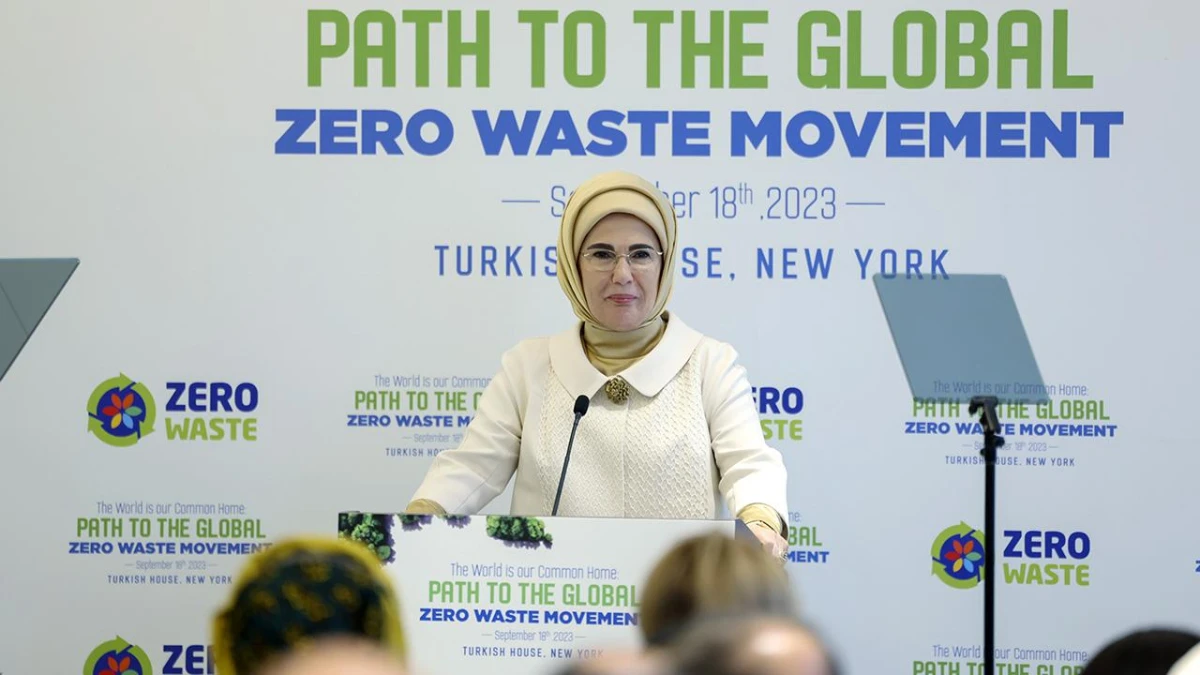
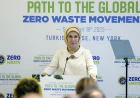
NEW YORK, United States — Emine Erdoğan, chair of the UN Advisory Board of Eminent Persons on Zero Waste, said the energy transition must address consumption habits as well as the expansion of clean power generation.
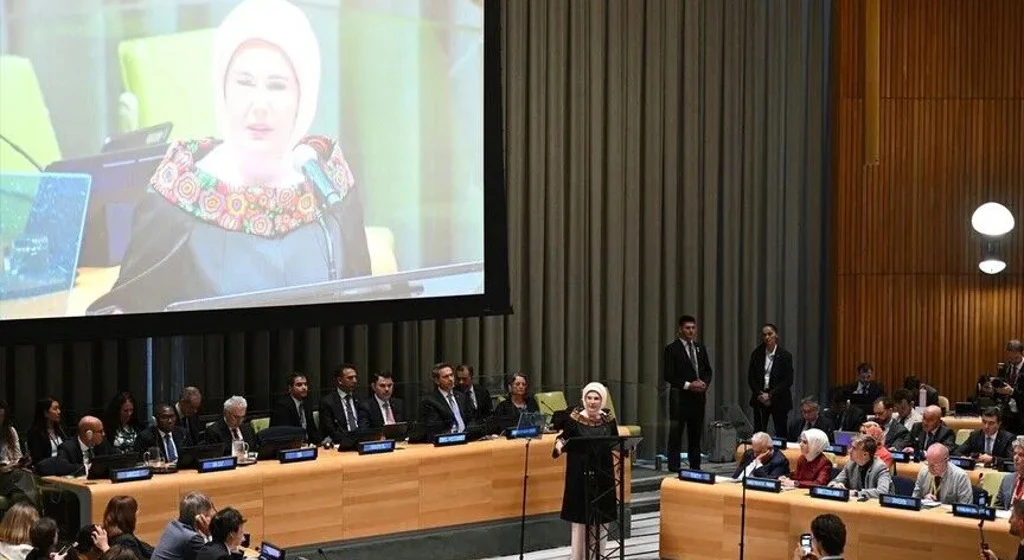
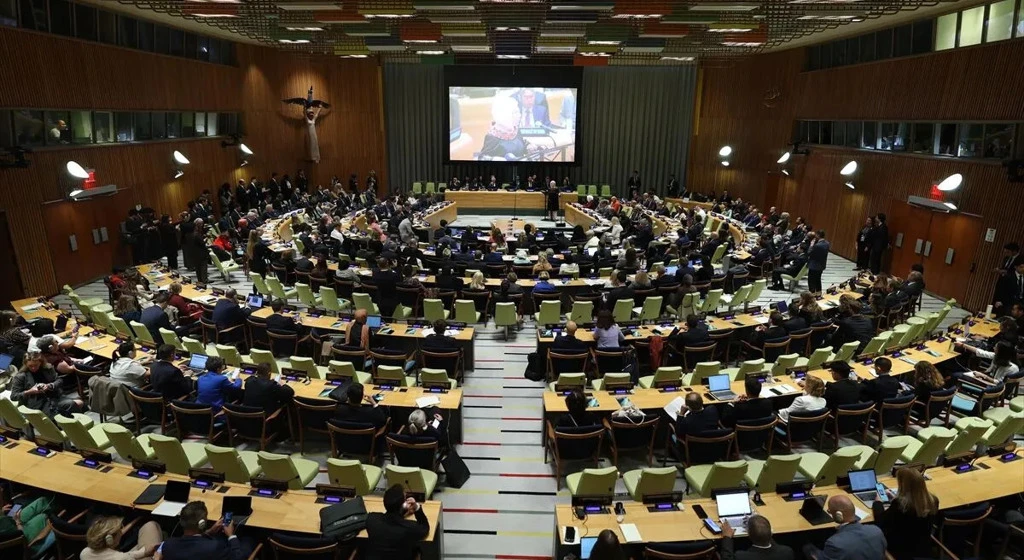
Speaking at the International Energy Agency’s High-Level Energy Transition Dialogue at the United Nations headquarters, Erdoğan called for an end to throwaway culture, wider use of durable products and production systems designed to prevent waste.
She was welcomed at the meeting by Türkiye’s Environment, Urbanization and Climate Change Minister Murat Kurum and IEA Executive Director Fatih Birol. Erdoğan thanked Birol and his team, UN representatives and other stakeholders involved in the international climate and energy agenda.
Energy policy must also address consumption
Erdoğan said the energy transition should not be limited to asking how countries can generate more clean power. She argued that policymakers must also examine why societies constantly require more energy and how unlimited consumption increases pressure on natural resources.
She pointed to recurring headlines about record temperatures, severe heat waves, wildfires, floods and destructive storms. Events that were once regarded as exceptional have become increasingly common as new temperature thresholds are crossed, she said.


Erdoğan linked this pattern to growing consumption, rising energy demand and greenhouse gas emissions. Nature, she added, is demonstrating through extreme weather that it can no longer carry the mounting pressure placed upon it.
Energy strategies should therefore examine how resources are used and how consumer choices shape environmental outcomes, she said. Increasing clean energy capacity remains essential, but reducing unnecessary demand and preventing waste must form part of the same transition.
Erdoğan called on governments, businesses and consumers to reconsider the assumption that expanding production alone can resolve the effects of the climate crisis.


Food waste also represents wasted energy
Erdoğan said humanity extracts and processes natural resources, consumes energy during production and then discards a significant share of what it produces.
Every discarded item contains energy, raw materials and human labour, she said. Waste should therefore be measured not only by the volume of material thrown away but also by the resources used throughout its life cycle.
According to figures cited by Erdoğan, food equivalent to approximately 5.8 trillion plates is wasted globally each year without being consumed. Discussions about food waste, she said, often overlook the energy used to grow, package, prepare, preserve, refrigerate and distribute that food.
Food loss also means the unnecessary use of water, agricultural land, transport capacity and labour. Erdoğan said this connection demonstrates why Zero Waste policies must be approached as part of energy and resource security rather than as a narrow waste-collection issue.
She noted that the UN’s International Day of Zero Waste highlights a different global concern each year, with food waste placed at the centre of the latest programme.
A call to abandon throwaway culture
Erdoğan cited research suggesting that 85% of people tend to buy more than they need. Excessive consumption, she argued, is not solely an economic or technical issue but is also linked to changes in society’s cultural and moral priorities.
A system built around products that are briefly used and quickly discarded creates constant demand for new raw materials, manufacturing capacity and energy, she said.
“Our primary task must be to move away from the throwaway culture shaped around single-use products.”
Erdoğan called for a sustainability culture centred on products that are durable, repairable and designed for long-term use. Such a shift, she said, would support public welfare while protecting fairness between present and future generations.
Manufacturers should consider the full life cycle of products rather than focusing only on production and sale, Erdoğan said. Goods can be designed to use fewer materials, last longer and generate less waste when their initial purpose ends.
She added that individual purchasing choices and industrial design standards must move in the same direction if the transition is to produce lasting results.
Nature offers a model for circular production
Erdoğan said production processes could be redesigned to prevent waste from being created in the first place. Materials that do become waste can be converted back into raw materials and returned to the economic system.
Under a circular economic model, products and components are reused, repaired or recycled rather than being removed from the system after a single period of use.
Erdoğan described nature as an effective school for circularity because natural systems do not produce permanent waste. Water, soil and air operate through continuous cycles, while the output of one living organism becomes an input for another.
The environmental problems accumulated under the linear model of extraction, production, consumption and disposal can only be addressed by learning to think in cycles, she said.
Erdoğan described Türkiye’s Zero Waste Project, launched in 2017, as an important roadmap for energy and resource security. The initiative has since developed into a broader international movement, she added.
Analyses of circular waste management suggest that stronger recovery and reuse systems could deliver substantial emissions reductions in the energy sector, Erdoğan said. She called for Zero Waste policies and energy planning to be developed together.
Türkiye sets 120,000-megawatt target for 2035
Türkiye is preparing for the transition by accelerating both Zero Waste programmes and clean energy investments, Erdoğan said.
She stated that Türkiye ranks fifth in Europe and 11th globally for installed renewable energy capacity. The country aims to increase its combined solar and wind capacity to 120,000 megawatts, or 120 gigawatts, by 2035.
Erdoğan said the target was not based solely on producing more clean electricity. Türkiye also intends to reduce losses, improve efficiency and limit resource waste across the energy system.
Circular waste management and renewable energy investments can reinforce one another, she said. Recovering materials reduces demand for energy-intensive extraction and manufacturing, while cleaner electricity lowers the emissions associated with recycling and industrial production.
Erdoğan described Zero Waste as one of the strongest pathways for achieving structural change from production through consumption.
She also said protecting the value of materials already in circulation could strengthen supply security and reduce dependence on newly extracted resources.
Zero Waste to feature on the COP31 agenda
Erdoğan said Türkiye wants to advance the Zero Waste approach through the COP31 action agenda when it hosts the climate conference in November.
She also recalled the second International Zero Waste Forum held in Istanbul in June. According to Erdoğan, the forum brought together 120 ministers and more than 7,000 participants from 183 countries.
The level of participation demonstrated that a waste-free future could become an achievable international objective when supported by common political will, she said.
Erdoğan stressed that climate and energy commitments must not remain on paper. Governments, international institutions, businesses and civil society organisations must translate them into measurable policies and projects.
Following her speech, participants moved to a round-table session. Attendees included Family and Social Services Minister Mahinur Özdemir Göktaş, Energy and Natural Resources Minister Alparslan Bayraktar, Council of Elders of the Organization of Turkic States Chairman Binali Yıldırım and Zero Waste Foundation President Samed Ağırbaş.
In a subsequent statement, Erdoğan said the effects of the climate crisis were being felt more deeply and that the growing burden on nature required a change in the way energy was understood.
Clean energy is critical for the future, she said, but it must be accompanied by an approach that protects resources and returns materials to productive use. Erdoğan expressed hope that the dialogue would contribute to a fair and liveable world for everyone.
WiseNewsPress.com
What's Your Reaction?
 Like
0
Like
0
 Dislike
0
Dislike
0
 Love
0
Love
0
 Funny
0
Funny
0
 Wow
0
Wow
0
 Sad
0
Sad
0
 Angry
0
Angry
0

Ahmet Taş is a journalist, editor and Turkey Office Manager of the Wise News Press Media Group. He works across news, digital media and international publishing, focusing on accurate, responsible and accessible journalism. He contributes to the development of media projects that bring important political, social and global developments to a wider international audience.














Comments (0)