



Turkey shifts focus as EU mixed signals strain relations
Recent comments by Ursula von der Leyen and exclusion from a Cyprus summit highlight EU-Turkey tensions, prompting Ankara to seek bilateral alliances.



By Yusuf İnan | Wise News Press
ANKARA, TÜRKİYE — Recent controversial remarks by European Commission President Ursula von der Leyen and Ankara's exclusion from a key leadership summit in Cyprus have sparked fresh debates over the future of Turkey-EU relations, driving Turkey to strengthen bilateral partnerships across Europe.
As the European Union grapples with internal divisions, shifting transatlantic security commitments, and mounting geopolitical pressures, these latest diplomatic friction points have forced Ankara to seek alternative avenues. Facing stalled accession talks and mixed signals from Brussels, Turkey is actively reinforcing its position within the broader European security architecture through independent strategic agreements, most notably with the United Kingdom.
The Von der Leyen crisis and mixed signals
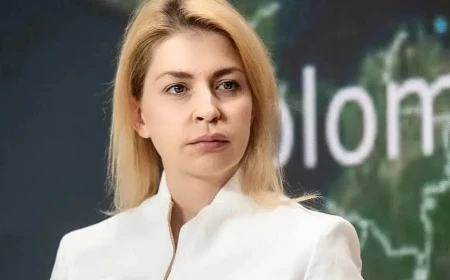
The latest wave of tension in Turkey-EU relations was triggered by a speech delivered by European Commission President Ursula von der Leyen in Hamburg on April 19. While expressing her support for EU enlargement, von der Leyen stated that Europe must complete its continent to avoid falling under "Russian, Turkish, or Chinese influence."
The grouping of Turkey alongside Russia and China caused immediate diplomatic blowback. Following intense reactions, the European Commission Spokesperson's Office issued a rapid correction, stating that Turkey remains an "undisputed partner in the region both economically and politically."
However, the damage was already done. According to Ayşe Yürekli, a Brussels-based EU analyst and Senior Advisor, these overlapping negative developments have severely impacted public perception. Speaking to DW Türkçe, Yürekli noted that the incident dragged pro-EU segments in Turkey—those who have long supported the accession journey—into a state of deep despair and disappointment.


Triple pressure on the European Union
Experts suggest that the current Turkish debate, which often revolves narrowly around whether the EU will ultimately accept Turkey as a member, misses the broader structural shifts happening within Europe. Yürekli emphasized that the EU is currently operating under a severe "triple pressure" that directly dictates its foreign policy, including its stance on Ankara.
The first major pressure point stems from the United States, particularly the signals of weakening American commitment to European security that have become more pronounced during US President Donald Trump's second term. The second is the intense economic competition originating from China's state-subsidized manufacturing model. Finally, the existential security threat posed by Russia's ongoing war against Ukraine has led to rapidly escalating defense costs across the continent.
Despite these overwhelming challenges, cooperation with Turkey remains a rational necessity for Europe. "The fundamental problem is political," Yürekli explained, adding that while many actors within the EU acknowledge the need for closer ties with Ankara, the deepening mutual distrust and unbridgeable gaps regarding European values prevent any meaningful strategic partnership from taking root.


Gradual re-engagement and political hurdles
Despite the political friction, there have been attempts at institutional reconciliation. A visit by EU Enlargement Commissioner Marta Kos to Ankara on February 6, 2026, generated a brief wave of optimism. During the talks, it was announced that the European Investment Bank (EIB), which had suspended its operations in Turkey in 2019, would gradually resume its activities.
This move is seen as a concrete reflection of a "gradual re-engagement" strategy, aimed at moving beyond the previously stalled positive agenda. Furthermore, ongoing discussions about integrating Turkey into the "Made in Europe" initiative are viewed as a highly positive development for supply chain integration. However, analysts warn that this process lacks a finalized framework and requires persistent lobbying by both the Turkish government and business organizations, as the European Parliament and the European Council will ultimately determine the outcome.
Exclusion from the Cyprus summit
Another major point of contention erupted last week during an informal EU leaders' summit held in Cyprus, which currently holds the EU Presidency. On the margins of the summit, a separate meeting was organized with leaders from Middle Eastern and Eastern Mediterranean countries, including Egypt, Syria, Jordan, Lebanon, and representatives from the Gulf Cooperation Council. Notably, Turkey was excluded from this gathering.
Diplomatic sources in Ankara confirmed that no invitation was extended to Turkey. Yürekli described Turkey's absence from a meeting concerning the Middle East as highly unfortunate, suggesting that the Greek Cypriot administration is leveraging its EU Presidency to maximize geopolitical gains following recent regional escalations, including Iranian missile strikes that impacted Southern Cyprus. By promoting a narrative of Nicosia as "Europe's last divided capital," the administration is actively attempting to isolate Ankara.
Divided approaches within the EU
The contradictory actions emanating from Europe highlight that the EU does not possess a monolithic stance regarding Turkey. Von der Leyen's remarks drew sharp criticism not only from Ankara but also from within the EU itself.
Nacho Sanchez Amor, the European Parliament's Turkey Rapporteur, dismissed von der Leyen's framing of Turkey alongside Russia and China as inconsistent and geopolitically flawed. Similarly, former European Council President Charles Michel criticized the statements, warning that Europe cannot strengthen itself through double standards.
These internal divisions reveal a multi-layered structure where the European Commission and the European Parliament often hold complementary but distinct views. Among the 27 member states, attitudes toward Turkey vary wildly, ranging from hardline opposition to a softer, dialogue-oriented approach.
New strategic partnerships and the UK model
While facing institutional bottlenecks with Brussels, Ankara has taken critical steps to bypass the deadlock. During a recent visit to the UK by Turkish Foreign Minister Hakan Fidan, the two nations signed a Strategic Partnership Framework Document. This agreement aims to accelerate cooperation in defense industries and deepen joint counter-terrorism efforts.
This strategic pivot demonstrates Turkey's determination to remain anchored in the European security architecture, even if not through formal EU channels. "While the EU faces structural limitations and defense constraints, Turkey is developing alternative channels," Yürekli noted. The UK, despite no longer being an EU member, remains a critical pillar of European security.
Turkey is replicating this model across the continent, having already established strong defense relations with EU members like Italy and Spain. In a further sign of expanding bilateral diplomacy, a massive 450-person delegation from Belgium, led by Queen Mathilde and Defense Minister Theo Francken, is scheduled to visit Turkey in mid-May, marking the first royal-level contact from Belgium in 14 years.
What's Your Reaction?
 Like
0
Like
0
 Dislike
0
Dislike
0
 Love
0
Love
0
 Funny
0
Funny
0
 Wow
0
Wow
0
 Sad
0
Sad
0
 Angry
0
Angry
0

Editor | Wise News Press — Delivering accurate, timely global news with integrity, insight, and editorial responsibility.


















Comments (0)