



Global military spending hits record as Turkey reaches $30B
Global military spending reached a record $2.9 trillion in 2025, with Turkey ranking 18th worldwide following a $30 billion defense budget.


By Ahmet Taş | Wise News Press
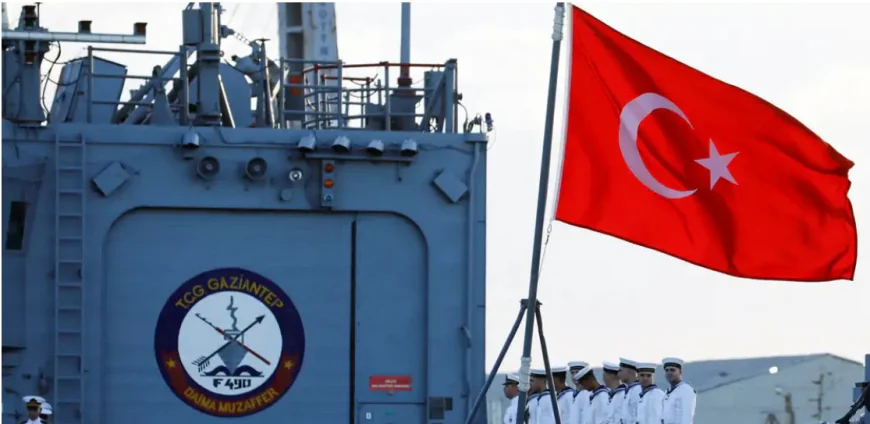
ANKARA, TÜRKİYE — Global military spending surged to an unprecedented $2.9 trillion in 2025, while Turkey's defense budget reached $30 billion, making it the 18th highest spender worldwide.
Driven by regional conflicts, ongoing wars in Europe and the Middle East, and Turkey's massive investments in its domestic defense industry, this historic escalation in military budgets reflects a profound shift in global security priorities. As governments redirect immense financial resources toward advanced weaponry, the economic burden on civilian sectors has reached its highest level in over a decade, signaling a long-term transformation in global resource allocation.
Turkey's domestic defense investments drive budget growth
Turkey has significantly accelerated its military investments, pushing its total defense expenditure to $30 billion in 2025. This figure represents a steady 7.2 percent increase compared to 2024, but a staggering 94 percent surge when compared to the country's defense budget in 2016. The expansion underscores Ankara's determination to establish a self-sufficient military infrastructure capable of supporting its strategic ambitions across multiple regions.
According to a report by DW detailing data from the Stockholm International Peace Research Institute (SIPRI), Turkey's ongoing cross-border military presence in Iraq and Syria, alongside its strategic deployment in Somalia, contributed to the rising costs. However, the primary catalyst for this financial leap was the state's massive capital injection into the domestic defense industry. The share of special funds established specifically to support Turkish defense manufacturing grew by 25 percent annually, ultimately accounting for a remarkable 22 percent of Turkey's entire military expenditure in 2025.
An 11-year streak of unprecedented global escalation
The dramatic increase in Turkey's budget mirrors a much larger international trend. Amid persistent wars in Europe and the Middle East, global military spending has risen for the 11th consecutive year. In 2025 alone, governments worldwide spent a combined $2.9 trillion on naval vessels, fighter jets, ballistic missiles, and other military hardware, marking the highest level of military spending recorded in human history.


Xiao Liang, a researcher at SIPRI's Military Expenditure and Arms Production Programme, noted that these unprecedented figures clearly illustrate how nations are aggressively responding to ongoing wars, heightened geopolitical tensions, and global insecurity. The overlapping crises in Ukraine, Gaza, and Sudan have severely deepened global instability. Because these crises remain unresolved and many nations have already locked in long-term defense procurement plans, Liang emphasized that this upward trajectory is highly likely to persist through 2026 and beyond.
Europe arms itself at Cold War levels amid Russian threat
A substantial portion of the global surge in 2025 originated in Europe. The continent's total defense spending skyrocketed by 14 percent, reaching a massive $864 billion. Russia's full-scale invasion of Ukraine in early 2022 fundamentally and irreversibly altered the security calculations of European nations. Numerous European governments are now operating under the assumption that Russia's military ambitions could pose a direct, existential threat beyond Ukrainian borders, prompting a frantic race to rebuild depleted armies and deter potential aggression.
While the massive budgets of Russia and Ukraine were the initial drivers of this European surge, the focus has drastically shifted toward Central and Western Europe. As nations in these regions finalize their armament and procurement strategies, Europe is experiencing its highest annual military growth since the end of the Cold War. Data reveals radical budgetary shifts across the continent, with Spain increasing its defense budget by 50 percent, Poland by 23 percent, and Italy by 20 percent.


Germany transforms its constitution to lead defense
Among European nations, Germany emerged as the most aggressive spender in 2025. The German federal government expanded its defense budget by 24 percent to $114 billion, solidifying its position as the top military spender in Europe and the fourth largest in the world.
In a historic shift, Germany's military spending reached 2.3 percent of its gross domestic product (GDP), surpassing the NATO target of 2 percent for the first time since 1990. To finance this monumental buildup, the German parliament implemented sweeping changes to the country's strict fiscal rules, officially exempting defense spending from the constitutionally mandated debt brake. This financial mobilization reflects deep anxieties over the Russian threat and growing uncertainty regarding the United States' long-term commitment to European security, particularly following pressure from U.S. President Donald Trump, who recently pushed NATO to raise its GDP spending target from 2 percent to 5 percent.
US spending dips temporarily while Middle East costs rise
In a stark contrast to the European and Asian trends, the United States actually reduced its military spending in 2025. Washington allocated $954 billion to defense, representing a 7.5 percent decrease from the previous year. This temporary decline was primarily caused by the U.S. Congress, which, unlike the preceding three years, failed to approve any new military assistance packages for Ukraine in 2025 amid domestic political gridlock.
Despite this dip, the U.S. comfortably remains the world's supreme military spender. Experts also warn that this reduction is merely a blip. The newly approved 2026 federal budget points to another massive increase. Given the escalating wars in the Middle East and mounting tensions in the Asia-Pacific, the slowdown will be short-lived. Demonstrating the immense financial drain of modern warfare, the Pentagon reported that just the first six days of direct conflict with Iran cost the United States $11.3 billion.
China's continuous expansion triggers an Asian arms race
In Asia, China maintained its position as the world's second-largest military spender, recording an unbroken 31-year streak of budget increases—the longest of any country tracked by SIPRI. Beijing boosted its military expenditure by 7.4 percent in 2025, aggressively pursuing its strategic mandate to fully modernize its armed forces by 2035. Last year, the Chinese military conducted extensive tests of new sixth-generation fighter jet prototypes and moved closer to deploying its nuclear-capable H-20 stealth bomber.
China's rapid militarization has triggered severe regional repercussions. Heightened frictions with neighboring countries in contested waters have fueled a prolonged arms race involving Japan, Taiwan, and the Philippines. Furthermore, shifting alliance dynamics have placed immense pressure on U.S. allies like Australia, Japan, and Taiwan to drastically increase their defense spending and achieve military self-reliance. Meanwhile, India increased its defense budget by 8.9 percent to $92.1 billion, becoming the world's fifth-largest spender. This surge was driven by tensions with China and a 2025 border war with Pakistan, a conflict that saw both nations invest heavily in combat aviation and advanced drone warfare.
The heavy economic burden of the modern arms race
When military spending is measured as a proportion of a country's economic output, it reveals exactly how much of a society's wealth is being diverted away from civilian needs and channeled into defense. This "military burden" reached an estimated 2.5 percent of the global GDP in 2025, the highest level recorded since the 2009 global financial crisis. Governments are not just spending more in absolute terms; they are actively sacrificing larger portions of their national economic output to expand their armed forces.
The consequences of this sweeping transformation extend far beyond military strategy and geopolitics. Highlighting the severe societal costs of the modern arms race, Liang issued a stark warning regarding the future:
"Governments may cut social services or development aid. Therefore, the issue is not limited solely to wars and weapons. This situation will leave profound impacts across societies as a whole."
What's Your Reaction?
 Like
0
Like
0
 Dislike
0
Dislike
0
 Love
0
Love
0
 Funny
0
Funny
0
 Wow
0
Wow
0
 Sad
0
Sad
0
 Angry
0
Angry
0

Editor | Wise News Press — Delivering accurate, timely global news with integrity, insight, and editorial responsibility.



















Comments (0)