



VSD symptoms in children: How can a hole in the heart be detected?
VSD in children may cause rapid breathing, feeding fatigue, sweating and poor weight gain, while small heart defects may produce no symptoms.



By Ahmet Taş | Wise News Press
ISTANBUL, TÜRKİYE — Ventricular septal defect, one of the most common congenital heart conditions in children, may cause rapid breathing, feeding difficulties, excessive sweating and poor weight gain, particularly during infancy.
Known as VSD, the condition involves an opening in the wall separating the heart’s right and left ventricles. Its effects vary according to the size and location of the opening, the amount of blood passing through it and the resulting strain on the heart and lung circulation.
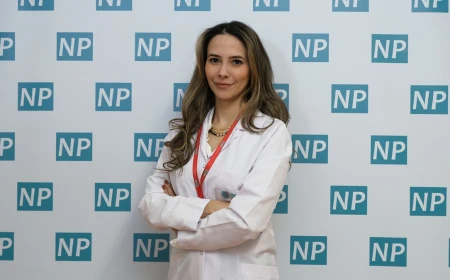
Professor İbrahim Cansaran Tanıdır, a pediatric cardiology specialist, says small VSDs may cause no noticeable symptoms and can sometimes be discovered only after a heart murmur is detected during a routine examination. Larger defects, however, may increase the heart’s workload and lead to significant circulatory problems.
What is a ventricular septal defect?
A ventricular septal defect is a congenital opening in the septum, the muscular wall that separates the heart’s two lower pumping chambers. It is one of several congenital conditions commonly described as a “hole in the heart.”
In a healthy heart, the left ventricle pumps oxygen-rich blood to the body, while the right ventricle sends oxygen-poor blood to the lungs. When a VSD is present, some blood from the higher-pressure left ventricle may pass through the opening into the right ventricle.
This abnormal blood flow can send more blood than usual to the lungs. In children with a large VSD, the heart may have to work harder to manage the increased volume of blood.
If a significant defect remains untreated, the additional workload may enlarge the heart chambers and raise pressure in the blood vessels supplying the lungs. The severity of these changes depends on the anatomy of the defect and the amount of blood flowing through it.
What are the symptoms of VSD in babies?
Babies with a large VSD may appear healthy immediately after birth. Symptoms can become more noticeable during the first weeks of life as resistance in the lung blood vessels falls and blood flow through the opening increases.
Signs that may require evaluation include:
- Breathing faster or harder than usual
- Becoming tired while breastfeeding or bottle-feeding
- Frequently pausing during feeding
- Excessive sweating, particularly around the head and face
- Taking unusually long to finish a feed
- Failing to gain weight as expected
- Delayed growth and development
- Irritability or reduced energy
- Repeated respiratory infections
Professor Tanıdır emphasizes that feeding difficulties and inadequate weight gain in babies should not be dismissed, particularly when they occur together with rapid breathing or excessive sweating.
None of these symptoms alone confirms VSD. Respiratory infections, anemia, feeding disorders and other medical conditions may produce similar signs. A pediatrician or pediatric cardiologist must evaluate the child before a diagnosis can be made.
The American Heart Association also notes that babies with a large VSD may breathe faster, experience difficulty feeding and fail to gain weight as expected. A small VSD, by contrast, may cause no symptoms other than a heart murmur heard through a stethoscope.
Symptoms may differ in older children
Many children with a small VSD remain completely free of symptoms. They may play, attend school and participate in everyday activities without any obvious limitation. In such cases, the defect is often identified after a doctor detects a heart murmur during a routine examination.
Children with a larger defect affecting heart and lung circulation may tire more quickly, struggle during physical activity, experience shortness of breath or fall behind their peers in growth and development.
The absence of symptoms does not necessarily mean that the opening is small. Similarly, the loudness of a heart murmur cannot by itself determine the size or clinical importance of a VSD.
A child’s condition must therefore be assessed through a combination of physical examination, echocardiography and clinical follow-up.
Parents should seek urgent medical assistance if a child develops severe breathing difficulty, bluish lips or tongue, an inability to feed, unusual drowsiness or changes in consciousness. These signs are not specific to VSD, but they may indicate a serious heart or respiratory problem.
How is VSD diagnosed?
Suspicion of VSD often begins when a pediatrician hears a heart murmur during an examination. A murmur is an additional sound produced by turbulent blood flow through or around the opening.
Echocardiography is the main diagnostic test. This non-invasive ultrasound examination allows doctors to assess:
- The size and precise location of the opening
- The direction and volume of blood flow
- Whether the heart chambers have become enlarged
- The function of the heart valves
- Signs of increased pressure in the lung arteries
- Other congenital heart abnormalities that may be present
Depending on the child’s condition, doctors may also use an electrocardiogram, chest X-ray, oxygen saturation measurement or advanced cardiac imaging.
Cardiac catheterization is not required for every child with VSD. It may be used when doctors need more detailed information about pressure and blood flow or when a catheter-based closure procedure is being considered.
Does every VSD need to be closed?
Not every ventricular septal defect requires an operation or catheter procedure. Small defects that do not place additional strain on the heart or affect a child’s development may only require regular pediatric cardiology appointments.
Some small VSDs become smaller or close naturally as the child grows. The likelihood of spontaneous closure depends partly on the location and anatomy of the opening.
Medication may be prescribed to control symptoms of heart failure in children with a large VSD. These medicines can reduce fluid accumulation and ease the heart’s workload, but they do not close the anatomical opening.
Closure may be recommended when the defect causes significant enlargement of the heart, increased pressure in the lung arteries, impaired growth, persistent symptoms or damage to a heart valve.
Selected VSDs can be closed through a catheter procedure. A thin catheter is introduced through a blood vessel, usually in the groin, and guided to the heart. A specially designed device is then positioned across the opening.
However, not every VSD is suitable for catheter closure. The defect’s size and location, its proximity to the heart valves and electrical conduction system, and the presence of additional heart abnormalities must all be considered.
Surgical closure may be recommended when the defect is very large, located too close to critical structures or accompanied by other congenital heart conditions. Treatment decisions should be made jointly by pediatric cardiology and congenital heart surgery teams.
Why early evaluation matters
A large VSD that significantly increases blood flow to the lungs may eventually cause high pressure and permanent damage in the pulmonary blood vessels if it is not evaluated and treated at the appropriate time.
Early diagnosis does not mean that every child will need surgery. Its purpose is to distinguish small defects that can safely be monitored from larger openings that require medical treatment or intervention.
Follow-up schedules are determined individually. Cardiologists consider the defect’s size, the amount of blood passing through it, its effects on the heart chambers, pressure in the lung circulation and the child’s growth.
Parents should discuss persistent feeding difficulties, rapid breathing, excessive sweating, poor weight gain or reduced exercise tolerance with a doctor. Timely pediatric cardiology assessment can help identify the underlying cause and establish the safest plan for each child.
This article is intended for general information only and does not replace medical examination, diagnosis or an individualized treatment plan.
WiseNewsPress.com
What's Your Reaction?
 Like
0
 Dislike
0
 Love
0
 Funny
0
 Wow
0
 Sad
0
 Angry
0

Ahmet Taş is a journalist, editor and Turkey Office Manager of the Wise News Press Media Group. He works across news, digital media and international publishing, focusing on accurate, responsible and accessible journalism. He contributes to the development of media projects that bring important political, social and global developments to a wider international audience.



















Comments (0)