



How will Democratic control of Congress reshape Trump’s trade policy?
Democratic control of Congress will constrain Trump’s agenda but may not end his tariffs, giving US trading partners more time and negotiating leverage.


By Ahmet Taş | Wise News Press
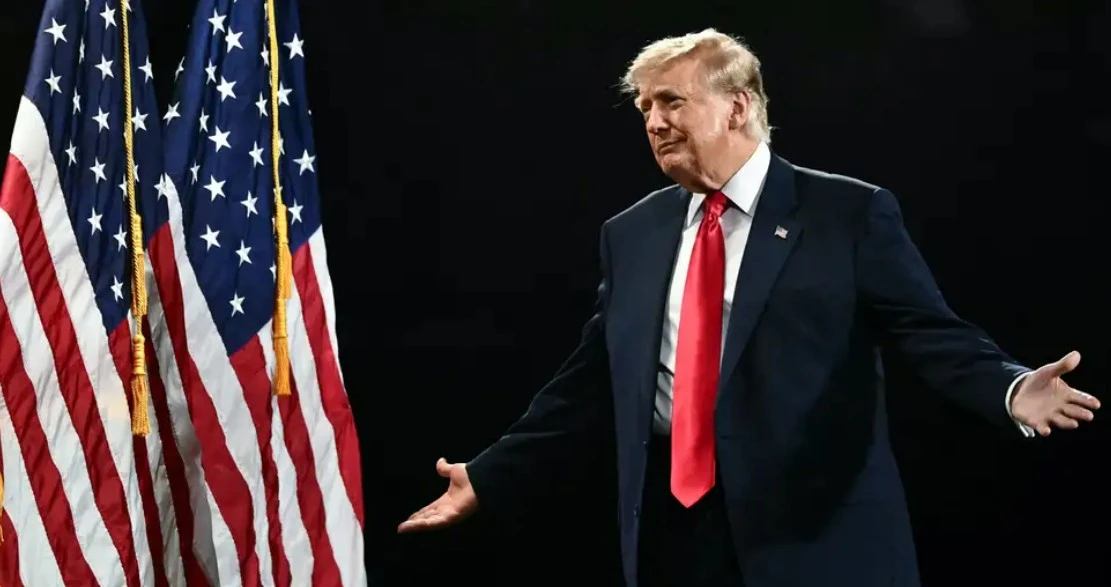
WASHINGTON, United States — Democratic victories in both chambers of Congress will restrict President Donald Trump’s legislative agenda, but they are unlikely to bring an immediate end to his tariff-driven global trade policy.
The new balance of power will increase congressional scrutiny of trade agreements, foreign investment commitments, artificial intelligence projects and relations with China. Trump, however, retains his veto and significant executive authority over tariffs.
Democrats take control of both chambers
Democrats won majorities in both the Senate and House of Representatives in the November 3, 2026, midterm elections, taking control of Congress from Republicans.
The party crossed the 51-seat threshold required for a Senate majority and the 218-seat mark needed to control the House. Democratic candidates also secured victories in traditionally Republican states, including Texas, South Carolina, Kansas, Iowa, North Carolina and Ohio.
According to an Associated Press voter survey, concerns over high prices, the war with Iran, the cost of living and government corruption played significant roles in the results.
About three-quarters of voters described the US economy as poor or “not so good,” while roughly eight in 10 said inflation had caused severe or moderate financial hardship for their households.
The outcome will make it considerably more difficult for Trump to move major legislation through Congress during the final two years of his presidency. Democrats will also gain control of committees that can demand documents, call administration officials to hearings and investigate executive decisions.
Veto power raises the risk of gridlock
Democratic control of Congress does not mean that the White House will become powerless. Trump can veto legislation passed by the House and Senate.
Before the election, Trump said he was prepared to use his veto if Democrats gained control and embraced the description “Mr. Veto.” He argued that repeated vetoes could eventually force Democrats to negotiate with the White House.
Congress can override a presidential veto, but doing so requires a two-thirds majority in both chambers. Democrats are not expected to control enough seats to meet that threshold without substantial Republican support.
The result could be an extended period of political gridlock. Budget legislation, tax measures, energy policy and changes to US trade law may become the subject of lengthy negotiations between Congress and the administration.
Trump could also rely more heavily on executive actions if lawmakers block his domestic agenda. Trade and immigration were already among the policy areas reportedly considered for additional executive action before the election.
Congress cannot automatically dismantle Trump’s tariffs
The US Constitution gives Congress authority to regulate foreign commerce. Over time, however, lawmakers have delegated substantial tariff powers to the president through several trade statutes.
In 2026, the Trump administration invoked Section 122 of the Trade Act of 1974 to impose temporary import duties, arguing that the measure was necessary to address international payments problems and rebalance US trade.
The administration has also used other delegated authorities to impose tariffs on national security, unfair trade and economic emergency grounds.
A Democratic Congress could introduce legislation to cancel specific tariffs or limit the president’s trade authority. Committees could also investigate how the measures have affected consumer prices, farmers, manufacturers and export-dependent communities.
Any broad tariff rollback passed by Congress would still face a presidential veto. Unless enough Republicans joined Democrats to override that veto, Trump could continue using the tariff authorities already available to the executive branch.
Congressional control will therefore change oversight and political pressure more quickly than it changes tariff rates themselves.
Trading partners may gain breathing room
Economists and political analysts told Reuters that the election results could give US trading partners more reason to delay or reconsider investment commitments made under threat of higher tariffs.
Trump has used tariffs not only to protect domestic production but also to pressure foreign governments into investing in the United States, purchasing American products and changing national regulations.
With Democrats controlling Congress, some governments may expect closer scrutiny of those arrangements. They may choose to wait and see whether lawmakers challenge the agreements, restrict funding or require additional transparency.
Heo Yoon, an economics professor at Sogang University in Seoul, said Democrats appeared to view some investment commitments as having been imposed on US allies. Countries may consequently feel less pressure to implement them quickly.
The change does not eliminate the risk of renewed tariff threats. Trump could increase pressure on allies to demonstrate that his trade strategy is producing investment and jobs inside the United States.
Japan and South Korea face major investment decisions
Japan and South Korea, two of Washington’s closest allies in Asia, made major US investment commitments under trade arrangements negotiated with the Trump administration.
Japan pledged $550 billion for strategic US industries. The investment framework covers sectors including semiconductors, pharmaceuticals, metals, critical minerals, shipbuilding, energy, artificial intelligence and quantum technology.
South Korea committed $350 billion. Of that amount, $150 billion was designated for the US shipbuilding industry, while another $200 billion was intended for sectors considered important to US economic and national security.
The arrangement anticipated annual South Korean investment of no more than $20 billion, with projects requiring presidential approval. Washington later expressed dissatisfaction with the pace of implementation.
Ban Kil-joo, a professor at the Korea National Diplomatic Academy, said increased congressional scrutiny could give Seoul more time to assess controversial projects.
That could be particularly important for proposals such as the Alaska LNG project. Trump has said South Korea agreed to help finance the project, while Seoul has disputed that characterization.
Kazuhiro Maeshima, a professor of US politics at Sophia University in Tokyo, cautioned that the tariff dispute was not over. If Japan moves too slowly on its commitments, demands for additional tariffs could return.
China could gain leverage, but also face tighter scrutiny
Analysts are divided over how the congressional shift will affect US-China trade negotiations.
Some argue that Trump’s domestic political weakness will give Beijing greater leverage. Chinese officials could delay concessions while monitoring the confrontation between the White House and Congress.
A fragile trade truce between the United States and China is due to expire in January. Beijing may calculate that Trump has less political room to escalate a trade war that could raise prices for American consumers.
Democratic control, however, does not necessarily mean a softer US approach toward China. Lawmakers are likely to support tighter controls on advanced technology exports and greater scrutiny of semiconductor, artificial intelligence and critical-mineral supply chains.
Alicia Garcia-Herrero, Natixis’ chief Asia-Pacific economist, said Democrats were unlikely to give Trump unrestricted freedom in negotiations with Beijing. Congressional oversight could limit his ability to offer concessions affecting AI and other high-growth industries.
Artificial intelligence projects may face new oversight
The change in Congress could also affect Trump’s plans for major investments in artificial intelligence and data centers.
Democratic lawmakers may seek stricter scrutiny of electricity and water consumption, environmental effects, data protection, public subsidies and the impact of data-center construction on local communities.
Permitting and federal funding decisions could consequently take longer. That would create another source of uncertainty for technology companies planning large AI infrastructure projects.
A broad halt to AI investment remains unlikely. Competition with China has led both major US parties to treat semiconductors, computing capacity and artificial intelligence as strategic priorities.
The main congressional disputes may therefore concern how projects are financed, where they are built and what environmental or regulatory conditions companies must meet.
Has the global economic balance really changed?
The midterm result does not create an immediate shift in global economic power. Trump retains substantial executive authority and can continue using tariffs as a negotiating tool.
Democratic control of Congress nevertheless raises the political cost of that strategy. The administration will face more hearings, budget disputes, document requests and challenges to the legal basis of its trade decisions.
For Japan, South Korea, India and other trading partners, the most significant change may be additional time. Governments can slow negotiations or investment commitments while observing how the struggle between Congress and the White House develops.
China may also seek to exploit divisions in Washington, although it could simultaneously face stronger congressional restrictions on technology and strategic supply chains.
Trump’s global trade power has therefore not disappeared. It has become more contested, more closely supervised and potentially more unpredictable.
WiseNewsPress.com
What's Your Reaction?
 Like
0
 Dislike
0
 Love
0
 Funny
0
 Wow
0
 Sad
0
 Angry
0

Ahmet Taş is a journalist, editor and Turkey Office Manager of the Wise News Press Media Group. He works across news, digital media and international publishing, focusing on accurate, responsible and accessible journalism. He contributes to the development of media projects that bring important political, social and global developments to a wider international audience.














Comments (0)