



Aliyev absent as Turkic summit backs Ankara roadmap and Russia proposal
Türkiye assumed the OTS chairmanship at the Ankara summit, where leaders adopted a 163-point declaration and Tokayev proposed a role for Russia.


By Ahmet Taş | Wise News Press
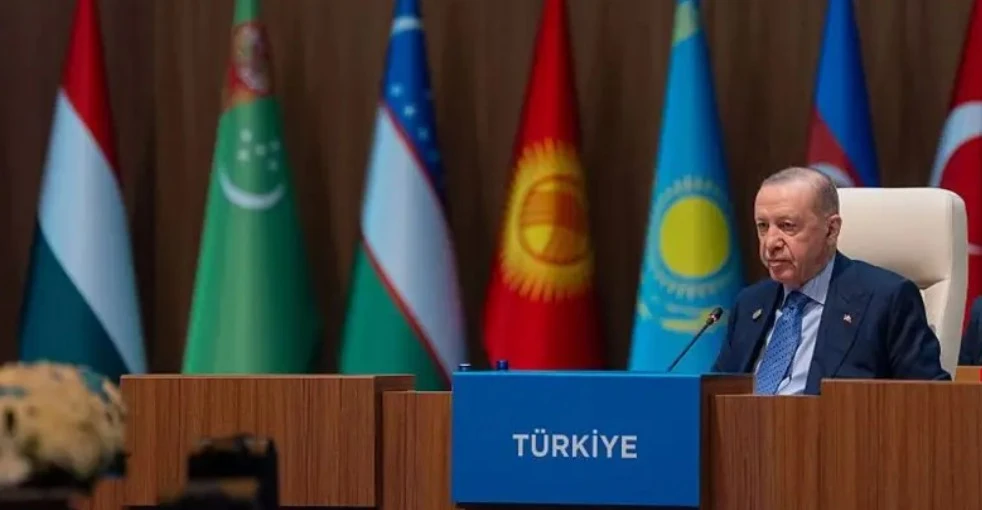
ANKARA, TÜRKİYE — The 13th Organization of Turkic States summit concluded in Ankara with a 163-point declaration, Türkiye’s assumption of the chairmanship and a Kazakh proposal for possible Russian participation.
Held under the theme “The Turkic Century: Unity in Language, Thought and Deed,” the summit set out cooperation goals covering transport, energy, security, digital trade, cybersecurity and space technology. Azerbaijani President Ilham Aliyev’s absence, however, overshadowed much of the political agenda.
Aliyev’s absence reshaped the political agenda
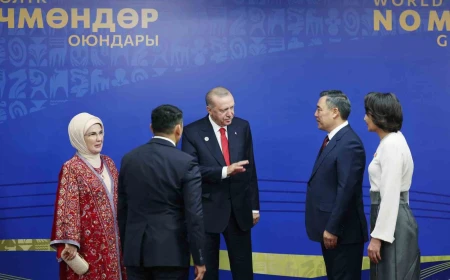
The summit brought together Turkish President Recep Tayyip Erdoğan, Kazakh President Kassym-Jomart Tokayev, Uzbek President Shavkat Mirziyoyev and Kyrgyz President Sadyr Japarov.
Observer states were represented by Turkmen President Serdar Berdimuhamedov and Turkish Republic of Northern Cyprus President Tufan Erhürman.
Azerbaijan was represented by Foreign Minister Jeyhun Bayramov rather than President Ilham Aliyev. It was the first time Azerbaijan had not been represented at the presidential level at an OTS leaders’ summit.
Azerbaijani media attributed Aliyev’s absence to previously scheduled engagements, including the closing and award ceremony of the FIFA Under-15 World Cup and Festival in Baku. No direct statement presenting a political reason for the decision was issued by the Azerbaijani presidency.
His absence was nevertheless widely interpreted in the context of recent disagreements between Ankara and Baku. A school uniform regulation in Azerbaijan and criticism from Türkiye over restrictions affecting the wearing of headscarves had generated political tension.
Baku accused outside actors of interfering in Azerbaijan’s domestic affairs, while more than 30 Turkish nationals were reportedly barred from entering the country following critical social media posts.
Erdoğan had personally invited Aliyev to the summit during a telephone conversation on Oct. 21. Azerbaijan’s decision to send its foreign minister instead therefore attracted attention beyond the officially stated scheduling explanation.
Erdoğan stresses unity within the Turkic world
Erdoğan did not directly address Aliyev’s absence during his opening speech. His message on unity, however, was interpreted as an indirect reference to the disagreements between Türkiye and Azerbaijan.
“There is no room for separation, division or dispute in the family photo of the Turkic world.”
The Turkish president said the national sensitivities of every member state should be respected and that common interests should be expanded through a mutually beneficial approach.
Erdoğan also reiterated Türkiye’s support for the peace process between Azerbaijan and Armenia. He said Ankara would continue contributing to efforts aimed at achieving lasting peace and stability in the South Caucasus.
Following the summit, Erdoğan held a separate meeting with Azerbaijani Foreign Minister Bayramov. Although detailed information about the discussion was not released, the meeting indicated that diplomatic communication between Ankara and Baku remained open.
Ankara Declaration sets out a 163-point roadmap
The summit’s main formal outcome was the adoption of the 163-point Ankara Declaration.
The document expressed the member states’ intention to strengthen the OTS as an increasingly influential platform contributing to regional and international peace, stability and prosperity.
Member states agreed to continue regular political and security consultations on regional and international issues of common interest. The declaration also welcomed meetings involving national security council secretaries and heads of defense industry institutions.
The participants called for accelerated efforts to obtain observer status for the OTS at the United Nations General Assembly and the Organization of Islamic Cooperation.
The summit also resulted in a change in the organization’s senior management. Uzbek diplomat Mirvokhid Azimov was appointed as the next OTS secretary-general, succeeding Kubanychbek Omuraliev, who had held the position since November 2022.
Leaders agreed that the next regular summit would be hosted by Uzbekistan in 2027. Kyrgyzstan’s proposal to hold an informal OTS summit in the same year was also welcomed.
Transport, energy and digital cooperation take priority
The Ankara Declaration placed the development of the Middle Corridor and Trans-Caspian transport connections among the organization’s principal economic priorities.
The member states aim to strengthen routes linking Central Asia, the South Caucasus and Europe while reducing logistical barriers and expanding regional trade.
Azerbaijani Foreign Minister Bayramov said his country would continue supporting the Middle Corridor and the Zangezur Corridor. He argued that the geographical position, economic potential and energy resources of the Turkic states offered significant opportunities in transport, trade and energy security.
Digital cooperation was another prominent subject at the summit. Erdoğan proposed the creation of a common digital trade platform and a shared Turkic large language model covering the Oghuz, Kipchak and Karluk language groups.
The declaration called for progress toward a cybersecurity agreement and further consultations on the establishment of an OTS Cybersecurity Council.
Leaders also welcomed the completion of a joint 12U CubeSat and a framework agreement intended to deepen cooperation in the space industry.
These initiatives suggested that the organization’s agenda was moving beyond political and cultural coordination toward practical projects in technology, data infrastructure and commercial connectivity.
Declaration reiterates support for Turkish Cypriots
Türkiye again raised the status and international engagement of the Turkish Cypriot community during the summit.
Erdoğan said he expected OTS members to increase their contacts with the Turkish Republic of Northern Cyprus, which participates in the organization as an observer.
The Ankara Declaration stated that the Cyprus issue should be resolved on the basis of the existing realities on the island. It also described Turkish Cypriots as an inseparable part of the Turkic world.
However, Kazakhstan, Kyrgyzstan, Uzbekistan and Turkmenistan have developed diplomatic relations with the Republic of Cyprus. Their efforts to strengthen relations with the European Union may limit their willingness to take major diplomatic steps concerning Northern Cyprus.
It therefore remains uncertain whether the declaration’s political language will lead to concrete changes in the international engagement of the Turkish Cypriot administration.
Tokayev proposes possible role for Russia
One of the summit’s most notable proposals came from Kazakh President Kassym-Jomart Tokayev.
Tokayev said Russia could participate in the activities of the organization through the OTS Plus format or potentially receive observer status.
He argued that Russia maintained centuries-old relations with the Turkic world and was home to numerous Turkic peoples. According to Tokayev, Russian participation could increase the international standing and influence of the organization.
No decision was adopted in Ankara to admit Russia as an observer or include it in the organization. Tokayev’s remarks were recorded as a political proposal from Kazakhstan rather than an agreed OTS policy.
The proposal could initiate a wider debate about the organization’s strategic direction. The OTS has often been viewed as a platform enabling Turkic states to diversify their international relations and reduce dependence on major powers, including Russia and China.
Bringing Russia into the organization could therefore prove controversial among those who support the development of an autonomous platform centered on the shared interests of Turkic states.
Türkiye assumes the OTS chairmanship
Türkiye formally took over the rotating OTS chairmanship from Azerbaijan at the conclusion of the summit.
During its chairmanship, Ankara is expected to prioritize institutional development, transport connectivity, digital transformation, energy security and political coordination among the Turkic states.
Bayramov emphasized that Azerbaijan would continue its active participation in the organization. His statement appeared intended to demonstrate that Aliyev’s absence did not signal Baku’s withdrawal from OTS cooperation.
Azerbaijan highlighted the achievements of its previous chairmanship, including initiatives concerning regional peace, financial monitoring, central bank cooperation, transport projects and energy connectivity between Central Asia and Europe.
The next important test for Ankara-Baku relations may come at the COP31 leaders’ summit scheduled to take place in Antalya on Nov. 11–12.
Erdoğan invited the leaders of the Turkic states to attend the climate summit. Whether Aliyev participates is expected to be closely watched as an indication of the direction of relations between Türkiye and Azerbaijan.
The Ankara summit produced an extensive roadmap for transport, energy, security and technology cooperation. Yet Aliyev’s absence and Tokayev’s Russia proposal ensured that questions about political unity and the organization’s strategic direction remained at the center of the agenda.
WiseNewsPress.com
What's Your Reaction?
 Like
0
 Dislike
0
 Love
0
 Funny
0
 Wow
0
 Sad
0
 Angry
0

Ahmet Taş is a journalist, editor and Turkey Office Manager of the Wise News Press Media Group. He works across news, digital media and international publishing, focusing on accurate, responsible and accessible journalism. He contributes to the development of media projects that bring important political, social and global developments to a wider international audience.









Comments (0)