



New approaches to breast cancer surgery: More personalized procedures
New breast cancer surgery approaches combine personalized planning, oncoplastic techniques and limited lymph node procedures to preserve healthy tissue.



By Ahmet Taş | Wise News Press
ANKARA, TÜRKİYE — Breast cancer surgery increasingly uses personalized planning, tissue-preserving techniques and limited lymph node procedures to maintain oncological safety while reducing unnecessary tissue loss and supporting patients’ quality of life.
Advances in imaging, surgical technology and understanding of tumor biology have transformed the objectives of breast cancer operations. Modern breast surgery is no longer focused solely on removing malignant tissue. It also aims to preserve as much healthy tissue as possible, avoid unnecessary procedures and reduce the long-term effects of treatment.
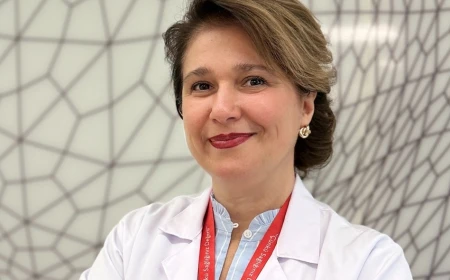
Professor Ebru Ayvazoğlu Soy, a specialist in general surgery, says the choice of surgical method should reflect not only the stage of the disease but also the tumor’s biological characteristics, its location within the breast and the individual needs of the patient.
New approaches allow more limited procedures for some patients, while treatment administered before surgery can alter the extent of the planned operation in others. However, not every technique is suitable for every patient, and surgical decisions must remain based on a comprehensive medical assessment.
Breast cancer surgery becomes more personalized
Breast cancer is not a single, uniform disease. Two tumors of the same size may behave differently because of their distinct biological characteristics and may therefore require different treatment plans.
Hormone receptor status, HER2 status, tumor grade and other pathological characteristics play an important role in treatment planning. Before surgery, doctors assess the extent of the tumor within the breast, the condition of the lymph nodes in the armpit and the patient’s general health.
Imaging methods are used to identify the location and distribution of the disease. Additional examinations may be conducted when necessary. The results help determine the extent of the operation, whether breast-conserving surgery is possible and what type of intervention may be required in the armpit.
Treatment planning may involve specialists in general surgery, medical oncology, radiation oncology, radiology, pathology and, when required, plastic surgery. This multidisciplinary approach helps determine whether systemic treatment should be given before surgery and which treatments may be necessary after the operation.
For some patients, surgery is the first stage of treatment. Others may initially receive chemotherapy or another systemic treatment. Soy stresses that a breast cancer operation should be viewed as an important part of the overall treatment process rather than as an isolated surgical procedure.
Oncoplastic surgery combines cancer treatment and breast reshaping
Oncoplastic breast surgery includes techniques designed to preserve or reshape the breast while malignant tissue is removed.
Traditional breast-conserving surgery can leave a visible loss of volume in the area from which the tumor was removed. Changes in shape may become more noticeable when a relatively large tumor is excised or when a wide section of tissue must be removed from a prominent part of the breast.
Oncoplastic techniques aim to reduce these deformities by rearranging the remaining breast tissue. Breast reduction methods may be used in some patients, while surrounding tissue may be repositioned to restore volume in others.
These techniques can be particularly useful when a wider area of tissue must be removed during breast-conserving surgery. They may allow selected patients to undergo breast-conserving treatment while still meeting the requirements of cancer surgery.
The use of oncoplastic methods does not alter the fundamental priority of removing the cancer safely. Clear surgical margins, pathological evaluation of the removed tissue and the appropriate use of additional treatments remain essential.
Another objective is to support body image and quality of life after treatment. However, cosmetic outcomes may differ between patients, and the same appearance cannot be guaranteed in every case.
Sentinel lymph node biopsy can limit armpit surgery
Lymph nodes in the armpit play an important role in assessing the regional spread of breast cancer. In the past, the removal of numerous lymph nodes was widely used for many patients.
Today, sentinel lymph node biopsy allows more limited surgery in appropriate cases. A sentinel lymph node is the first lymph node, or group of nodes, reached by lymphatic drainage from the breast.
Removing and examining these nodes can provide information about whether cancer has spread to the armpit. If the findings are suitable, the patient may not need a more extensive removal of lymph nodes.
A more limited procedure can help reduce complications associated with armpit surgery. These may include arm swelling, restricted movement and changes in sensation.
Arm swelling, known as lymphedema, can become a long-term problem for some patients. Avoiding unnecessary removal of lymph nodes may help lower this risk when a limited operation is considered medically sufficient.
Sentinel lymph node biopsy is not adequate for every patient. The amount of disease in the lymph nodes, systemic treatments administered before surgery and the planned radiotherapy must be considered together when determining the extent of armpit surgery.
The current approach aims to achieve sufficient cancer control with the least extensive intervention necessary.
Treatment before surgery may change the planned operation
Neoadjuvant therapy refers to systemic treatment administered before breast cancer surgery. Its objectives include reducing the size of the tumor and observing how the disease responds to medication.
Preoperative systemic treatment may be an important option in certain HER2-positive or triple-negative breast cancers. If the tumor becomes significantly smaller, some patients initially considered for mastectomy may be reassessed for breast-conserving surgery.
The response to treatment also provides information about the sensitivity of the tumor to the medications used. Pathological findings obtained after surgery may contribute to decisions about additional treatment.
However, the complete disappearance of the tumor on imaging does not automatically mean that surgery is unnecessary. Outside clinical research, abandoning surgery solely because the tumor is no longer visible on imaging is not considered a standard approach.
When neoadjuvant treatment is planned, marking the original location of the tumor is important. This allows surgeons to identify the affected area after treatment, even if the tumor has become considerably smaller or is no longer clearly visible.
This approach demonstrates how surgery and systemic treatment can be integrated into a single, coordinated breast cancer treatment plan.
Breast reconstruction offers several options
Breast reconstruction may form an important part of surgical treatment for patients who require a mastectomy. The aim is to recreate the shape of the breast after breast tissue has been removed.
Reconstruction can be performed with an implant or by using tissue from the patient’s own body. The most appropriate method depends on the patient’s medical condition, treatment plan and preferences.
Skin-sparing or nipple-sparing mastectomy may offer reconstructive advantages for selected patients. Whether the nipple can be preserved depends on the location of the tumor and the oncological condition of the tissue surrounding the nipple.
Reconstruction may be performed during the same operation as the mastectomy or postponed until a later date. The expected need for radiotherapy, the patient’s general health and personal preference can influence the timing.
Some patients may decide not to undergo reconstruction and may prefer to live with a flat chest wall after mastectomy. Modern surgical planning recognizes this as a valid option.
Patients should receive adequate information about the available choices, expected results and possible limitations before deciding. Their expectations and personal priorities should be included in the treatment plan.
Safety and long-term follow-up remain essential
Preoperative marking techniques, image-guided applications and methods used to assess tissue can help surgeons plan breast cancer operations more precisely.
Small tumors that cannot be felt by hand may be marked with a wire or another suitable localization system. This helps the surgeon identify and remove the correct area while limiting unnecessary loss of surrounding tissue.
The introduction of a new technology does not automatically mean that it provides better cancer treatment. The effectiveness, safety and long-term outcomes of each method must be evaluated.
After surgery, wound healing, arm and shoulder movement, lymphedema risk and cosmetic results should be monitored. Radiotherapy and systemic treatments are then planned according to the pathological findings.
The common objective of new breast cancer surgery approaches is to control the disease effectively while reducing unnecessary tissue loss and treatment-related complications.
Personalized surgical planning, multidisciplinary cooperation and the appropriate use of developing techniques are making breast cancer surgery a more comprehensive field that considers both oncological outcomes and quality of life.
WiseNewsPress.com
What's Your Reaction?
 Like
0
 Dislike
0
 Love
0
 Funny
0
 Wow
0
 Sad
0
 Angry
0

Ahmet Taş is a journalist, editor and Turkey Office Manager of the Wise News Press Media Group. He works across news, digital media and international publishing, focusing on accurate, responsible and accessible journalism. He contributes to the development of media projects that bring important political, social and global developments to a wider international audience.



















Comments (0)