



Istanbul panel honors key Turkic world leaders and thinkers
An online panel organized by Istanbul University highlighted the historic struggles of prominent Turkic leaders, from Kirimoglu to Ismail Bey Gaspirali.


By Yusuf İnan | Wise News Press
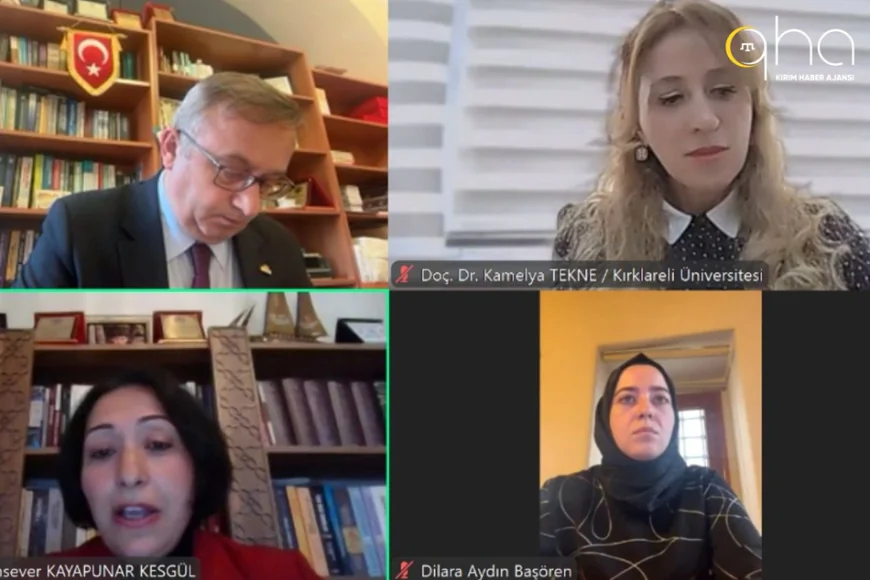
ISTANBUL, TURKEY — An online panel organized by the Istanbul University Turkic Studies Research Institute has extensively discussed the historical struggles of prominent intellectuals and leaders who shaped the Turkic world.
The event, held on April 22, 2026, evaluated the lives and contributions of figures such as Mustafa Abdulcemil Kirimoglu, Ismail Bey Gaspirali, Ziya Gokalp, Ebulfez Elcibey, and Enver Odabasi. Expert academicians shed light on the shared heritage across the Turkic geography, focusing on the communities' processes of independence and cultural development.
National leader Kirimoglu’s struggle for the homeland
Associate Professor Kamelya Tekne from Kirikkale University detailed the activities of Ukrainian MP and the national leader of the Crimean Tatar people, Mustafa Abdulcemil Kirimoglu. Under his leadership, the Crimean Tatar national movement transformed into an institutional structure, marked by the Red Square Demonstrations and the ongoing international legal struggle of the
Tekne also drew attention to the increasing human rights violations following Russia's occupation of Crimea, highlighting the plight of political prisoners. Citing the cases of Servet Gazi, who is held in a Kamchatka prison 12,000 kilometers away from Crimea, and Niyara Ersmambet, a mother of two sentenced to 15 years in prison, she emphasized that the oppression of civil activists and women continues to escalate.
Gaspirali and the Usul-i Cedid education reform
Kasim Turgut, a lecturer at Istanbul Gelisim University, conveyed Ismail Bey Gaspirali's vision of establishing unity in the Turkic world. Evaluating Gaspirali's organizational and publishing activities, Turgut noted the significance of the Tercüman newspaper, which began publication in 1883. According to QHA (Crimean News Agency) reports, Turgut summarized Gaspirali's struggle with the following words:


"In fact, we can say that he suffered for the unity of the Turkic world. He tried to fight alone and sometimes could not find support. Usul-i Cedid is an educational reform."
Noting that Gaspirali personally prepared the curriculum, textbooks, and trained the teachers, Turgut reminded that the core motto adopted by the
Ziya Gokalp's ideal of Turan
Dr. Cansever Kayapunar Kesgul from Istanbul Yeni Yuzyil University discussed the life and ideological approach of Ziya Gokalp. Referencing Gokalp's famous lines, "The homeland is neither Turkey for the Turks, nor Turkestan; the homeland is a great and eternal country: Turan," Kesgul highlighted the spirit intended to be instilled in Turkish youth during the harsh conditions of war and occupation of that era. Kesgul emphasized that Gokalp pointed not only to a geographical homeland but to a "Red Apple" (Kizilelma) consciousness that dominates technology and science.


Elcibey's state-building and vision of independence
Science Specialist Aytek Aytak Yusifsoy explained the historical role of Ebulfez Elcibey, the first democratically elected president of Azerbaijan. Describing Elcibey as "a name raised with the pain of a divided homeland and an enslaved nation," Yusifsoy noted that he was an orientalist with nearly 50 scientific works. Yusifsoy explained Elcibey's vision with these statements:
"While extracting a national state from the ruins of an empire, Elcibey built the independence voices of modern Azerbaijan with his own historical consciousness. His leadership is not an accidental political success."
It was stated that the legacy of Elcibey, who took the Ataturk model as a basis for state-building, continues to live on in the rising will for Turkic unity today.
What's Your Reaction?
 Like
0
Like
0
 Dislike
0
Dislike
0
 Love
0
Love
0
 Funny
0
Funny
0
 Wow
0
Wow
0
 Sad
0
Sad
0
 Angry
0
Angry
0

Editor | Wise News Press — Delivering accurate, timely global news with integrity, insight, and editorial responsibility.













Comments (0)