



Ahead of the Ankara summit: Is Turkic unity under threat?
Ahead of the Ankara summit, Yusuf İnan examines Turkic cooperation, Crimea and the case for inviting Ukraine to strengthen dialogue and regional trust.


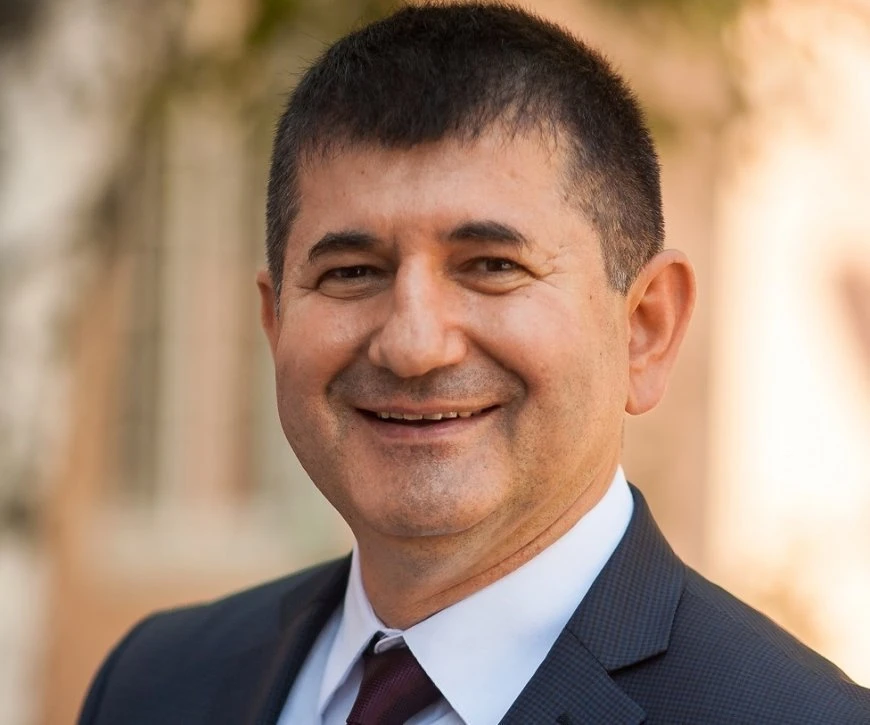
By Yusuf İnan | Wise News Press
Journalist and author | Political and strategic analyst
Ahead of the 13th summit of the Organization of Turkic States in Ankara, developments involving Türkiye, Azerbaijan and Ukraine deserve examination through the lens of President Recep Tayyip Erdoğan’s role in fostering cooperation and the Turkic world’s capacity to act together.
The circulation of allegations capable of creating distrust between Türkiye and Azerbaijan has implications beyond their bilateral relationship. Their potential impact on solidarity among Turkic states, Türkiye’s regional influence and support for Ukraine’s territorial integrity also deserves consideration.
The question is this: When suspicion grows between countries that should trust one another, who gains and who loses?
The gathering planned in Mykolaiv in 2018
For me, this question has a personal dimension. It relates to a project in which I was directly involved.


Through Fond İnan, we were planning a major Turkic World and Türkiye Festival in the southern Ukrainian city of Mykolaiv during Eid al-Adha in 2018.
The project envisaged the sacrifice of approximately 100,000 sheep and rams, the distribution of meat to people in need, and the installation of döner stands serving freshly prepared meat and kebabs to the public.
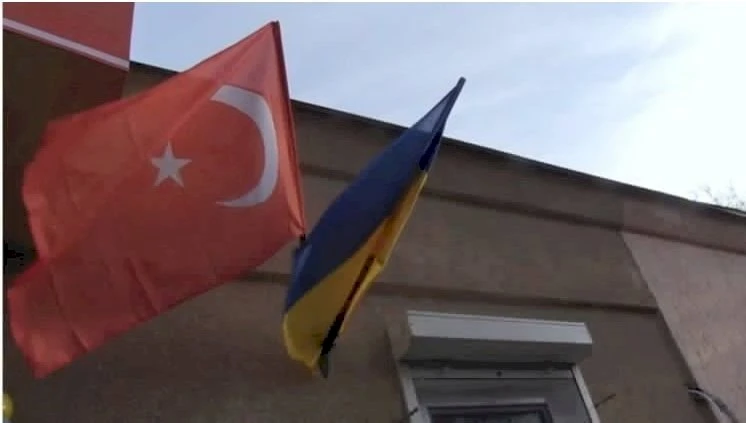


Turkish and Ukrainian flags at the entrance to the Inan Foundation’s premises in Mykolaiv, December 1, 2016. (Photo: Inan Foundation archive)
We hoped to bring President Recep Tayyip Erdoğan and the heads of Turkic states to the event. Their participation was an ambition of the project, representing the political dimension we wanted the gathering to achieve.
The spirit of sharing associated with Eid al-Adha, the idea of Turkic solidarity and support for Ukraine’s territorial integrity would have come together in one public space.
A message of peace, solidarity and sharing, delivered in a region close to Crimea, would also have carried political significance.
The festival never took place. In the process I experienced and have previously described in detail, allegations conveyed to different authorities and the resulting atmosphere of distrust made preparations unworkable. Fond İnan was forced to suspend its activities.
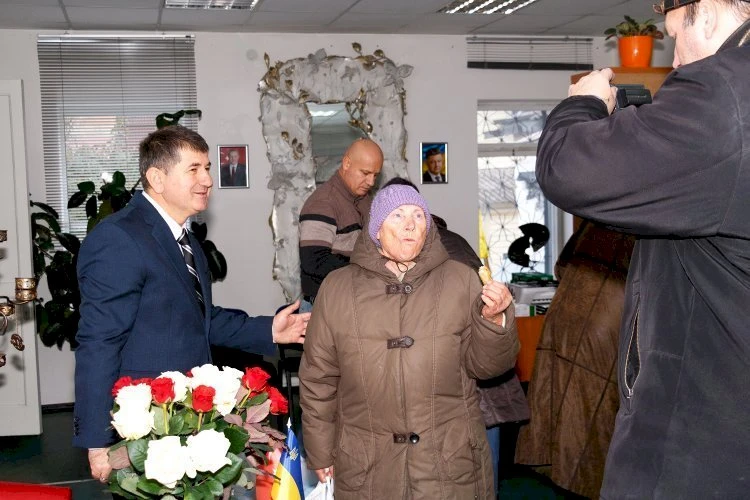
A charity event at the Inan Foundation in Mykolaiv, December 1, 2016. Yusuf İnan is pictured on the left; portraits of Turkish President Recep Tayyip Erdoğan and Ukraine’s then-President Petro Poroshenko are displayed on the wall. (Photo: Inan Foundation archive)
I do not interpret this outcome as evidence that the Ukrainian people or the Ukrainian state opposed solidarity with Türkiye. The issue I believe requires investigation is how allegations that undermined trust between institutions emerged and how they influenced decision-making.
Why Kazakhstan and Azerbaijan merit closer examination
Following earlier events in Kazakhstan, I also received accounts circulating within certain civic circles about statements that sought to implicate Türkiye. Within those circles, the accounts were interpreted as describing an initiative directed against Türkiye and President Erdoğan.
I cannot substantiate those details through publicly available records and therefore do not present them as established facts. Nevertheless, I believe there is a question the relevant authorities could examine: Where did the accusations against Türkiye originate, through which channels were they conveyed, and how were they assessed?
In Azerbaijan, there is a concrete development documented in public reporting.
On October 17, 2026, Türkiye’s embassy in Baku rejected allegations involving secret meetings, interference and coup plans attributed to Turkish officials. The embassy described the reports as disinformation intended to damage relations between Türkiye and Azerbaijan.
The matter therefore requires examination of both the publications linking Türkiye to such allegations and the official denial, without treating the alleged plans as proven.
The use of similar accusations in different settings does not, by itself, establish a common directing authority. Possible coordinated influence, separate conflicts of interest and the recirculation of false information should each be examined on their own evidence.
The political significance of Tokayev’s Istanbul appeal
Remarks by Kazakhstan’s President Kassym-Jomart Tokayev are also important within this wider discussion.
On July 25, 2026, in Omsk, Russia, Tokayev met President Vladimir Putin in connection with the Russia–Kazakhstan Interregional Cooperation Forum. He proposed freezing the conflict and returning to what he called the “Istanbul Formula 2.0.”
The appeal was significant because it brought negotiations hosted by Türkiye back into the diplomatic discussion.
Tokayev’s position as the president of a member state of the Organization of Turkic States gives his remarks additional political relevance within the Turkic world. In my assessment, the appeal also illustrates the value of Türkiye’s diplomatic role.
His statement, however, cannot be presented as a collective decision by the organization. During the same meeting, Tokayev also reaffirmed Kazakhstan’s commitment to its strategic partnership and allied relations with Russia.
The diplomatic opportunity lies in the possibility that countries with different relationships and priorities could find common ground around a negotiating framework hosted by Türkiye.
The Ankara summit and Türkiye’s role in building cooperation
The 13th summit of the Organization of Turkic States, scheduled for October 29–30, 2026, in Ankara, offers an important opportunity to reinforce mutual trust.
The organization’s institutional history dates to the establishment of the Turkic Council in 2009. Its present name, the Organization of Turkic States, was adopted at the summit held in Istanbul on November 12, 2021.
I therefore do not suggest a direct institutional founding relationship between our 2018 festival project and the organization’s subsequent development. The connection I see is a shared underlying idea: bringing the leaders and peoples of the Turkic world together and translating solidarity into practical initiatives.
In my view, the vision of cooperation promoted by Erdoğan also corresponded with the humanitarian gathering we hoped to organize in Ukraine.
The Mecca Joint Defense Agreement signed by Türkiye, Saudi Arabia and Pakistan on August 7, 2026, represents a separate framework for cooperation. Official statements describe its purposes as collective security, deterrence and regional stability.
The durability of these partnerships depends on respect for the sovereign choices of participating countries and the preservation of mutual trust. Accusations accepted without adequate verification can erode that trust.
Crimea and the stakes for Ukraine
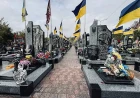
Türkiye’s refusal to recognize the illegal annexation of Crimea, together with its support for Ukraine’s territorial integrity, is central to this discussion.
Had our planned festival taken place in 2018, that solidarity could also have become visible in the daily lives of Ukrainian people. Shared meals, assistance reaching families in need and a public holiday gathering would have given the diplomatic message a direct social expression.
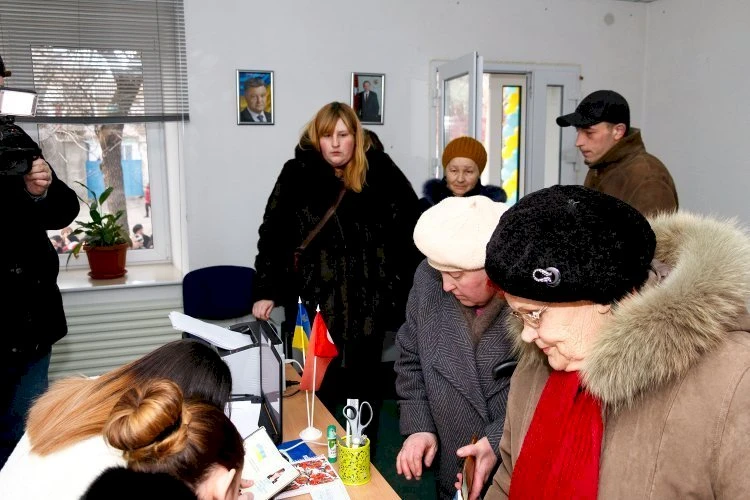
Local residents during a food and meat distribution event at the Inan Foundation in Mykolaiv, December 1, 2016. Ukrainian and Turkish flags are displayed on the table, with portraits of Recep Tayyip Erdoğan and Petro Poroshenko on the wall. (Photo: Inan Foundation archive)
We cannot say with certainty that such an event would have changed Russia’s policies. I do believe, however, that it could have contributed to lasting connections between Türkiye, Ukraine and the wider Turkic world.
The weakening of those connections may align with Russia’s interests. But benefiting from an outcome does not, by itself, establish that a state directed the events that produced it.
Any allegation connecting Putin or Russian institutions to the events would therefore require concrete evidence extending beyond an assessment of strategic advantage.
That is what I want investigated: At which stages did a project capable of bringing Türkiye and Ukraine closer together become unworkable, and whose interests aligned with the resulting loss?
Should Ukraine be invited to a Turkic summit because of Crimea?
The Ankara summit also provides an opportunity to consider another question: Should Ukraine be invited to summits of the Organization of Turkic States because of Crimea and its historical and social connections with the Crimean Tatar people?
Crimean Tatars are an integral part of the Turkic world. Protecting their identity, language, culture and rights, while defending Ukraine’s sovereignty and territorial integrity, are mutually reinforcing objectives.
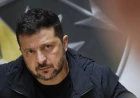
My proposal is that, following consultations among member states, Ukrainian President Volodymyr Zelenskyy or a senior representative designated by him should be invited to participate as a guest. The inclusion of representatives of the Crimean Tatar people in the Ukrainian delegation could give that participation additional meaning.
Such a gathering could help keep Crimea on the international agenda, provide an opportunity to hear Crimean Tatar concerns directly and strengthen regular dialogue between Ukraine and the Turkic world.
Guest participation should be distinguished from membership or observer status. Any more permanent relationship could be considered separately through the organization’s own decision-making processes.
The solidarity we hoped to express through the 2018 gathering in Mykolaiv could find renewed expression today through dialogue at the leadership level.
Türkiye could consult other members on this proposal, turning concern for Crimea and the Crimean Tatars into a practical diplomatic initiative.
Questions for investigation and a shared political response
The task today is to compare decision-making processes carefully, rather than declare every past event part of a single plan.
How were the accusations affecting the festival preparations assessed? While their accuracy was being examined, was sufficient consideration given to the damage the project could suffer?
What evidence supported the accounts circulated in different circles about Kazakhstan? If statements accusing Türkiye did reach the relevant authorities, what inquiries followed?
What information supported the publications linking Turkish officials to coup allegations in Azerbaijan? After the official denial, were steps taken to address the consequences of the misinformation?
Answers to these questions could also establish whether the events were connected at all.
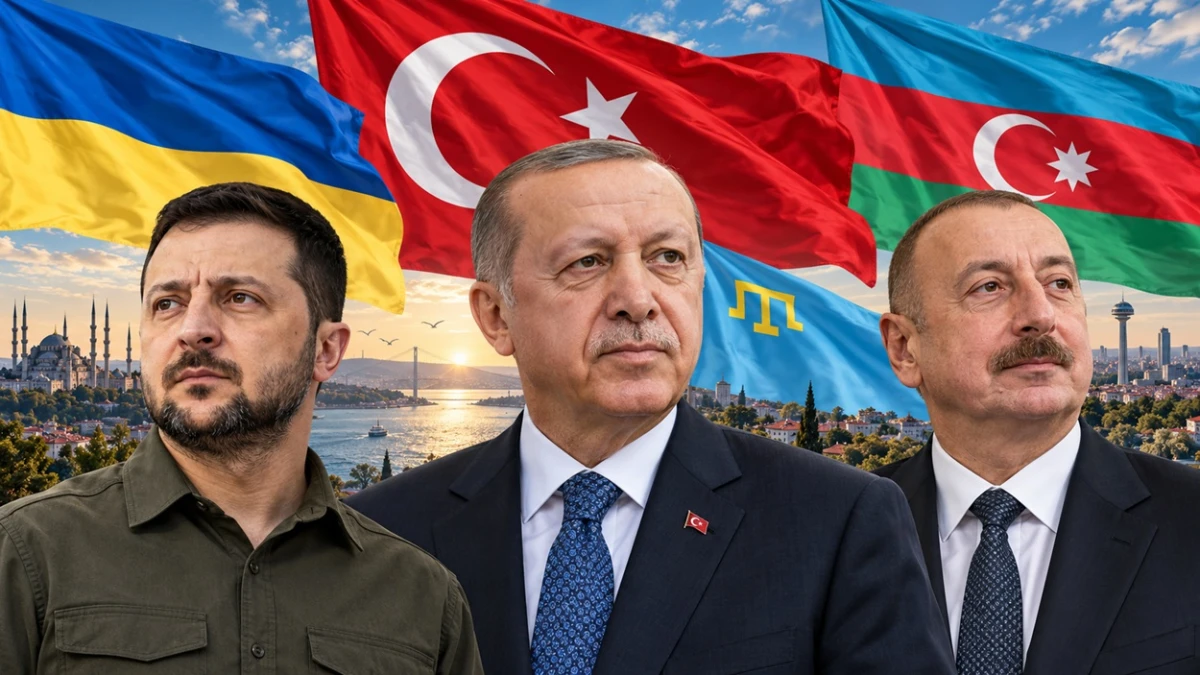
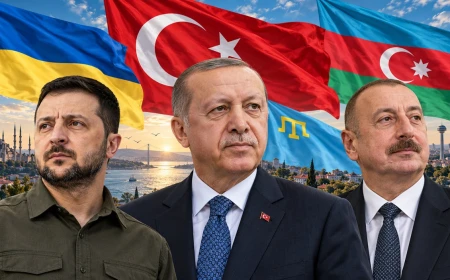
Presidents Recep Tayyip Erdoğan, Ilham Aliyev and Volodymyr Zelenskyy, together with members of the Organization of Turkic States, have an important shared interest: ensuring that trust between their countries is not undermined by unverified accusations.
Preserving the close relationship between Türkiye and Azerbaijan, defending Ukraine’s territorial integrity and strengthening cooperation among Turkic states are objectives that can support one another.
The Ankara summit should help strengthen the resolve to clarify suspicions, reinforce trust and give practical expression to the principles of peace and sharing.
Yusuf İnan
WiseNewsPress.com
What's Your Reaction?
 Like
0
 Dislike
0
 Love
0
 Funny
0
 Wow
0
 Sad
0
 Angry
0
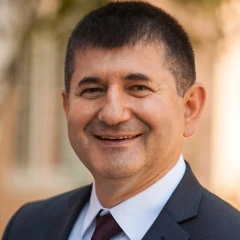
Yusuf İnan is a journalist, columnist, strategic analyst and head of the Wise News Press Media Group. His work focuses on international affairs, geopolitics, security and major social issues. Through his journalism, he promotes peace, dialogue, mutual understanding and responsible reporting while contributing to the development of international media projects.










Comments (0)