



Europe, US and Ukraine align common position before talks with Russia
Europe, the US and Ukraine agreed in Abu Dhabi that sovereignty, territorial integrity and credible security guarantees must underpin any settlement.


By Yusuf İnan | Wise News Press
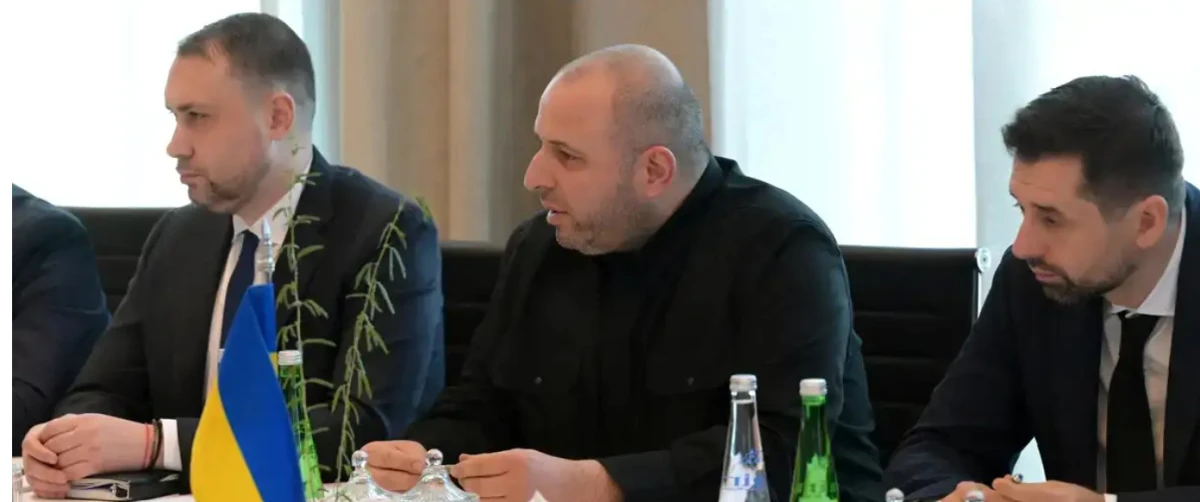
ABU DHABI, UAE — The European Union, United States, Ukraine, NATO and four European countries agreed that sovereignty, territorial integrity and credible security guarantees must guide any future settlement with Russia.
Representatives of the EU, Ukraine, the US, France, Germany, Italy, the United Kingdom and NATO held consultations in Abu Dhabi on Tuesday, November 10, to coordinate efforts aimed at ending Russia’s war against Ukraine.
A joint statement issued after the meeting said any future arrangement must respect Ukraine’s sovereignty, territorial integrity and right to make independent decisions. The participants also agreed that credible security guarantees for Kyiv should form part of a possible settlement.
The consultation established a common diplomatic position before separate trilateral talks involving Ukraine, Russia and the United States. It did not announce an agreed ceasefire, a peace treaty or specific military obligations for future guarantor countries.
Four principles shape the common position
Four principles were central to the Abu Dhabi coordination meeting: Ukrainian sovereignty, territorial integrity, independent decision-making and credible security guarantees.
The participants said a potential settlement should not be limited to stopping the fighting. It should also protect Ukraine’s ability to make its own political, military and economic decisions after the war.
That position reflects Kyiv’s opposition to any agreement that would allow another country to determine Ukraine’s defence policy, foreign relations or future alliances. Ukrainian officials have previously rejected demands for imposed neutrality, reductions in the size of the military or restrictions on cooperation with Western partners.
The joint statement did not set out a territorial formula or explain how the status of Russian-occupied Ukrainian land might be addressed. It also did not say whether the existing front line could become a temporary ceasefire boundary.
Russia did not participate in drafting the statement, meaning the principles outlined by Ukraine and its Western partners should not be treated as conditions already accepted by Moscow.
A practical security framework is the goal
The participants agreed to work toward a practical security framework in which the different elements reinforce one another and strengthen Ukraine’s long-term security.
According to the joint statement, such a framework should also build the confidence required to achieve a negotiated settlement.
The document does not define what credible security guarantees would involve. Key questions remain unanswered, including which countries would act as guarantors, how quickly they would respond to another attack and whether the arrangement would require direct military intervention.
Possible measures could include long-term weapons supplies, air and missile defence support, intelligence sharing, military training and coordinated sanctions if Russia launches another attack.
The partners could also consider financial commitments to maintain Ukraine’s armed forces and rebuild critical infrastructure. However, the Abu Dhabi statement does not announce new funding, troop deployments or a legally binding defence treaty.
It instead sets out political objectives that the participants intend to defend during the negotiation process.
NATO remains central to collective defence
The meeting also addressed the future European security architecture after the war in Ukraine.
Participants discussed how existing European institutions and agreements could be used to reduce the risk of renewed conflict, manage military threats and prevent dangerous escalation.
The statement reaffirmed that a strong NATO would remain central to collective defence in the Euro-Atlantic area. That declaration is significant because Russia has repeatedly sought restrictions on NATO’s role and Ukraine’s relationship with the alliance.
Moscow argues that a settlement should address what it describes as the broader security concerns of all European states, including Russia. Russian Foreign Minister Sergei Lavrov has said the parameters of a future European security architecture should be established before the specific conditions for ending the war are settled.
European officials have taken a different position. They argue that broader discussions about continental security cannot replace negotiations focused on ending the war, protecting Ukraine and securing an enforceable peace.
The two approaches reveal a central divide: Moscow seeks negotiations about the European security order, while Kyiv and its partners want Ukraine’s sovereignty and long-term defence to remain at the core of any settlement.
Europe is not directly at the trilateral table
Although European, EU and NATO representatives were present in Abu Dhabi, they were not direct participants in the trilateral talks involving Ukraine, Russia and the United States.
The meeting described in the joint statement was a separate coordination session held before the main negotiations. European representatives consulted with Ukraine and the US, but they did not take part in the initial trilateral format with Russia.
The statement therefore represents the position of Ukraine and its Western partners rather than a negotiated consensus with Moscow.
Russia has opposed direct European participation in the current format. European governments, however, argue that no lasting agreement affecting the continent’s security can be reached without European involvement.
France, Germany, Italy and the United Kingdom have sought a larger role, particularly in discussions about postwar guarantees, sanctions, reconstruction and the future European security architecture.
The joint statement said the participants would work toward broader multilateral discussions involving European partners. No date or agreed mechanism for expanding the negotiations has been announced, and Russia has not publicly accepted such a format.
Major differences remain unresolved
Despite the coordinated Western position, Ukraine and Russia remain divided over the principal terms of a possible settlement.
According to Reuters, Moscow continues to demand that Ukrainian forces withdraw from all of Donbas before a peace agreement can be reached. Kyiv rejects surrendering territory that its forces have defended and says territorial questions can only be addressed at the leaders’ level.
Ukraine is also seeking strong security guarantees to prevent Russia from launching another invasion after a ceasefire or peace agreement.
Moscow has demanded that Ukraine remain outside NATO and accept restrictions on its military capabilities and cooperation with Western countries. Kyiv says those demands would weaken its sovereign right to defend itself and leave the country vulnerable to renewed aggression.
The parties also disagree over the order of negotiations. Ukraine and its European partners view a ceasefire as an important first step toward broader political talks. Russia has resisted an unconditional halt to the fighting, arguing that it could allow Ukraine time to rearm.
These differences show that the Abu Dhabi statement is an important coordination document for Ukraine and its partners, but it is not evidence that a peace agreement has been reached.
Negotiations are expected to continue
The first session of the US-mediated talks between Ukraine and Russia lasted nearly four hours. The parties did not announce a joint outcome after the initial meeting, and discussions were expected to continue on Wednesday, November 11.
The agenda includes ending the war, security guarantees for Ukraine, postwar European security, de-escalation and humanitarian issues.
Europe, the United States and Ukraine said they would maintain close coordination throughout the negotiation process. Their stated objective is to move toward broader multilateral discussions involving European partners and to achieve a comprehensive and lasting peace.
Further progress will depend on whether the parties can narrow their differences over territory, the sequencing of a ceasefire, monitoring arrangements and the responsibilities of potential guarantor countries.
Any agreement would also need to address sanctions, reconstruction, the return of prisoners and civilians, and the consequences of violating the settlement.
The Abu Dhabi statement demonstrates that Ukraine and its Western partners entered the talks with a shared set of principles. The next stage will show whether those principles can be transformed into an enforceable agreement acceptable to Russia.
WiseNewsPress.com
What's Your Reaction?
 Like
0
 Dislike
0
 Love
0
 Funny
0
 Wow
0
 Sad
0
 Angry
0
Yusuf İnan is a journalist, columnist, strategic analyst and head of the Wise News Press Media Group. His work focuses on international affairs, geopolitics, security and major social issues. Through his journalism, he promotes peace, dialogue, mutual understanding and responsible reporting while contributing to the development of international media projects.










Comments (0)