



BILD: Russia may intensify winter strikes on Ukraine’s energy grid
BILD cites military expert Markus Reisner as warning that Russia may intensify winter attacks on Ukraine’s energy and critical infrastructure.


By Ahmet Taş | Wise News Press
ANKARA, TURKEY — Russia may seek to intensify pressure on Ukraine during the coming winter by targeting energy facilities and other critical infrastructure, according to an assessment reported by German newspaper BILD.
BILD cited Austrian military expert Markus Reisner, who argued that with the front line seeing limited major changes, Moscow could increasingly rely on a strategy of attrition aimed at weakening Ukrainian society through attacks on electricity networks, logistics and essential infrastructure.
The assessment represents Reisner’s analysis of Russia’s possible strategy rather than a publicly confirmed operational plan from Moscow.
Energy infrastructure could again become a major winter target
According to BILD, Reisner believes Russia may attempt to use winter conditions to increase military, economic and psychological pressure on Ukraine.
With major breakthroughs along the front remaining difficult, the military expert said attacks against energy facilities and other critical systems could become an increasingly important part of Russia’s campaign.


Reisner argued that Moscow may calculate that prolonged disruption to electricity, heating and other essential services could increase the burden on Ukrainian civilians and place additional strain on the country’s ability to sustain the war effort.
He suggested that Russian President Vladimir Putin appears convinced that winter pressure could significantly weaken Ukraine and potentially force Kyiv toward concessions.
That assessment has not been presented as an officially confirmed Russian strategy. It reflects Reisner’s interpretation of current battlefield and infrastructure trends.


Reisner points to extensive damage to critical infrastructure
The Austrian expert also highlighted the scale of damage already sustained by Ukraine’s critical infrastructure during the war.
BILD reported Reisner as saying that around 80% of Ukraine’s critical infrastructure had been damaged or destroyed.
The figure was presented as the expert’s assessment and was not independently verified in the source material.
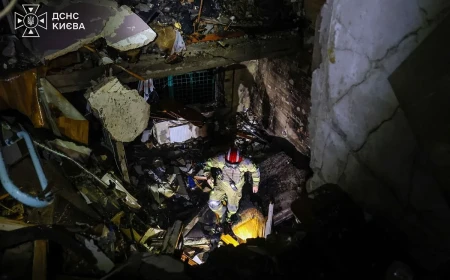
Damage to electricity generation, transmission networks and other essential systems becomes particularly significant during the colder months, when demand for power and heating rises.
A further campaign against such facilities could therefore have effects beyond the immediate destruction caused by individual strikes, potentially influencing transport, water supplies, communications and civilian life.
For Ukraine, the challenge involves not only intercepting incoming missiles and drones but also repairing damaged facilities and maintaining sufficient redundancy in the national energy system.
Patriot missile shortages remain a concern
Ukraine’s air-defense capacity is another central issue raised in the report.
Reisner said shortages of interceptor missiles, particularly for Patriot air-defense systems, remain a vulnerability that Russia is likely to understand and factor into its planning.
Large-scale waves of missiles and drones can force Ukrainian forces to defend multiple locations simultaneously, increasing pressure on available interceptor stocks.
Patriot systems have played an important role in Ukraine’s defense against advanced aerial threats, but their effectiveness depends on a continuing supply of missiles.
The expert’s comments suggest that the availability of air-defense ammunition could become one of the key variables shaping Ukraine’s ability to protect energy facilities during the winter.
Kyiv has repeatedly relied on international military support to strengthen its air defenses, while infrastructure protection has remained one of the central reasons for requests for additional systems and ammunition.
Russia expanding drone capabilities, BILD reports
BILD also reported that Russia continues to expand its capacity for drone warfare.
According to the report, Moscow has developed additional launch sites and newer unmanned aerial vehicles capable of reaching speeds of up to 600 km/h.
If deployed on a wider scale, faster drones could further reduce the time available for Ukrainian air-defense units to identify, track and engage incoming threats.
The source material does not provide detailed technical information about the specific drone types involved, production volumes or the extent to which the reported speeds apply across Russia’s drone fleet.
However, the development fits into a broader pattern in which unmanned systems have become increasingly important to both sides of the conflict.
Ukraine, for its part, has also increased the use of long-range drones against targets inside Russia.
Warehouses and logistics networks also under pressure
The winter threat described by Reisner is not limited to energy infrastructure.
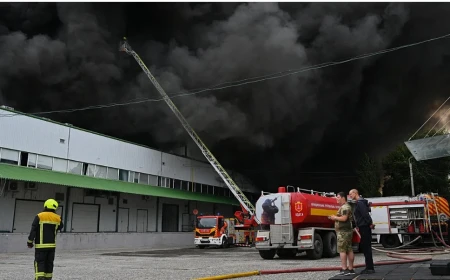
BILD reported that Russian strikes in August and September damaged warehouses and logistics centers belonging to Ukrainian supermarket networks.
According to the report, the damage contributed to temporary shortages on some store shelves in Kyiv.
Attacks on logistics hubs can have broader consequences because they affect the movement and distribution of food, consumer goods and other supplies rather than only a single company or facility.
Disruption to warehouses, transport routes and distribution centers could therefore compound the effects of attacks on electricity and energy infrastructure.
At the same time, Ukraine has increasingly carried out drone strikes on targets inside Russia, including facilities associated with military, industrial, logistics and energy operations.
The continuing exchange demonstrates how the war has expanded far beyond the immediate front line, with infrastructure on both sides becoming increasingly important to military strategy.
Expert warns of hybrid threats to Europe
Reisner also warned that European countries could face a rise in sabotage operations and other forms of hybrid activity.
According to BILD, the military expert said such threats could intensify alongside the continuing war in Ukraine.
He also said limited actions against the European Union’s eastern flank could not be completely ruled out.
These comments were presented as a risk assessment rather than evidence of a confirmed Russian plan to attack an EU or NATO member state.
The source material does not cite an official document establishing such an operation.
As winter approaches, several factors are likely to shape Ukraine’s ability to withstand renewed pressure: the resilience of its energy system, stocks of air-defense missiles, Russia’s missile and drone production capacity, and the level of continued military support provided by Ukraine’s partners.
Even if the front line remains relatively stable, the struggle over energy, logistics and critical infrastructure could become one of the most consequential elements of the war during the winter months.
WiseNewsPress.com
What's Your Reaction?
 Like
0
Like
0
 Dislike
0
Dislike
0
 Love
0
Love
0
 Funny
0
Funny
0
 Wow
0
Wow
0
 Sad
0
Sad
0
 Angry
0
Angry
0

Ahmet Taş is a journalist, editor and Turkey Office Manager of the Wise News Press Media Group. He works across news, digital media and international publishing, focusing on accurate, responsible and accessible journalism. He contributes to the development of media projects that bring important political, social and global developments to a wider international audience.


















Comments (0)