



Zelensky sets Ukraine's red lines on territory, army and neutrality
Zelensky rejected territorial swaps, limits on Ukraine’s army and neutrality in peace talks, while urging partners to maintain sanctions on Russia.


By Ahmet Taş | Wise News Press
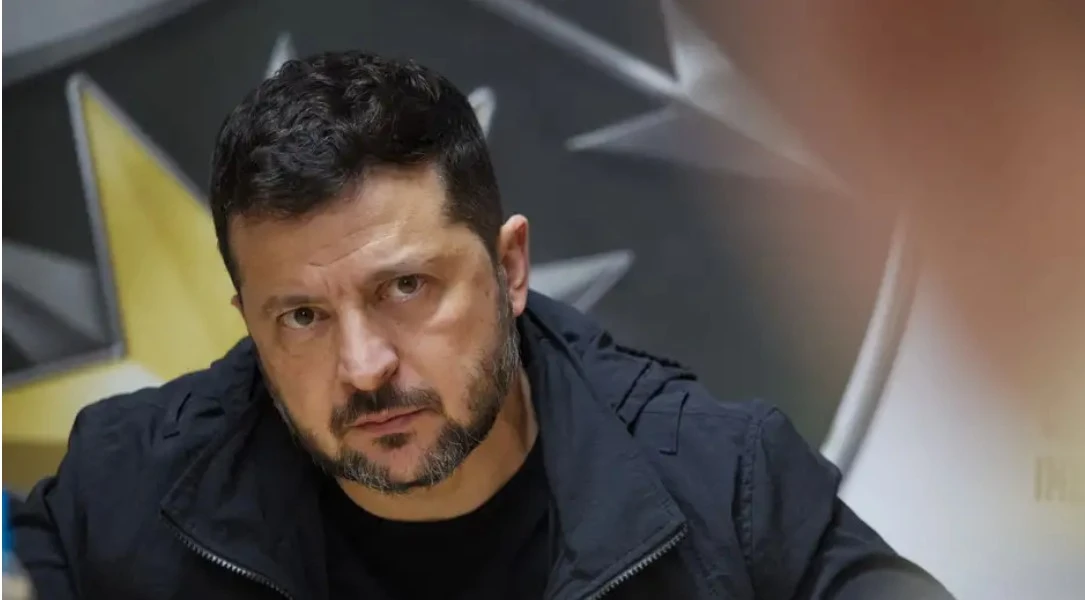
KYIV, UKRAINE — Ukrainian President Volodymyr Zelensky said Kyiv would reject territorial swaps, limits on its armed forces and neutral status in peace talks, while urging partners to keep sanctions on Russia.
In an interview with Ukrainian broadcaster TSN, Zelensky drew a distinction between issues his government is willing to discuss and terms it would not accept. Territorial questions, he said, could be addressed only by national leaders, while negotiating teams could work on ceasefires and humanitarian measures.
No agreement to swap territory
Zelensky said U.S. representatives had raised the possibility of territorial swaps as part of efforts to end Russia’s war against Ukraine. He rejected that approach, saying Ukraine would not exchange one piece of its territory for another.
His position does not rule out a discussion of territorial questions altogether. Zelensky said such questions belonged at the level of national leaders rather than technical negotiating teams. That leaves room for diplomatic contact while setting a limit on what Kyiv is prepared to approve.
How territory is treated in a potential agreement would affect the meaning of any ceasefire. Stopping fighting along a particular line and recognizing occupied Ukrainian territory as Russian would have different consequences. Zelensky’s remarks indicate that Kyiv intends to maintain that distinction in negotiations.


The president attributed the territorial-swap proposal to discussions with U.S. representatives. His comments did not establish that Washington and Kyiv had agreed on such a plan.
Army limits and neutrality ruled out
Zelensky also said Russia could not dictate Ukraine’s security guarantees. He ruled out negotiating a neutral status for the country or restrictions on the size of its armed forces.
For Kyiv, the future strength of its military is closely tied to whether any peace arrangement can protect the country after the fighting stops. A limit imposed through negotiations would therefore affect more than military staffing: it would shape Ukraine’s ability to respond to a future threat.


The same concern underlies Zelensky’s position on neutrality. He argued that decisions about Ukraine’s security cannot be determined by Moscow’s demands. Finding guarantees that Ukraine considers credible remains one of the challenges facing any broader settlement.
Zelensky did not give a detailed account of the proposals being discussed with the United States. He described the talks as an ongoing process while making clear that neutrality and limits on the army were outside Ukraine’s stated negotiating position.
Warning against lifting sanctions early
Zelensky urged Ukraine’s partners not to lift sanctions on Russia before a potential meeting of the Ukrainian, U.S. and Russian leaders. He said the measures were imposed in response to Russian aggression and should not be removed simply to make talks possible.
His concern is that Ukraine and its partners could arrive at the negotiating table having already surrendered tools they may need during the discussions. He also pointed to frozen Russian assets and financial resources as matters that should not be separated from the terms of a possible settlement.
That is not a statement that sanctions could never change. Zelensky said there would be an appropriate sequence for considering their removal if an arrangement to end the war were reached. He objected to easing pressure before the outcome of negotiations is known.
The distinction matters because a meeting between leaders would be a diplomatic step, not an agreement ending the conflict. Zelensky’s message to partners was that the start of a dialogue should not be treated as though its goals had already been achieved.
November talks need practical results
Ukraine’s presidential office previously said it planned a meeting of Ukrainian, U.S. and Russian teams in the first half of November. In the TSN interview, Zelensky said the value of technical talks would depend on what the sides could accomplish, rather than on the meeting itself.
He identified several possible results: an end to strikes on energy infrastructure, arrangements to protect shipping and grain exports, a large-scale prisoner exchange, or preparations for a meeting of national leaders.
According to Zelensky, a halt to attacks on energy facilities could provide an early practical indication that Russia was willing to take steps toward ending the war. An agreement on shipping would also have consequences beyond the battlefield, affecting routes used for Ukrainian exports.
None of those outcomes has been announced as an agreement. They are goals Kyiv says it wants the proposed talks to address. Progress will depend on whether the parties meet and whether they can settle on measures that can be put into effect.
Humanitarian operation planned for Oleshky
Separately from the wider peace talks, a humanitarian operation is being prepared for Oleshky, a Russian-occupied town in the Kherson region. Ukraine’s General Staff said a local ceasefire in a designated area would begin at 3:00 a.m. Kyiv time on October 27 to allow assistance and prepare safer conditions for civilians.
Zelensky said the pause could last several days and that Ukraine, the United States and Russia were expected to play roles in the mission. He also referred to the need for the Russian side to clear mines from roads intended for safe passage.
The president expressed concern about where civilians might be directed during an evacuation. He suggested Russia could try to steer people toward territory under its control instead of allowing them to reach Ukrainian-controlled areas. For Kyiv, he said, the priority is to help residents leave the blocked area and reach safety.
The announced local ceasefire does not mean the humanitarian operation has already succeeded. Delivering aid and evacuating residents will depend on conditions on the ground and on the parties observing the arrangements they have announced.
What happens next
Zelensky’s statements set out two related aims for Kyiv: pursuing steps that could reduce the harm caused by the war and preserving its position on questions that will shape Ukraine’s future security. His remarks on territory, the army and neutrality define the latter; his proposals on energy, shipping and prisoner exchanges address more immediate outcomes.
Two developments will now test those plans. The first is whether the local pause around Oleshky allows aid to reach civilians and creates a safe route for those who want to leave. The second is whether the proposed three-way talks produce a practical agreement on any of the measures Kyiv has identified.
Zelensky did not promise that either effort would succeed. He set out what Ukraine is prepared to discuss and the terms it says it will not accept as diplomacy continues.
WiseNewsPress.com
What's Your Reaction?
 Like
0
 Dislike
0
 Love
0
 Funny
0
 Wow
0
 Sad
0
 Angry
0

Ahmet Taş is a journalist, editor and Turkey Office Manager of the Wise News Press Media Group. He works across news, digital media and international publishing, focusing on accurate, responsible and accessible journalism. He contributes to the development of media projects that bring important political, social and global developments to a wider international audience.










Comments (0)