



Russian inscription on soldier's grave in Ukraine stirs language debate
A Russian inscription on a fallen Ukrainian soldier’s grave has divided bereaved families in Kropyvnytskyi as the city considers clearer memorial rules.


By Yusuf İnan | Wise News Press
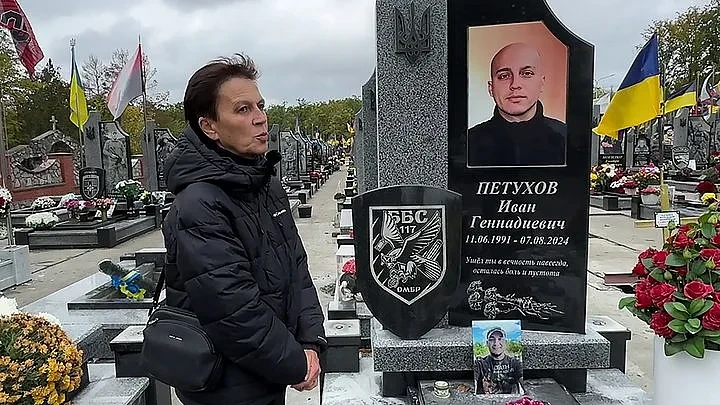
KROPYVNYTSKYI, UKRAINE — A Russian inscription on the grave of Ivan Petukhov, a Russian-speaking volunteer who died defending Ukraine, has exposed a disagreement between bereaved families as city officials consider clearer rules for the military memorial.
The dispute concerns more than the words on one headstone. Petukhov’s mother says the inscription preserves the language her son spoke throughout his life and military service. Another mother, whose daughter was killed in the war, says Russian lettering is painful to encounter in a place dedicated to Ukrainians who died resisting Russia’s invasion. Their opposing views reflect the different meanings the language has acquired during the war.
How the inscription became a dispute
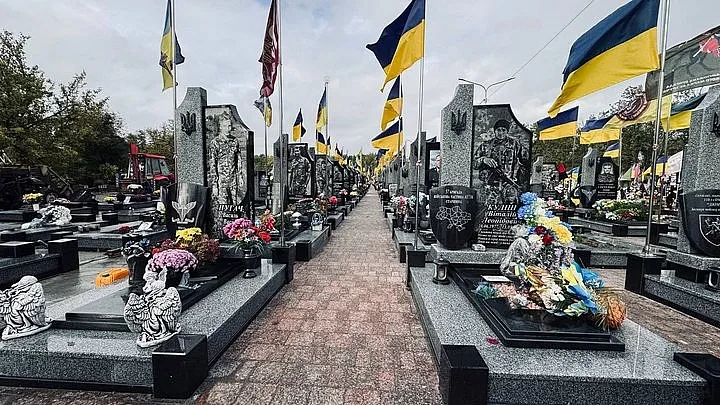
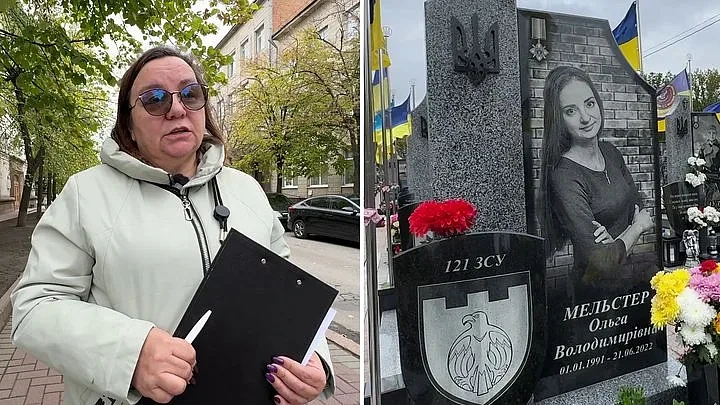
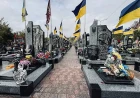
The monument stands in the Alley of Remembrance at Kropyvnytskyi’s Dalekoskhidne Cemetery. According to Ukrainian public broadcaster Suspilne, Inga Dudnik noticed its Russian inscription while visiting the grave of her daughter, Olha Melster, who died in the war. Dudnik is a member of a working group involved in developing the memorial area.
Dudnik said Petukhov’s was the only monument with a Russian inscription in the section, which contains about 860 graves. She argues that a military memorial should have a consistent design and use Ukrainian for its inscriptions. For families arriving to remember relatives killed in the war with Russia, she said, the language on a monument can carry an especially painful association.
Petukhov’s mother, Ella Petukhova, made a deliberate choice. She told Suspilne that her son spoke Russian at home and continued to use it with fellow soldiers after volunteering to defend Ukraine. She sees the inscription as a way to remember him as he lived, rather than as a statement of support for Russia.


Both women have lost a child. Their disagreement places two deeply personal needs alongside each other: a family’s wish to preserve the identity of its son and another family’s wish for a shared memorial space that reflects the country for which its defenders died.
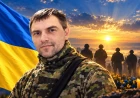
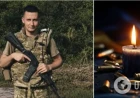
Who was Ivan Petukhov?
Petukhov was born in 1991 in Zhovti Vody, in Ukraine’s Dnipropetrovsk region. His family later moved to Kropyvnytskyi. He completed his education and worked at the Ingul mine before Russia’s full-scale invasion.


According to his mother, he volunteered for military service on 27 February 2022, three days after the invasion began. The family did not make the decision for him. Petukhova said he chose to join because other men he knew had gone to defend the country.
She also said he remained a Russian speaker while serving. In her account, the ability to trust and protect fellow soldiers mattered more to him than the language they used with one another. Petukhova believes the Russian inscription acknowledges a fact that should remain visible: Russian-speaking Ukrainians also volunteered, fought and died for Ukraine.
That part of Petukhov’s story challenges a central assumption behind Russia’s wartime rhetoric. In his address announcing the invasion, President Vladimir Putin presented Russia’s actions as necessary to protect people in Ukraine. Petukhov, a Russian-speaking Ukrainian, chose to defend his country against that invasion. His language did not determine his political allegiance.
Why other families want Ukrainian inscriptions
Dudnik’s objection does not mean she disputes Petukhov’s service. Her concern is the meaning of a Russian inscription within a public space where hundreds of Ukrainian service members are buried. She wants the city to establish a clear standard for the entire memorial area and to examine how this monument was installed.
Other relatives interviewed by Suspilne also supported Ukrainian inscriptions. Iryna Natochii, whose husband Maksym is buried in the alley, said he had spoken Russian in civilian life but used Ukrainian during military service. Zhanna Lipchenko, who lost her son Farid, said she did not want to offend Petukhov’s family, whose grief she understood. She nevertheless believed that families should follow common rules for the memorial.
These accounts show why the disagreement cannot be reduced to a simple division between Ukrainian speakers and Russian speakers. Some of those who want Ukrainian inscriptions also lost relatives who had spoken Russian. For them, the language of a shared military memorial has a different role from the language a person used at home.
Petukhova sees the matter from her son’s side of the same history. She does not want the language he spoke to be removed from the way his family remembers him. The city must consider those views while determining which rules apply to monuments in the alley.
How the war changed attitudes toward Russian
Russian was widely spoken in Ukraine before the full-scale invasion, particularly in parts of the south and east. That does not mean everyone in the country spoke Russian. Ukrainian was the state language and the everyday language of many households across the country. Both languages were part of the lives of numerous Ukrainian families.
Survey data from the Kyiv International Institute of Sociology shows a change after the invasion. In its comparison of household language use, the share of respondents who said they mainly spoke Russian at home fell from 25% in 2020 to 13% in 2025. The share who said they spoke Ukrainian rose from 52% to 63%.
The institute cautioned that the comparison has limits: residents of territories occupied after 2022 were absent from the later survey, although some displaced people took part. Even with that qualification, its findings point to a substantial shift in language use and in the importance many people attach to Ukrainian.
In a separate 2026 survey, 65% of respondents said Russian should be removed from official communication throughout Ukraine. That question concerned its official status. It did not ask whether people should be prohibited from speaking Russian privately.
The distinction matters in Kropyvnytskyi. A family remembering its son in the language he spoke and a municipality setting standards for a publicly organised military memorial raise related but different questions.
What rules apply to the memorial?
Yelyzaveta Sachura, a representative of Ukraine’s Commissioner for the Protection of the State Language, told Suspilne that inscriptions at military memorial cemeteries established and maintained with local public funds must be in Ukrainian. She distinguished those sites from other cemeteries where families commission headstones at their own expense.
The status and rules of the Alley of Remembrance are therefore central to this case. City officials have prepared a draft revision to the regulations governing the site. It would expressly require inscriptions on both the front and back of monuments to be in Ukrainian. The draft also sets out requirements for their materials and appearance.
The proposed revision has not yet been adopted. It would be premature to say that the city has ordered Petukhov’s inscription changed or that a final decision has been made about the existing monument. Dudnik has prepared an appeal asking officials to examine how it was installed and to establish consistent rules. The municipality has also said it will seek clarification on language requirements for military memorials.
Any decision will have practical consequences for families. It will also require officials to explain how a common memorial standard relates to a monument already chosen by the mother of a fallen soldier.
A language and two memories of loss
Petukhov’s life does not fit the claim that Russian-speaking Ukrainians needed Russia to decide their future. He volunteered to defend Ukraine while continuing to speak Russian. His mother regards that language as part of the son she knew.
For Dudnik, Russian lettering in the military alley evokes the country whose invasion took her daughter’s life. Her objection comes from that loss. The same language consequently carries a family memory for one mother and a wartime wound for another.
The case does not establish that all Ukrainians now view Russian in the same way. It does show how the invasion has changed the meaning of language in a public place of mourning. Kropyvnytskyi’s pending decision concerns a headstone, but it also asks how a country honours defenders who spoke different languages and died defending the same state.
WiseNewsPress.com
What's Your Reaction?
 Like
0
 Dislike
0
 Love
0
 Funny
0
 Wow
0
 Sad
0
 Angry
0
Yusuf İnan is a journalist, columnist, strategic analyst and head of the Wise News Press Media Group. His work focuses on international affairs, geopolitics, security and major social issues. Through his journalism, he promotes peace, dialogue, mutual understanding and responsible reporting while contributing to the development of international media projects.









Comments (0)