



Scientists and families unite in Istanbul to advance TBL1XR1 research
Seventeen children and families from 10 countries joined scientists in Istanbul to set shared priorities for future TBL1XR1 treatment research.


By Ahmet Taş | Wise News Press
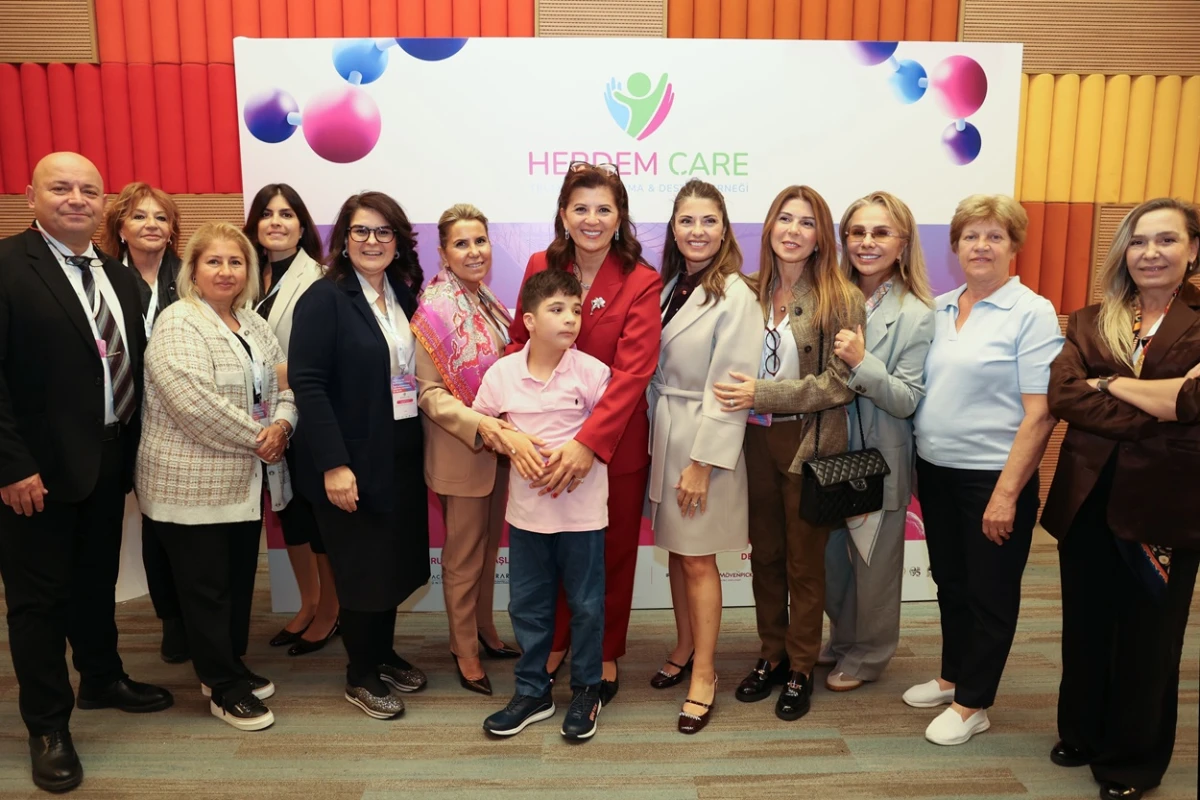
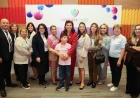
ISTANBUL, Türkiye — Seventeen children living with TBL1XR1-related disorder and their families traveled from 10 countries to Istanbul, where scientists outlined a shared research plan for the ultra-rare neurodevelopmental condition.
The three-day gathering combined the First International TBL1XR1 Scientific Conference with the Second TBL1XR1 Global Family Forum at Acıbadem University Maslak Hospital from Oct. 1 to 3.
Organized by the HERDEM Çare TBL1XR1 Research and Support Association and hosted by Acıbadem University, the event brought together families, clinicians and researchers from four continents.
Organizers described the conference as the first international scientific meeting dedicated specifically to TBL1XR1. Discussions covered genetic research, patient-derived cells, brain organoids, animal models, genome-editing technologies and possible directions for future gene-based treatments.
Scientists emphasized that there is currently no TBL1XR1-specific treatment ready for human use. The approaches presented remain at research or preclinical stages and will require extensive laboratory testing, safety evaluation and clinical development.


Families and scientists meet across four continents
The participating families traveled from Türkiye, Italy, Switzerland, Germany, Australia, the United States, Ireland, Finland, China and Malaysia.
Although the children share changes involving the same gene, their symptoms and support needs can differ considerably. Families discussed challenges involving epilepsy, speech and communication, feeding, mobility, behavior, sleep and education.
Researchers said these experiences provide important information about how the disorder develops over time. Family observations can help scientists identify common patterns, determine which symptoms require closer study and select meaningful outcomes for future clinical trials.


TBL1XR1-related disorders are associated with disease-causing changes in the TBL1XR1 gene, which plays a role in regulating biological processes involved in brain development and function. The clinical effects can vary according to the specific genetic change and other individual factors.
The meeting was designed to combine scientific evidence with the lived experiences of children and caregivers. Organizers said families should be treated as research partners whose observations can help shape scientific priorities.
Research moves toward candidate testing
Prof. Florian Eichler of Harvard Medical School and Massachusetts General Hospital discussed the importance of research models being developed for TBL1XR1-related disorders.
Eichler said scientists now have research tools that can help them study disease mechanisms and evaluate possible treatment candidates.
“We now need to test candidate compounds, measure their effects and move toward meaningful treatments,” Eichler said.
Candidate compounds must undergo laboratory and preclinical evaluation before researchers can determine whether any of them could be suitable for testing in people.
Scientists at the conference discussed the potential use of patient-derived cells and brain organoids. Brain organoids are laboratory-grown three-dimensional cell models used to study aspects of brain development and disease. They do not reproduce the full complexity of a human brain but can help researchers investigate how particular genetic changes affect developing cells.
Genome-editing and gene-based approaches were also discussed as possible future research directions. Experts stressed that these technologies remain experimental in the context of TBL1XR1 and are not available as established treatments.
Prof. Yong Cheng of the Translational Neuroscience Center at Minzu University of China presented preclinical work involving TBL1XR1 mouse models. Such models can be used to study biological mechanisms and assess possible interventions before any human trial is considered.
Daily challenges guide research priorities
Prof. Anna-Katharina Rohlfs of Ulm University in Germany addressed speech and communication difficulties associated with TBL1XR1-related disorders.
She discussed supportive communication methods that may help children express their needs when spoken language is limited or develops differently. These methods can include visual tools, communication devices and individually designed educational support.
Families also described their experiences with seizures, feeding difficulties, disrupted sleep, movement limitations and behavioral challenges. Researchers said systematic collection of this information would be necessary to understand the natural history of the disorder.
A natural history study follows patients over time without testing an experimental treatment. It documents how symptoms emerge or change and can help researchers establish reliable measurements for future clinical studies.
Because TBL1XR1-related disorders are ultra-rare, individual hospitals or countries may see only a small number of patients. International cooperation is therefore considered essential for collecting sufficient clinical and genetic data.
Four priorities set for future studies
Participants identified four major priorities intended to prepare the research community for future treatment studies.
The first is the creation of a shared international patient registry. The proposed system would bring together standardized clinical and genetic information from patients in different countries, subject to ethical approval, data-protection requirements and informed consent.
The second priority is a 36-month natural history study examining how the condition develops over time. Researchers would monitor areas such as communication, behavior, mobility, seizures, feeding and daily functioning.
The third priority is to investigate relationships between genetic variants and clinical findings. Scientists hope this work will clarify why individuals with changes involving the same gene can experience different symptoms or levels of severity.
The fourth priority is to prepare the scientific and clinical infrastructure required for possible future trials. This includes determining suitable outcome measures, identifying eligible participants and establishing procedures for sharing data and biological samples safely.
The meeting’s final declaration also established two working groups focused on natural history research, common data collection, patient registries, biological samples and international scientific cooperation.
Families become partners in research
HERDEM Çare founder and board chair Dr. Ayşegül Altınbaş said the meeting demonstrated how the individual efforts of families could develop into international scientific cooperation.
“Families are not only the subject of research; they are partners,” Altınbaş said.
She explained that families initially focused on making their children’s needs visible before connecting with others facing similar challenges. Those relationships eventually developed into an organized effort to support scientific research.
Altınbaş said the association wanted the research model being created for TBL1XR1 to contribute to other rare disease communities.
“TBL1XR1 is a starting point for us,” she said, adding that knowledge, research infrastructure and international partnerships developed through the initiative could provide a framework for work on other rare and neurodevelopmental conditions.
The meeting also highlighted the practical importance of sustained family participation. Caregivers can help researchers identify outcomes that matter in daily life, including communication, sleep, feeding, independence and participation in education.
Türkiye expands its role in rare disease research
The conference also marked an international stage in work initiated under a rare diseases cooperation protocol involving the Health Institutes of Türkiye, Acıbadem University, Altınbaş University and HERDEM Çare.
The scientific program included contributions from Acıbadem University Rare Diseases and Orphan Drugs Research and Application Center Director Prof. Yasemin Alanay and researchers from several Turkish universities and medical institutions.
Participants included Prof. Tunç Fışgın of İstinye University, Prof. Uğur Özbek of the İzmir Biomedicine and Genome Center, Prof. Semra Hız Kurul of Dokuz Eylül University and Prof. Pınar Gençpınar of İzmir Kâtip Çelebi University.
Assoc. Prof. Kaya Bilgüvar, affiliated with Acıbadem and Yale universities, Assoc. Prof. Feyza Nur Tuncer Kılınç of Istanbul University’s Aziz Sancar Institute of Experimental Medicine, Prof. Yankı Yazgan of Marmara and Yale universities and Dr. Türkan Uygur Şahin of Altınbaş University also contributed.
Representatives from public institutions, universities, rare disease organizations and the European rare diseases alliance EURORDIS attended the opening program.
Organizers said the next step would be to turn the priorities established in Istanbul into sustainable research projects. Progress will depend on standardized data, long-term participation, research funding and cooperation among families, clinicians, laboratories and international institutions.
While no treatment timetable was announced, the meeting created a structured roadmap for studying the disorder and preparing the scientific foundations required before potential therapies can move toward clinical evaluation.
WiseNewsPress.com
What's Your Reaction?
 Like
0
Like
0
 Dislike
0
Dislike
0
 Love
0
Love
0
 Funny
0
Funny
0
 Wow
0
Wow
0
 Sad
0
Sad
0
 Angry
0
Angry
0

Ahmet Taş is a journalist, editor and Turkey Office Manager of the Wise News Press Media Group. He works across news, digital media and international publishing, focusing on accurate, responsible and accessible journalism. He contributes to the development of media projects that bring important political, social and global developments to a wider international audience.
















Comments (0)