



From Freud to Einstein: How History’s Greatest Minds Decoded Dreams
From Aristotle's philosophy to modern neuroscience, explore how history's most renowned thinkers have interpreted the mysterious realm of dreams.
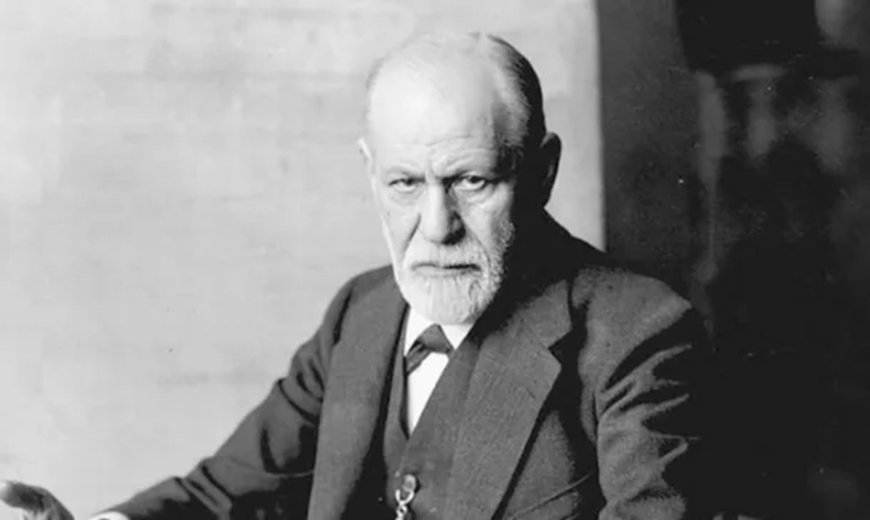


WISE NEWS PRESS / ISTANBUL, TURKEY — DEC. 4, 2025
The phenomenon of dreaming has captivated the human imagination for millennia, prompting the world's greatest scientists, philosophers, and artists to propose theories ranging from divine messages to biological necessities.
A review of insights from renowned thinkers reveals a complex tapestry of interpretation, where dreams serve as mirrors to the soul, gateways to the unconscious, and even clues to the nature of reality itself.
The Gateway to the Unconscious
In the realm of psychology, Sigmund Freud's pioneering work remains a cornerstone, unveiling dreams as the "gateway to the unconscious mind" and exposing the intricate tapestry of the human psyche. Building on this, Carl Jung expanded the horizon by portraying dreams as mirrors of the "collective unconscious," illuminating the depths of the human soul through symbolism.
Later researchers added nuance to these psychological perspectives. Ernest Hartmann explored dream content as a reflection of inner conflicts and aspirations, highlighting their emotional significance.
Philosophical Inquiries and Existence
Philosophers have long debated the source and meaning of dreams. Aristotle viewed them as windows into the "inner workings of the mind," sparking early curiosity about the subconscious. In contrast, Plato explored the metaphysical dimensions, depicting dreams as vehicles for divine communication and spiritual enlightenment.


The debate continued through the Enlightenment and beyond:
-
René Descartes posited dreams as a realm of pure consciousness, distinct from the material world.
-
Thomas Hobbes took a materialist stance, viewing dreams merely as epiphenomena of the brain's activity.


-
Friedrich Nietzsche delved into the existential fabric, seeing dreams as glimpses into the "eternal recurrence of life's patterns".
The Biology of Slumber
Modern science has shifted the focus toward neurobiology and evolution. Allan Hobson's groundbreaking research reshaped the understanding of dreams as manifestations of neural activity during sleep.
Furthermore, William Dement's pioneering studies on REM sleep revolutionized the field by highlighting the role of dreaming in memory consolidation and cognitive processing. From an evolutionary perspective, Charles Darwin's theory suggests dreams may have evolved as a mechanism for processing emotional experiences and rehearsing survival strategies.
Art, Time, and Relativity
Beyond science and philosophy, visionaries in physics and literature have found inspiration in the dream state. Albert Einstein's speculations on time and space resonated with the timeless allure of dreams, suggesting that reality itself might be "but a waking dream".
In literature, William Shakespeare captured the ephemeral beauty of the dream world, weaving tales of redemption, while Edgar Allan Poe plumbed the dark recesses of the subconscious through macabre nightmares.
???? Unlock the Meaning of Your Dreams
Don't leave your nightly visions unresolved.
Visit DreamsInterpreters.com for expert insight and spiritual clarity.
What's Your Reaction?
 Like
0
Like
0
 Dislike
0
Dislike
0
 Love
1
Love
1
 Funny
0
Funny
0
 Wow
0
Wow
0
 Sad
0
Sad
0
 Angry
0
Angry
0

Editor | Wise News Press — Delivering accurate, timely global news with integrity, insight, and editorial responsibility.






















Comments (0)