



Erdoğan: Mecca defense pact sends global message, EU not a priority
Erdoğan said the Turkey-Saudi Arabia-Pakistan Mecca defense pact sent a global message, while outlining positions on the EU, F-35s, Syria, Gaza and Iran.


By Ahmet Taş | Wise News Press
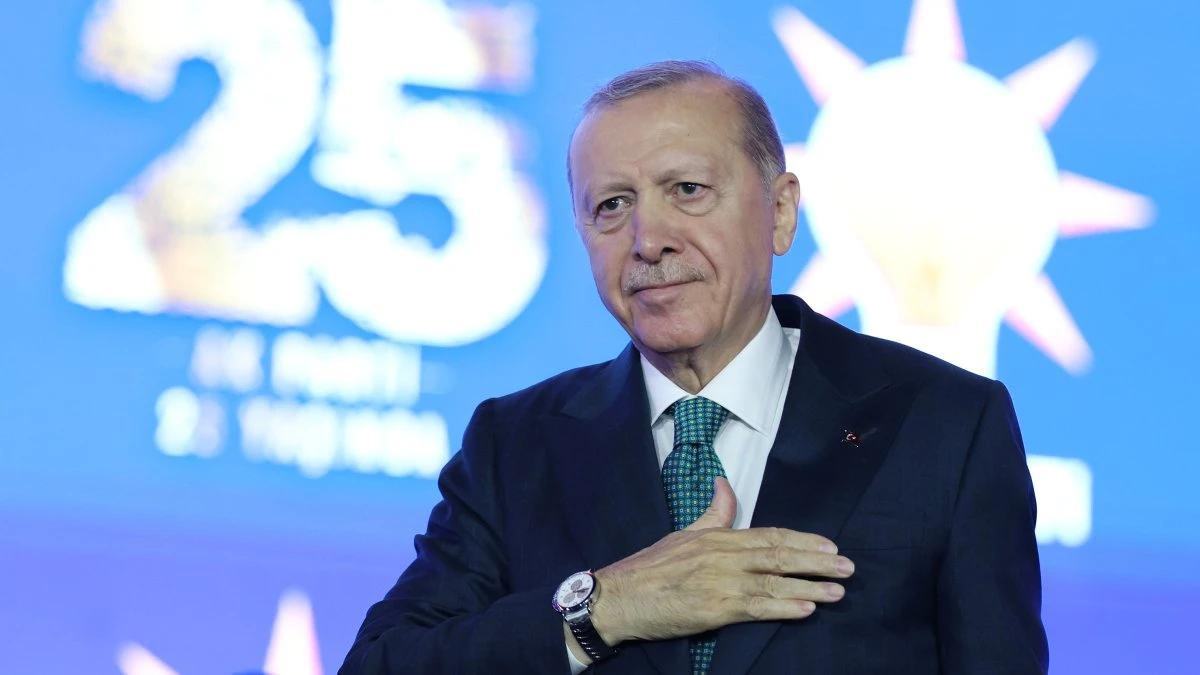
ANKARA, TURKEY — Turkish President Recep Tayyip Erdoğan said a defense agreement signed by Turkey, Saudi Arabia and Pakistan in Mecca had sent an important message to the world, while describing European Union membership as no longer Ankara’s top priority.
In an interview with Al Jazeera Arabic reported by Anadolu Agency, Erdoğan addressed a broad range of foreign policy issues, including the three-country Mecca agreement, Turkey’s relations with the European Union and the United States, the F-35 fighter jet program, Syria, Gaza, Lebanon, Iran, Russia and Libya.
Mecca pact presented as a joint defense framework
Erdoğan described the agreement between Turkey, Saudi Arabia and Pakistan as a significant development in relations among the three countries.
He said signing the pact in Mecca gave the three governments additional strength and delivered what he characterized as an important international message. Erdoğan also portrayed Turkey, Pakistan and Saudi Arabia as countries seeking to promote peace amid heightened regional tensions.
Asked whether the arrangement resembled NATO’s Article 5 collective defense principle, Erdoğan said the three countries would have the ability to act together if one of them came under attack.


According to Erdoğan’s description, an attack against Turkey, Saudi Arabia or Pakistan would trigger a shared defense response by the other members of the pact. The source material, however, does not include the full legal text of the agreement, so the precise scope of its obligations cannot be independently assessed from the interview alone.
Erdoğan says the pact could expand to other countries
The Turkish president also said membership did not necessarily have to remain limited to the three founding states.
Erdoğan said additional countries could join the arrangement in the future and that the parties had kept the door open to prospective members when the agreement was signed.


He specifically mentioned Egypt, saying Cairo could join if it wished to participate in the framework.
Erdoğan linked the pact to a broader message of regional peace, particularly at a time of tension involving the United States and Iran. He said Turkey, Pakistan and Saudi Arabia intended to continue presenting themselves as supporters of diplomacy and peace.
Iran tensions and the Strait of Hormuz remain major concerns
The interview also covered tensions involving Iran, the United States and Israel.
Erdoğan said Turkey wanted hostilities to end as quickly as possible and stressed the importance of restoring normal maritime traffic through the Strait of Hormuz.
He argued that disruptions in the strait represented a problem for global oil flows and said Ankara favored reopening the route without charges on maritime traffic.
The Turkish president again presented Ankara as favoring diplomacy over military escalation.
He also praised the mediation roles of Qatar and Pakistan in efforts to find a solution between Washington and Tehran, saying he expected those diplomatic efforts to continue.
Erdoğan says he plans to visit Damascus
Syria was another major topic in the interview.
Erdoğan said relations between Turkish state institutions and the administration led by Syrian President Ahmed al-Sharaa were progressing well.
He said Turkey would continue supporting Syria’s stability and would not leave the country isolated.
The Turkish president also announced that he intended to travel to Damascus “as soon as possible,” without providing a specific date for the planned visit.
On Lebanon, Erdoğan criticized Israeli military actions and said Turkey would continue supporting the Lebanese government.
He added that Ankara had discussed the situation with the United States and wanted further diplomatic engagement aimed at ending the violence affecting Lebanon.
Gaza and Israel remain central to Ankara’s regional policy
Erdoğan said Turkey would continue its involvement in issues surrounding Gaza, arguing that Ankara could not leave the territory on its own.
He said Hamas had demonstrated what he described as a constructive approach toward ceasefire arrangements, while accusing Israel of continuing an aggressive policy in Gaza and Lebanon.
The remarks reflect Erdoğan’s position and political assessment of the conflict.
Erdoğan also referred to conversations with US President Donald Trump about Israel, saying Ankara had repeatedly communicated its concerns to Washington and would continue doing so.
Addressing hostile rhetoric toward Turkey from some Israeli political and media figures, Erdoğan said Ankara preferred to discuss peace rather than war but would defend itself if Turkey were attacked.
Turkey expects movement from Washington on the F-35 issue
On relations with the United States, Erdoğan highlighted Turkey’s long-running dispute over the F-35 fighter jet program.
He said Ankara expected President Trump to fulfill what Erdoğan described as a promise concerning F-35 aircraft.
According to the Turkish president, defense industry cooperation remains one of several important files between Ankara and Washington, alongside efforts to expand bilateral trade.
Erdoğan also said Turkey’s relations with Russia remained “very good,” adding that contacts were maintained through frequent telephone diplomacy and direct communication between Turkish and Russian ministers.
On Libya, he said Turkey intended to maintain its engagement and noted that Turkish Petroleum was taking steps related to cooperation over the country’s oil reserves.
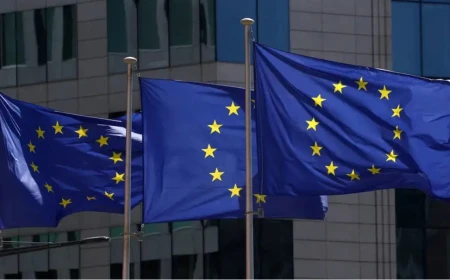
European Union membership is no longer Ankara’s top priority
One of the clearest policy messages in the interview concerned Turkey’s relationship with the European Union.
Erdoğan said Ankara had not closed the door on EU membership but stressed that joining the bloc was no longer Turkey’s primary priority.
He argued that Europe had kept Turkey outside the union for decades and suggested that this approach was unlikely to change soon.
At the same time, Erdoğan said Turkey still remained open to membership if the European Union chose to admit the country.
He framed the issue as one in which Europe, rather than Turkey, would ultimately lose from keeping Ankara outside the bloc.
The remarks point to a foreign policy approach in which Ankara continues to maintain channels with the EU and the United States while simultaneously deepening relations with Middle Eastern and regional partners.
Erdoğan concluded the interview by predicting a stronger future role for Turkey in international diplomacy and world peace, while calling for greater unity across the Arab and Muslim world.
WiseNewsPress.com
What's Your Reaction?
 Like
0
Like
0
 Dislike
0
Dislike
0
 Love
0
Love
0
 Funny
0
Funny
0
 Wow
0
Wow
0
 Sad
0
Sad
0
 Angry
0
Angry
0

Ahmet Taş is a journalist, editor and Turkey Office Manager of the Wise News Press Media Group. He works across news, digital media and international publishing, focusing on accurate, responsible and accessible journalism. He contributes to the development of media projects that bring important political, social and global developments to a wider international audience.












Comments (0)