



Ukraine, Vladimir Putin, Volodymyr Zelenskyy, Ukrainian military, Russia, defense industry
Russia’s invasion failed to demilitarize Ukraine; instead, it accelerated military reform, domestic arms production and a more assertive regional strategy


By Yusuf Inan | Wise News Press
Journalist and Author | Political and Strategic Analyst
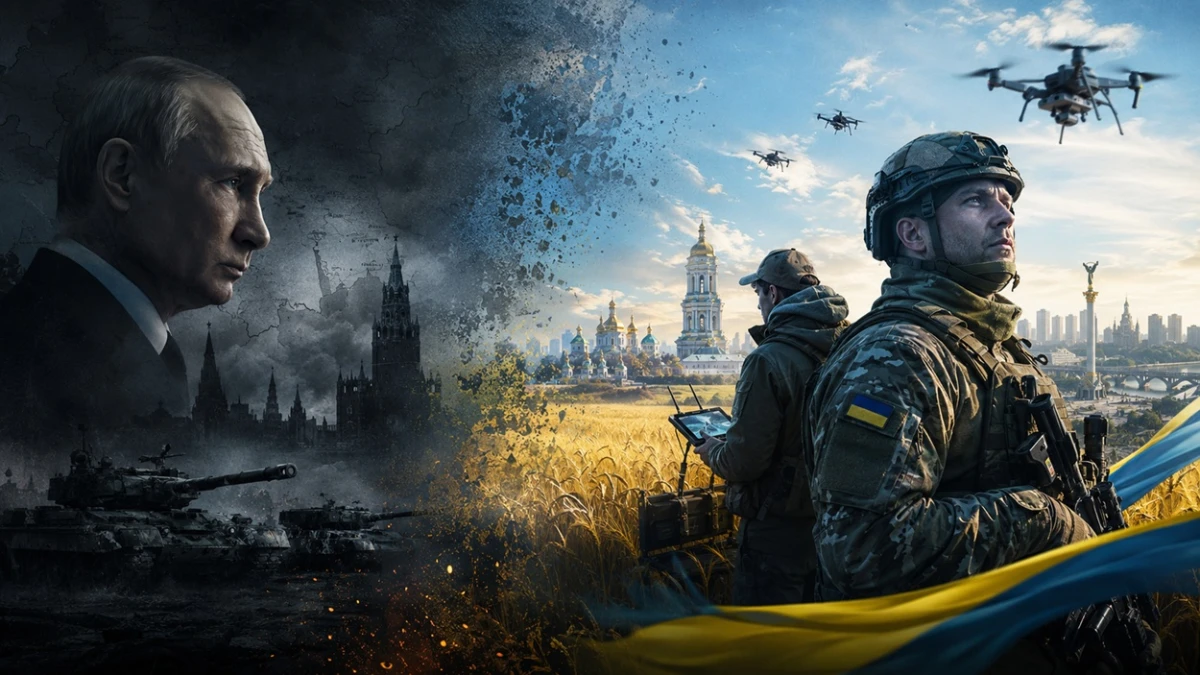
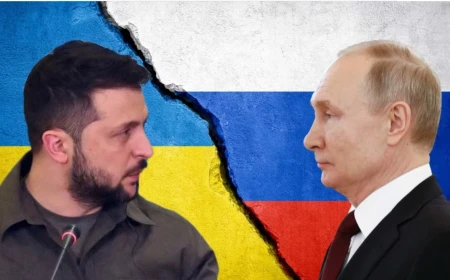
ANKARA, TURKEY — Vladimir Putin said Russia was acting to “demilitarize” Ukraine, yet one of the war’s greatest strategic paradoxes is now becoming increasingly difficult to ignore: Moscow’s invasion has helped create a more experienced, technologically capable and militarily resilient Ukrainian state.
That transformation did not begin in February 2022. Russia’s seizure of Crimea in 2014 and the fighting that followed in Donbas forced Ukraine into more than a decade of military adaptation. The full-scale invasion accelerated that process dramatically.
The Ukraine of today is no longer the Ukraine Russia confronted in 2014.
Putin’s argument created its own contradiction
Putin has repeatedly portrayed Ukraine as a vulnerable state whose territory could eventually become the object of ambitions by neighboring countries. He has specifically accused Poland and other states of harboring territorial aspirations toward western Ukraine, although such claims have not been supported by evidence.


But even if one were to take that hypothetical threat seriously, Russia’s own war has fundamentally changed the equation.
Any country contemplating military aggression against Ukraine in the future would no longer face the poorly prepared armed forces of 2014. It would face an army that has spent years fighting one of the world’s largest military powers under extraordinarily difficult conditions.
Ukrainian soldiers have learned to operate under missile attacks, drone warfare, electronic interference, ammunition shortages and rapidly changing battlefield conditions.


The irony is striking: Russia may have done more than any other country to prepare Ukraine to defend itself against future external aggression.
Ukraine’s army has been rebuilt through war
After 2014, Ukraine increased defense spending, reorganized parts of its command structure and expanded cooperation with NATO countries. Tens of thousands of Ukrainian troops gained real combat experience before Russia launched its full-scale invasion.
The war since 2022 has pushed that evolution much further.
Ukraine has had to integrate Western artillery, air-defense systems, armored vehicles, missiles, intelligence platforms and communications technologies while simultaneously developing its own solutions.
Perhaps more important than the equipment itself is the culture of adaptation that has emerged.
A battlefield problem can lead to a technological response within weeks or months. Commercial drones are modified for military purposes. Electronic-warfare systems are adjusted to counter new Russian tactics. Drone operators, engineers and soldiers exchange battlefield feedback directly with manufacturers.
Ukraine has become not simply a recipient of military technology but a laboratory of modern warfare.
This does not mean Russia has been defeated. Moscow still possesses far greater strategic depth, larger manpower reserves, a huge missile arsenal and nuclear weapons. Russian forces continue to occupy substantial Ukrainian territory and can inflict devastating damage on Ukrainian cities.
But Russia has failed to destroy the Ukrainian state or force Kyiv into political submission.
That alone represents a major difference from the expectations surrounding the opening phase of the invasion.
From “demilitarization” to a domestic defense industry
The development of Ukraine’s defense industry may prove to be the most consequential long-term result of the war.
Ukraine’s National Security and Defense Council has put the country’s projected defense-industrial production capacity for 2026 at around $55 billion, dramatically higher than it was at the beginning of the full-scale invasion.
Capacity is not the same as actual production. Financing, procurement and access to components remain significant constraints.
The direction of travel, however, is unmistakable.
Ukraine now produces or develops large numbers of unmanned aerial vehicles, naval drones, electronic-warfare equipment, long-range strike systems and other weapons.
Its domestically developed systems have demonstrated the ability to reach targets deep inside Russian territory, including the Moscow region and strategically important energy and military infrastructure.
A state Moscow said it wanted to demilitarize has therefore developed the technological ability to strike hundreds of kilometers beyond its own borders.
That is one of the central strategic contradictions of Putin’s war.
The next frontier is strategic autonomy
Ukraine nevertheless remains dependent on its partners in several critical areas, particularly sophisticated air-defense systems and their ammunition.
Russian ballistic missiles and large-scale drone attacks continue to pose an enormous threat. Kyiv cannot yet replace systems such as Patriot entirely with domestically produced alternatives.
But Ukraine is moving toward a more independent defense architecture.
Interceptor drones, sensors, electronic warfare, artificial intelligence, automated targeting systems and locally developed missiles are increasingly important parts of the country’s defense strategy.
The significance extends beyond Ukraine.
Western militaries once approached the relationship primarily as teachers helping Ukraine modernize. Today, NATO countries are also studying Ukrainian battlefield experience, particularly in drone warfare and electronic warfare.
Ukraine has become both a student and a teacher.
If the war continues, this technological ecosystem is likely to become even more institutionalized. A generation of engineers, soldiers, commanders and entrepreneurs is acquiring knowledge that cannot easily be erased when the fighting eventually ends.
Ukraine is also widening its diplomatic horizon
The transformation is not exclusively military.
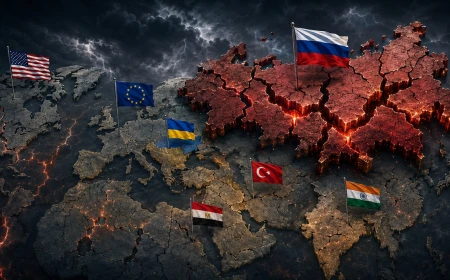
Ukraine is increasingly attempting to position itself as an independent regional actor with relationships extending beyond Washington and Brussels.
Türkiye is central to this strategy.
Kyiv and Ankara have developed substantial cooperation in defense technologies, Black Sea security, reconstruction and diplomatic efforts. Türkiye continues to support Ukraine’s territorial integrity while maintaining channels of communication with Moscow.
The Crimean Tatars also provide an important historical and cultural bridge between Ukraine and the wider Turkic world.
Kyiv has shown interest in deeper engagement with Azerbaijan, Central Asian states and institutions of the Turkic world. At the same time, Ukraine has been expanding contacts with Gulf countries and the broader Muslim world.
This does not mean Ukraine is moving away from Europe.
Rather, Kyiv appears to understand that a country located between Europe, the Black Sea, the Caucasus and Eurasia cannot build its foreign policy around a single axis.
The emerging Ukrainian strategy is therefore broader: Europe and the United States remain indispensable partners, but Türkiye, the Turkic states, the Islamic world and former Soviet republics are increasingly important diplomatic arenas.
Tokayev’s message revealed a changing post-Soviet environment
The behavior of Kazakhstan is particularly significant.
Kazakh President Kassym-Jomart Tokayev has repeatedly demonstrated that Astana is unwilling simply to reproduce Moscow’s position on Ukraine. In 2022, while sitting beside Putin, Tokayev publicly said Kazakhstan would not recognize the Russian-backed separatist entities in Donetsk and Luhansk.
In 2026, appearing alongside Putin again, Tokayev called for an end to the war.
His message was remarkably simple:
“This must end.”
Such statements matter because they reflect a broader change in the post-Soviet space.
Russia remains overwhelmingly influential, but neighboring states are increasingly pursuing their own strategic interests. They trade with Moscow while also strengthening ties with China, Türkiye, Europe and the United States.
The longer the war continues, the more pressure there may be on Russia’s traditional assumption that it possesses a privileged sphere of influence across the former Soviet Union.
Pressure is also growing inside Russia
Predicting the imminent collapse of the Russian Federation would be speculation rather than serious analysis.
Russia retains enormous resources and a political system capable of suppressing dissent.
But the economic and political costs of a prolonged war are real.
Growth has slowed sharply compared with the earlier wartime expansion, while military spending continues to consume substantial resources. Russian economists and former officials have increasingly warned about technological stagnation, labor shortages and the long-term consequences of an economy organized around war.
Criticism also comes from Russians living abroad, opposition figures, some veterans and individuals formerly connected to state institutions.
The Kremlin continues to demonstrate that it is prepared to respond harshly to organized political opposition.
For that reason, internal criticism should not automatically be interpreted as evidence that the Russian state is approaching collapse.
But a prolonged war can produce pressures that accumulate gradually rather than dramatically: economic exhaustion, disagreements among elites, regional grievances and weakening influence over neighboring states.
Ukraine’s strategy appears increasingly designed not only to survive Russia’s military pressure but to outlast it.
The ultimate paradox of Putin’s war
At the same time, President Volodymyr Zelenskyy continues to reshape Ukraine’s state and military leadership.
Commanders are replaced, younger officials are promoted, logistics structures are reorganized and new institutions are created around drones, long-range strikes and modern battlefield requirements.
Not every decision succeeds, and Ukraine continues to face serious problems involving manpower, financing, corruption risks and dependence on foreign assistance.
But the state is adapting.
And that brings the argument back to the central question.
If Putin began this war in part to weaken Ukraine, reduce its military potential and prevent it from becoming a powerful security actor, what has Russia actually achieved?
Ukraine has lost territory and suffered an enormous human and economic tragedy. That reality cannot be minimized.
Yet Russia has also confronted Ukrainians with an existential question about whether their state, territory and national independence can survive.
The response has transformed Ukrainian society.
Russia saw the weakness of Ukraine’s military when it seized Crimea in 2014.
What Moscow may not have anticipated was that its own aggression would teach Ukraine exactly what kind of army, defense industry and state institutions it needed to ensure that the experience could never be repeated so easily.
Putin sought a weaker Ukraine on Russia’s frontier.
Instead, he may have accelerated the emergence of a battle-tested military power with growing technological capabilities, increasingly diversified international relationships and a population that now understands national defense not as an abstract concept, but as a matter of survival.
If the war continues, history’s greatest irony may not simply be that Ukraine survived.
It may be that the country Russia intended to weaken becomes stronger while the long-term burden of the war increasingly weighs on Russia itself.
Yusuf İnan
WiseNewsPress.com
Yusuf İnan is a journalist, author, and political and strategic analyst. He serves as editor-in-chief of UAPresa.com, WiseNewsPress.com, SehitlerOlmez.com and YerelGundem.com. His work focuses on strategic and political analysis concerning developments in Türkiye and around the world.
What's Your Reaction?
 Like
0
Like
0
 Dislike
0
Dislike
0
 Love
0
Love
0
 Funny
0
Funny
0
 Wow
0
Wow
0
 Sad
0
Sad
0
 Angry
0
Angry
0
Yusuf İnan is a journalist, columnist, strategic analyst and head of the Wise News Press Media Group. His work focuses on international affairs, geopolitics, security and major social issues. Through his journalism, he promotes peace, dialogue, mutual understanding and responsible reporting while contributing to the development of international media projects.











Comments (0)