



Ukraine’s Umerov move: Zelenskyy signals Türkiye, Turkic and Muslim worlds
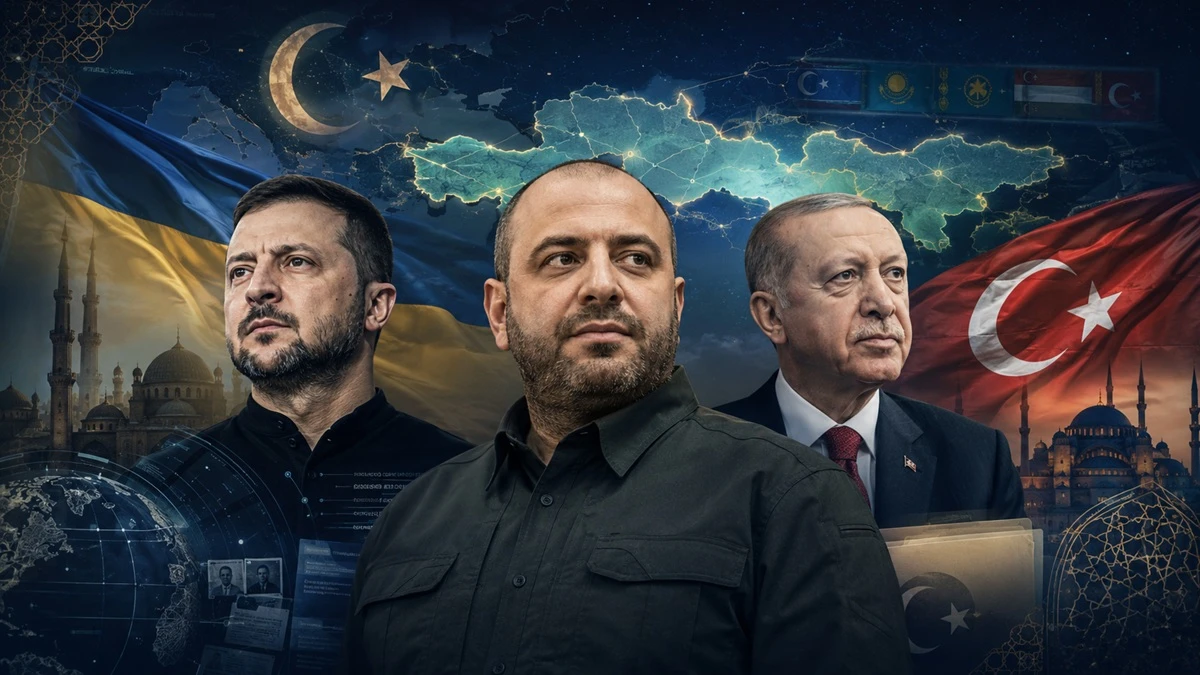
Rustem Umerov’s intelligence appointment links Ukraine’s Crimea strategy with Türkiye, the Turkic world and Muslim societies through security and diplomacy.


By Yusuf Inan | Wise News Press
Journalist and Author | Political and Strategic Analyst
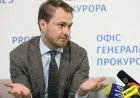
KYIV, UKRAINE — The appointment of Crimean Tatar statesman Rustem Umerov as head of Ukraine’s Foreign Intelligence Service carries diplomatic, historical and geopolitical messages far beyond an ordinary bureaucratic reshuffle.
President Volodymyr Zelenskyy appointed Umerov to lead foreign intelligence while instructing him to continue coordinating peace negotiations, talks with the United States and other partners, and international defence-technology agreements. Zelenskyy said the new position would give Umerov greater capacity to concentrate on matters at the intersection of diplomacy and defence.
Kyiv has not officially stated that the appointment was designed specifically as a message to Türkiye, the Turkic world or Muslim-majority countries. However, when Umerov’s Crimean Tatar identity, Muslim background, diplomatic experience and responsibilities are considered together, the decision acquires a strategic meaning that extends well beyond institutional administration.
The message is directed not only to governments and heads of state. It also reaches societies across the vast Turkic and Muslim world by demonstrating that a Crimean Tatar Muslim can hold one of the most sensitive positions in the Ukrainian state.


What does the appointment mean institutionally?
The Foreign Intelligence Service operates in the fields of foreign policy, military security, economics, technology, information and cyber security. It collects intelligence, produces strategic analysis, identifies external threats and cooperates with foreign security and intelligence institutions. The agency is directly overseen by the Ukrainian president.
Umerov will therefore have direct access to some of Ukraine’s most sensitive assessments concerning Russian intentions, allied governments, international power balances, military developments and possible diplomatic openings.
It would nevertheless be inaccurate to describe the Foreign Intelligence Service as an institution that independently directs all of Ukraine’s domestic policy. Internal security, military intelligence, counterintelligence and government coordination remain divided among several bodies.


Umerov’s move from the National Security and Defence Council to foreign intelligence consequently shifts the centre of his work from broad internal and external security coordination toward foreign threats, strategic diplomacy, international influence and relations with partner governments.
What makes the appointment unusual is that Umerov will remain Ukraine’s chief negotiator. Foreign intelligence, peace diplomacy, defence agreements and strategic communications will now converge in the hands of an official who can connect classified assessments with international negotiations.
This gives Umerov a position close to the centre of Ukraine’s foreign policy and war strategy. It also allows Zelenskyy to use the same figure to speak simultaneously to Western allies, Türkiye, the Turkic republics and Muslim-majority countries.
Crimea becomes a question of people, identity and historical justice
Umerov was born in Uzbekistan in 1982 to a Crimean Tatar family living in deportation. He returned to Crimea with his family at the age of nine and later worked closely with Crimean Tatar leader Mustafa Dzhemilev. His life story is inseparable from the Soviet deportation of the Crimean Tatars and their struggle to return to their homeland.
That background gives the appointment exceptional symbolic significance. A representative of Crimea’s indigenous people now leads the state institution responsible for assessing Ukraine’s principal external threats and supporting its strategic interests worldwide.
Ukraine can therefore describe Crimea as more than territory marked on a military map. Crimea becomes a question of homeland, indigenous rights, forced deportation, cultural survival and historical justice.
Zelenskyy has described Ukraine’s sovereignty, territorial integrity and the future of Crimea as fundamental questions. He has also said that the Crimean Tatar people and Ukraine’s other indigenous peoples must not be deprived of their homeland.
Umerov’s appointment gives institutional form to that message. It tells Crimean Tatars that Ukraine does not merely promise to defend them as a vulnerable community; it entrusts one of their representatives with responsibility at the highest levels of the state.
It also strengthens Kyiv’s argument that its struggle for Crimea is not an abstract territorial dispute. The struggle concerns the future of people whose families were deported, whose homeland was occupied and whose representative institutions have faced pressure under Russian control.
Umerov’s biography makes Ukraine’s independence struggle and its claim to Crimea more understandable and meaningful to audiences beyond Europe, particularly across the Turkic and Muslim worlds.
A bridge of trust and historical affinity with Türkiye
Türkiye does not recognize Russia’s annexation of Crimea, supports Ukraine’s independence, sovereignty and territorial integrity, and officially attaches particular importance to the situation of the Crimean Tatar Turks. Ankara repeated that position in March 2026.
Umerov’s importance for Türkiye is not limited to his ethnic and cultural background. He has already established practical working relations with Turkish diplomatic and intelligence officials.
In January 2026, Zelenskyy announced that Umerov was holding talks in Türkiye with the Turkish foreign minister and intelligence services, with the resumption of prisoner exchanges identified as the central issue.
This means Ankara will be dealing with an intelligence chief who understands Türkiye, the historical sensitivities surrounding Crimea, the Black Sea balance and the cultural language through which Turkish society views the Crimean Tatar question.
For Ukraine, that familiarity may help generate trust more rapidly in areas such as Black Sea security, prisoner exchanges, intelligence coordination, defence production, drone technology and diplomatic mediation.
For Türkiye, Umerov offers a senior Ukrainian counterpart who combines state authority with a personal understanding of Crimean Tatar history and Turkish sensitivities.
Beyond formal state relations, Umerov has the potential to become a bridge of trust, affinity and shared historical memory between Ukrainians and Turks.
There is no evidence that Türkiye requested or engineered his appointment. The more defensible interpretation is that Zelenskyy selected Umerov primarily for Ukraine’s strategic needs, while the appointment simultaneously creates a considerable advantage in relations with Ankara.
A strategic message to the Turkic world and its peoples
The symbolism extends from Türkiye to Azerbaijan, Kazakhstan, Uzbekistan, Kyrgyzstan, Turkmenistan and Turkic communities elsewhere.
Crimean Tatars are both an indigenous people of Ukraine and an inseparable part of the wider Turkic historical and cultural world. Umerov personifies the idea that Ukrainian citizenship and Turkic identity are not competing affiliations.
His rise demonstrates that a person can remain deeply connected to Crimean Tatar history, culture and identity while serving at the centre of the Ukrainian state.
This is a message not only to Turkic governments but to their citizens. Ukraine can now communicate through a figure whose biography reflects themes familiar across the Turkic world: homeland, deportation, cultural survival, resistance to assimilation, sovereignty and the right of a people to determine its own future.
Umerov can help Ukraine present itself not merely as an Eastern European country resisting Russia, but also as a Black Sea state that includes a historic Turkic and Muslim people within its national identity.
Such a message could help build a bridge of confidence and emotional affinity between Ukraine and the Turkic world. It may make Ukraine’s war of independence more relatable to people whose own historical memories include imperial rule, displacement and pressure on national identity.
Identity alone, however, cannot transform foreign policy. The Turkic states maintain different political, economic, security and energy relationships with Russia. Some governments will remain cautious regardless of Umerov’s appointment.
For the symbolic advantage to produce lasting results, it must be supported by stronger diplomatic representation, trade, transport links, defence cooperation, education, cultural exchanges and public diplomacy.
A message to the wider Muslim world
Umerov’s Muslim identity adds another strategic dimension. His appointment challenges attempts to portray Ukraine solely as a Western or Christian political project.
It presents Ukraine as a shared state in which Crimean Tatars, Muslims and other communities participate directly in national defence, diplomacy and strategic decision-making.
At a state iftar attended by Muslim leaders, soldiers and diplomats, Umerov said thousands of Muslims were serving in Ukraine’s armed forces and defending the country’s future. Zelenskyy honoured Muslim service members and connected their struggle with the liberation of Ukraine and Crimea.
This allows Kyiv to deliver a different message to Muslim-majority societies: Ukraine’s war is not only a European confrontation or a dispute between Russia and the West. It is also a struggle against occupation, forced displacement and the denial of an indigenous Muslim people’s right to its homeland.
That framing may resonate in societies with historical experiences of colonialism, foreign intervention, forced migration and the loss of political sovereignty.
Umerov’s cultural and religious familiarity may also help Ukraine communicate more warmly with the Middle East, Gulf countries, Central Asia and other parts of the Islamic world.
Zelenskyy has publicly praised Umerov’s work in the Middle East and Gulf. In his August 2026 address to Ukrainian ambassadors, he said Ukraine had achieved good results in the region and specifically named Umerov among the officials responsible.
The message again extends beyond royal courts, presidential offices and foreign ministries. It reaches Muslim communities by showing that a Muslim official is entrusted with Ukraine’s intelligence, defence diplomacy and peace negotiations.
This can create a human and emotional connection that conventional diplomatic language may not achieve.
Ukraine must nevertheless avoid treating Umerov’s Muslim identity merely as an instrument of public relations. The appointment will acquire lasting credibility only if it is accompanied by practical protection of Muslim citizens, Crimean Tatar language and culture, religious freedom and indigenous rights.
The Erdoğan factor and Türkiye’s global importance
The appointment also highlights the wider geopolitical importance of President Recep Tayyip Erdoğan and Türkiye.
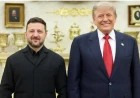
In the same speech in which he announced Umerov’s new responsibilities, Zelenskyy thanked those working to strengthen relations with Türkiye, described that work as extremely important and emphasized his numerous personal contacts with Erdoğan. He said he expected the teams of the two countries to produce increasing results.
Türkiye’s value to Ukraine does not arise from a single factor. Ankara is a NATO member, a major Black Sea power, a defence-industry partner and one of the few governments capable of supporting Ukraine while maintaining direct working communication with Moscow.
Türkiye also possesses influence extending through the Caucasus, Central Asia, the Balkans, the Middle East and the wider Muslim world.
Erdoğan’s ability to communicate with both Kyiv and Moscow, Türkiye’s control of a critical Black Sea gateway, its links to the Crimean Tatars and its influence across Turkic and Muslim societies make Ankara an indispensable strategic actor for Ukraine.
Umerov’s appointment indirectly confirms the importance of that position. Kyiv is placing an official who knows Türkiye and has previously worked with Turkish diplomatic and intelligence institutions at the centre of its foreign-security apparatus.
The strategic message is therefore not directed solely at the Erdoğan administration. It is also addressed to Turkish public opinion, Turkic societies and Muslim communities: a figure they can regard as culturally and historically close now carries one of the Ukrainian state’s highest security responsibilities.
This creates the possibility of a trust and goodwill bridge extending beyond relations between governments and reaching directly between societies.
A functional decision with a powerful symbolic dimension
The appointment should not be exaggerated into proof of a formal Ukraine-Türkiye-Turkic world geopolitical bloc. Zelenskyy has not declared that Umerov’s promotion represents a joint project with Ankara or an official Ukrainian turn away from the West.
The decision also carries institutional risks. Umerov will be expected to manage foreign intelligence, peace negotiations and international defence-technology agreements simultaneously. Such a concentration of responsibilities could improve coordination, but it could also produce excessive workload and excessive dependence on one individual.
Reuters has reported that Zelenskyy’s broader reshuffle has been criticized as insufficiently explained and as repeatedly moving members of the same limited circle between senior positions.
The symbolic importance of Umerov’s identity must also be matched by practical policies. The true value of his rise will be measured by whether Ukraine strengthens the rights, language, culture and political representation of the Crimean Tatars and maintains Crimea as a central element of national strategy.
Strategically, the appointment can be read on three interconnected levels.
For Ukraine, it brings foreign intelligence, peace diplomacy, defence technology and international partnerships closer together.
For the Crimean Tatars, it represents recognition and participation at the centre of the state rather than symbolic inclusion at its margins.
For Türkiye, the Turkic world and Muslim-majority societies, it creates a new channel of trust, communication and shared historical understanding.
Zelenskyy’s official explanation focuses on diplomacy, defence and negotiations. Yet choosing Rustem Umerov gives that functional decision a much broader historical and geopolitical meaning.
Umerov can speak to Western allies as a former defence minister and chief negotiator, to Türkiye as a Crimean Tatar statesman familiar with Ankara, to the Turkic world as a representative of a historic Turkic people, and to Muslim societies as one of Ukraine’s most prominent Muslim officials.
That combination makes the appointment more than a change at the top of an intelligence agency. It is a strategic message about the kind of state Ukraine wants to present to the world—and about the partners and societies it hopes to bring closer to its struggle for Crimea, sovereignty and independence.
Yusuf İnan
WiseNewsPress.com
Yusuf İnan is a journalist, author, and political and strategic analyst. He serves as editor-in-chief of UAPresa.com, WiseNewsPress.com, SehitlerOlmez.com and YerelGundem.com. His work focuses on strategic and political analysis concerning developments in Türkiye and around the world.
What's Your Reaction?
 Like
0
Like
0
 Dislike
0
Dislike
0
 Love
0
Love
0
 Funny
0
Funny
0
 Wow
0
Wow
0
 Sad
0
Sad
0
 Angry
0
Angry
0

Editor | Wise News Press — Delivering accurate, timely global news with integrity, insight, and editorial responsibility.









Comments (0)