



Why Ukraine is targeting Russia’s e-commerce giant Wildberries warehouses
Ukraine has intensified strikes on Wildberries warehouses, accusing the Russian e-commerce giant of supporting military logistics and Russia’s war economy.



By Ahmet Taş | Wise News Press
KYIV, UKRAINE — Ukraine has intensified attacks on warehouses belonging to Russian e-commerce giant Wildberries, accusing the company’s logistics network of helping supply drone components, navigation equipment and other materials used by Russian forces.
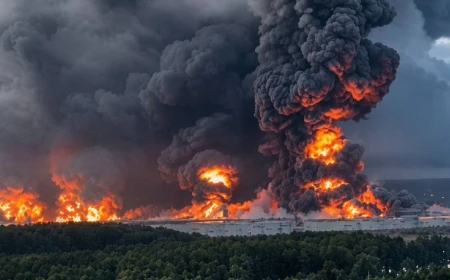
According to Euronews, more than 20 Wildberries warehouses have reportedly been targeted since Kyiv stepped up attacks against the company on July 18. The strikes have caused extensive fires and losses reportedly worth billions, while raising questions over why one of Russia’s largest civilian e-commerce businesses has become a recurring target.
Why is Ukraine targeting Wildberries?
Wildberries, founded in 2004, is Russia’s largest online marketplace and is frequently compared with Amazon because of the scale of its retail and logistics operations.
Ukrainian President Volodymyr Zelenskyy has said warehouses targeted by Ukrainian drones played a role in supplying Russian forces with components used in unmanned aircraft, navigation equipment and other military-related goods.
Euronews notes that the Wildberries marketplace itself lists a range of products that may have military applications, including drone components and bulletproof vests.


However, Kyiv’s argument extends beyond the individual goods sold through the platform.
Wildberries operates one of the largest warehousing and distribution networks in Russia, giving the company significant importance to domestic logistics, commercial activity and the broader Russian economy.
Ukraine appears to view that economic role as part of the infrastructure supporting Moscow’s ability to sustain the war.


Wildberries has rejected the attacks. Company founder Tatyana Kim recently described the strikes as acts of “terrorism.”
More than 20 warehouses reportedly struck
Wildberries’ logistics network has come under growing pressure in recent weeks.
According to Euronews, more than 20 warehouses have been targeted, with fires destroying large quantities of merchandise.
Images and videos shared by residents on social media have shown thick black smoke rising from some of the affected warehouse sites.
The scale of the reported losses is particularly significant because Wildberries functions as a central distribution platform for tens of thousands of merchants and businesses across Russia.
An attack on a major warehouse can therefore affect not only the company itself but also sellers who store products at Wildberries facilities and depend on its logistics system to reach customers.
For Ukraine, repeated attacks on such facilities may create economic disruption well beyond the physical damage to individual buildings.
Kyiv has increasingly expanded its long-range strike campaign against targets inside Russia, including oil refineries, industrial sites, military infrastructure and logistics facilities.
Wildberries plays a major role in Russia’s economy
Wildberries reports annual turnover of approximately €70 billion to €75 billion, according to figures cited by Euronews.
Various estimates cited in the report suggest that this level of activity is equivalent to slightly more than 2 percent of Russia’s gross domestic product, highlighting the scale of the company’s economic footprint.
Wildberries says it employs around 50,000 people, while its workforce can exceed 100,000 during peak periods.
Its marketplace connects large numbers of Russian entrepreneurs with customers across the country, making the platform an important part of the consumer economy.
The company and its founder have also faced international scrutiny since Russia launched its full-scale invasion of Ukraine in February 2022.
Poland imposed sanctions on Wildberries in 2022 and described the company as one of the Russian Federation’s largest taxpayers.
The European Union also placed the company’s banking arm on its sanctions list in July, according to Euronews, citing its financial contribution to Russia’s state budget.
These measures have reinforced Ukraine’s argument that large Russian corporations can have significance beyond their nominally civilian commercial functions.
Kyiv seeks to pressure Russia’s broader war economy
Ukraine’s strikes on Wildberries appear to form part of a wider strategy aimed at imposing costs on Russia far from the battlefield.
Kyiv has repeatedly targeted energy infrastructure because oil and fuel revenues provide substantial resources to the Russian state.
Logistics networks offer another potential point of pressure.
Large warehouses, distribution centers and transport networks help keep Russia’s domestic economy functioning and can also facilitate the movement of goods that may have military or dual-use applications.
Ukraine’s allegation that Wildberries facilities support military supply chains has therefore become central to its justification for the strikes.
At the same time, Wildberries is overwhelmingly known as a civilian retail platform, meaning attacks on its facilities can also affect merchants, workers and consumers who have no direct role in military activity.
That has made the campaign controversial.
The company has characterized the strikes as attacks on civilian business infrastructure, while Kyiv presents them as part of efforts to weaken Russia’s wartime logistical and economic capacity.
Russian sellers say they face major losses
The damage to Wildberries facilities is creating problems for businesses that rely on the platform.
Euronews reports that Russian merchants have taken to social media to complain that they received little meaningful assistance from the company after their goods were destroyed.
Some sellers warned that thousands of small businesses could face closure if compensation or government support is insufficient.
Entrepreneurs have argued that tax relief and loan-payment deferrals would be more useful than limited one-off compensation payments.
Many of those complaints appeared on Instagram, even though the platform has officially been banned in Russia since March 2022.
The sellers’ concerns illustrate how attacks on large logistics hubs can produce secondary economic effects.
A warehouse fire may destroy products belonging to hundreds or thousands of independent businesses, potentially affecting revenue, employment, tax payments and consumer supplies.
Tatyana Kim said recently that Wildberries was not legally required to compensate users for losses caused by Ukrainian attacks, according to Euronews.
Despite that position, expectations are growing that the Russian state may eventually intervene.
Will Moscow step in to support Wildberries?
Because of its size and economic importance, Wildberries is increasingly being described as a company Russia may consider “too big to fail.”
Russian media reports cited by Euronews suggest the government is examining ways to support both Wildberries and businesses that sell through the platform.
State-controlled VTB Bank is expected to play a central role in organizing potential assistance.
Possible measures reportedly include loans, subsidies and tax reductions.
The challenge for Moscow is broader than rebuilding damaged warehouses.
If repeated Ukrainian attacks continue, the government may need to protect large logistics facilities while also supporting sellers who lose inventories and revenue.
That could impose additional costs on the Russian state at a time when it is already spending heavily on the military, air defense and repairs to energy infrastructure damaged by Ukrainian strikes.
The effectiveness of Ukraine’s Wildberries campaign will therefore depend not only on the physical destruction of warehouses but also on whether repeated disruption produces lasting economic and logistical consequences.
Kyiv appears to be betting that targeting a company deeply integrated into Russia’s retail economy can create pressure across supply chains while also disrupting goods it alleges are connected to the military.
For Moscow, protecting Wildberries has consequently become more than a corporate issue. The company’s scale means that continued disruption could affect thousands of businesses, substantial tax revenue and one of the most important consumer logistics networks in the Russian economy.
WiseNewsPress.com
What's Your Reaction?
 Like
0
Like
0
 Dislike
0
Dislike
0
 Love
0
Love
0
 Funny
0
Funny
0
 Wow
0
Wow
0
 Sad
0
Sad
0
 Angry
0
Angry
0

Ahmet Taş is a journalist, editor and Turkey Office Manager of the Wise News Press Media Group. He works across news, digital media and international publishing, focusing on accurate, responsible and accessible journalism. He contributes to the development of media projects that bring important political, social and global developments to a wider international audience.





















Comments (0)