



Germany’s drone defense gaps exposed after Leipzig airport incident
An explosive-laden drone found at Leipzig/Halle Airport has exposed gaps in Germany’s detection systems, legal authority and ability to counter low-flying UAVs.


By Ahmet Taş | Wise News Press
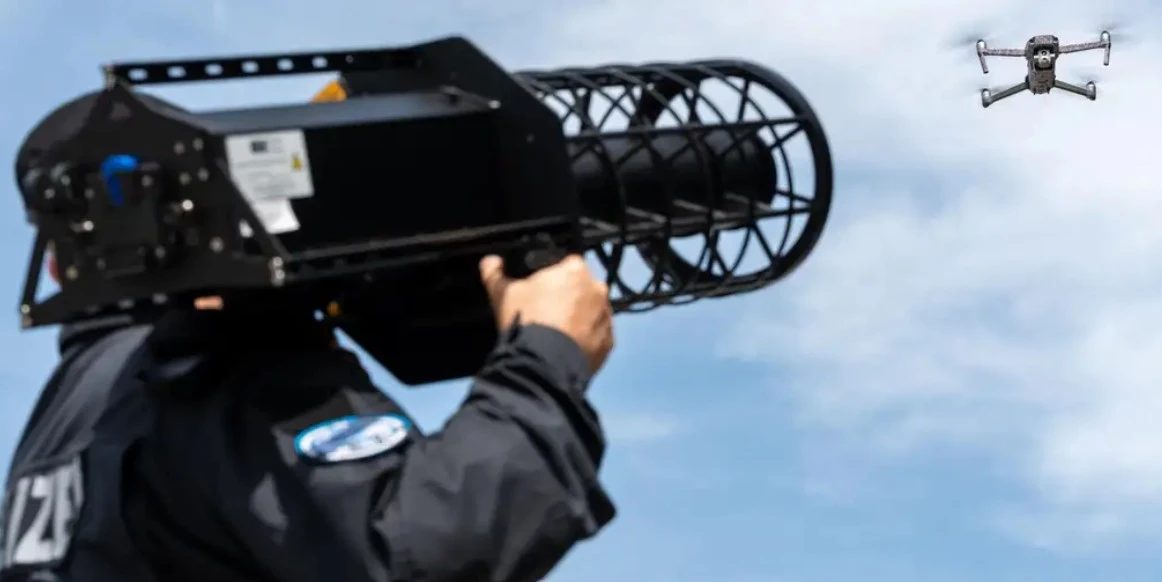
BERLIN, GERMANY — An explosive-laden drone found at Leipzig/Halle Airport has renewed concerns over Germany’s ability to detect and neutralize unmanned aircraft, exposing gaps in sensors, technical equipment and the division of authority between security agencies.
According to DW Türkçe, the incident has intensified debate over whether Germany is adequately prepared for a growing drone threat around airports, military facilities, ports and industrial sites. Security experts say the country still lacks sufficient sensor coverage for small, low-flying aircraft and faces institutional obstacles that can slow decisions during rapidly developing incidents.
Explosive-laden drone at Leipzig airport triggers investigation
The latest concern centers on an unmanned aircraft reportedly carrying explosives that reached the apron area of Leipzig/Halle Airport without being detected in advance.
According to DW Türkçe, the drone remained at the airport for hours before it was discovered.
German Interior Minister Alexander Dobrindt described the incident as a possible “hybrid attack scenario” that he believes could involve a foreign power.


Suspicion has reportedly focused on Russia because the drone was said to have been found near a Ukrainian Antonov transport aircraft. However, responsibility for the incident has not been established.
Germany’s Federal Prosecutor’s Office is investigating the case.
The incident is therefore being treated as a security investigation, while claims regarding Russian involvement remain unconfirmed.


For German authorities, the case highlights a basic question: how could a potentially dangerous drone enter one of the country’s major airports and remain undetected for such a long period?
More than 1,000 suspicious drone flights recorded in 2025
Unauthorized or unexplained drone activity is not a new problem in Germany.
According to the Federal Criminal Police Office, more than 1,000 suspicious drone flights were recorded in the country during 2025.
Unidentified UAVs have been reported near airports, ports, industrial installations and military facilities.
In October, drone activity around Munich Airport disrupted air traffic for several hours and left numerous passengers stranded.
Security expert Nico Lange told DW that German airports still do not have sufficient sensor networks to reliably detect all types of drones, particularly aircraft flying slowly and at low altitude.
European drone industry organization UAV DACH has raised similar concerns.
Its board chairman, Gerald Wissel, said the Leipzig incident demonstrated the core weakness of the existing system: a drone was apparently able to reach an airport apron without being detected and was discovered largely by chance.
The organization is calling for a real-time picture of Germany’s low-altitude airspace and mandatory electronic identification of aircraft through ADS-L technology.
ADS-L is a radio-based system designed to make drones electronically visible to airspace monitoring systems.
Germany’s fragmented security structure can delay response
Technology is only part of the problem.
Germany’s federal structure means responsibility for a drone incident can depend on where the aircraft is flying and which infrastructure is threatened.
In many cases, a newly detected drone initially falls under the responsibility of the police force of the relevant federal state.
Germany has 16 states and 16 separate state police organizations.
The Federal Police becomes involved when drones affect major airports, railway infrastructure or other areas under federal responsibility.
Because drones can move quickly, decisions about detection, tracking and possible neutralization may need to be made within minutes.
Security experts and opposition politicians have warned that unclear or overlapping authority can delay that response.
Green Party lawmaker Irene Mihalic, herself a trained police officer, told DW that confusion over responsibility in drone defense represents a serious danger to Germany’s internal security.
Some political groups, particularly the Greens, have called for the Federal Police to take a stronger coordinating role.
New joint drone defense center is not enough on its own
The German government has already taken steps to improve coordination.
In December, Interior Minister Dobrindt established the Joint Drone Defense Center, known as GDAZ, in Berlin.
The center brings together information from the Federal Police, state police forces, intelligence services and the Bundeswehr around the clock.
Its goal is to create a shared operational picture so suspicious drone activity can be assessed more quickly.
But the Leipzig/Halle incident has shown that centralizing information does not automatically solve the problem.
If a dangerous drone cannot be detected and stopped at a major airport, a national coordination center alone offers limited protection.
Germany’s independent Critical Infrastructure Working Group has also criticized the current technical capabilities.
Its spokesman, Manuel Atug, told DW that authorities had announced the deployment of drone-defense systems at airports, but many of the installed systems were primarily designed for detection rather than neutralization.
According to Atug, some German airports still lack even those detection capabilities.
Federal Police drone unit to expand to 300 personnel
The Federal Police received a dedicated drone-defense unit in December 2025.
The initial plan called for approximately 130 personnel operating from four locations.
Following the Leipzig/Halle incident, the Interior Ministry announced plans to significantly expand the unit.
Under the new structure, around 300 personnel will be deployed across eight locations.
The government says the larger network should allow specialized teams to reach incidents more quickly and operate with greater flexibility.
Police unions, however, argue that staffing alone will not solve the problem.
German Police Union Chairman Jochen Kopelke has criticized shortages in funding, legal authority and modern counter-drone technology.
The debate is increasingly focused on giving security forces not only the ability to identify a drone but also the legal and technical capacity to disable it before it reaches sensitive infrastructure.
When can the Bundeswehr shoot down a drone?
The Leipzig incident also revived calls for the German military to take a greater role in defending civilian airports.
Schleswig-Holstein state premier Daniel Günther, a member of the Christian Democratic Union, called for Bundeswehr involvement in airport drone defense.
Germany’s Defense Ministry rejected the proposal.
One reason is constitutional and legal: responsibility for domestic security primarily belongs to the police.
The ministry also noted that the Bundeswehr already faces significant challenges protecting its own military installations, which include what a spokesman described as tens of thousands of kilometers of perimeter fencing.
Requiring the military to provide permanent 24-hour protection for civilian infrastructure as well could, according to the ministry, create a false sense of security that cannot realistically be maintained.
Police can nevertheless request administrative assistance from the Bundeswehr in emergencies.
Germany also amended its Aviation Security Act in March to clarify some of the legal uncertainty.
The change gives the Bundeswehr authority, for the first time, to shoot down certain drones outside its own facilities.
However, the legal threshold is high: such action must be necessary to prevent an especially serious accident.
Eight major airports prioritized for new counter-drone technology
Germany’s Interior Ministry says major airports are now being equipped with counter-drone technology in stages.
The Federal Police has already purchased some systems, according to the ministry.
Eight airports have been designated as priorities: Frankfurt, Munich, Berlin, Düsseldorf, Hamburg, Cologne/Bonn, Stuttgart and Leipzig/Halle.
The government aims to have mobile drone-defense technology available at all eight airports by the end of 2026.
The Leipzig incident nevertheless demonstrates that Germany’s challenge involves several layers at once.
Authorities need sensors capable of detecting small aircraft at low altitude, a reliable real-time picture of the airspace, clearer command structures and legal authority that allows a rapid response when a drone is considered dangerous.
The government is now increasing personnel and technical capacity, but security specialists argue that Germany remains in a transition period in which detection and defensive capabilities are not yet sufficient at all critical locations.
The question is no longer whether unauthorized drones can reach sensitive German infrastructure. The more urgent challenge is whether security authorities can identify, classify and stop them quickly enough when they do.
WiseNewsPress.com
What's Your Reaction?
 Like
0
Like
0
 Dislike
0
Dislike
0
 Love
0
Love
0
 Funny
0
Funny
0
 Wow
0
Wow
0
 Sad
0
Sad
0
 Angry
0
Angry
0

Ahmet Taş is a journalist, editor and Turkey Office Manager of the Wise News Press Media Group. He works across news, digital media and international publishing, focusing on accurate, responsible and accessible journalism. He contributes to the development of media projects that bring important political, social and global developments to a wider international audience.






















Comments (0)