



Ukraine launches massive drone attack on Russia, Moscow among targets
Ukraine launched a large-scale drone attack across Russia, including Moscow, as Russian officials claimed hundreds of UAVs were intercepted overnight.


By Ahmet Taş | Wise News Press
MOSCOW, RUSSIA — Ukraine launched a major long-range drone attack targeting Moscow and multiple Russian regions, while Russian authorities claimed hundreds of unmanned aircraft were intercepted in what officials described as one of the largest recent aerial attacks on Russian territory.
According to Turkish newspaper Karar, citing Russian regional officials and military statements, attacks were reported across a wide geographical area stretching from the Moscow region to Rostov. Russia’s Defense Ministry issued exceptionally high interception figures, but those numbers have not been independently verified.
Russia claims hundreds of Ukrainian drones were intercepted
Russia’s Defense Ministry said 822 Ukrainian drones were shot down during the overnight attack.
Later, the ministry increased the scale of its claims, saying Russian forces had intercepted 1,478 drones and nine Ukrainian cruise missiles over a 24-hour period.
Those figures could not be independently confirmed.


Moscow Mayor Sergei Sobyanin separately said approximately 600 drones had been directed toward Moscow and surrounding areas, with 201 destroyed by air defenses.
Sobyanin described the operation as one of the largest aerial attacks on the Russian capital in the past two years.
If the scale reported by Russian officials is accurate, the attack would rank among the largest Ukrainian long-range drone operations against Russian territory since Moscow launched its full-scale invasion of Ukraine in February 2022.


Ukraine has significantly expanded its domestically produced long-range drone capabilities during the war, allowing it to strike targets hundreds and, in some cases, more than a thousand kilometers from its borders.
Large warehouse burns near Moscow
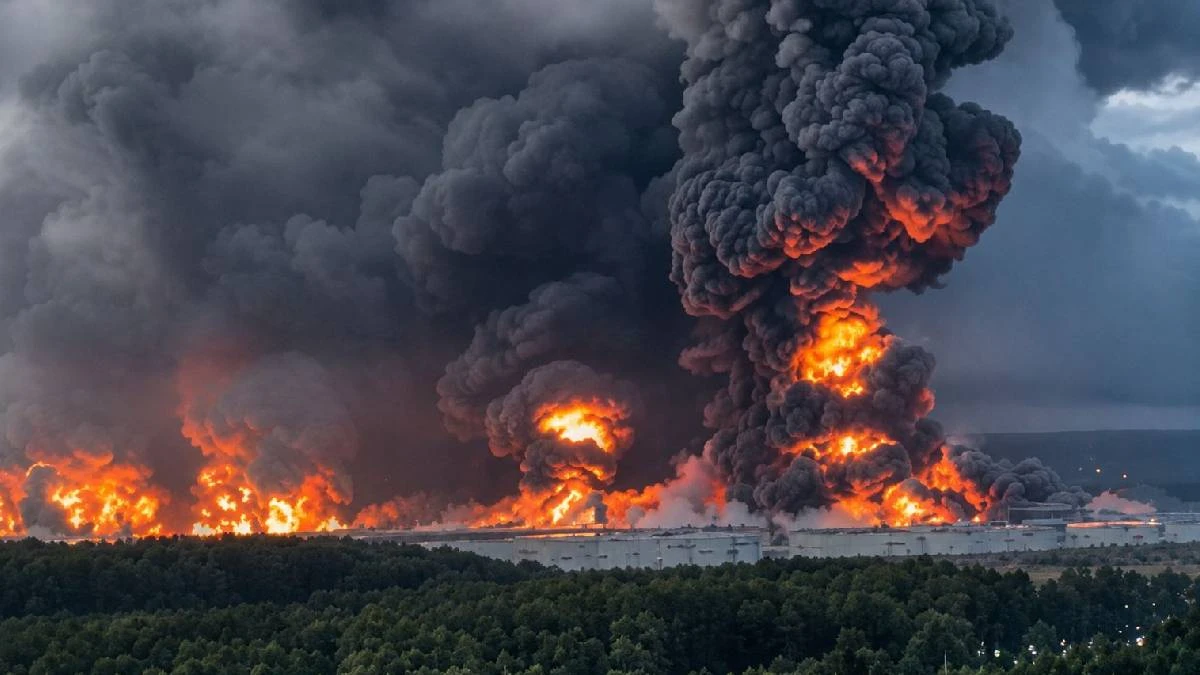
One of the most significant incidents was reported in Podolsk, south of Moscow.
Karar reported that a warehouse belonging to Russian e-commerce and logistics company Wildberries caught fire following the attack.
The facility was described as covering approximately 200,000 square meters.
Images circulating from the area reportedly showed large flames engulfing parts of the site and thick black smoke rising into the sky.
Moscow Region Governor Andrei Vorobyov described the overnight events as one of the largest drone attacks the region had experienced in recent years.
Wildberries operates one of Russia’s largest online retail and logistics networks.
Karar also reported that approximately 20 warehouses and buildings linked to the company had been targeted during attacks over the previous month, although the precise circumstances of each incident were not independently established.
The increasing number of strikes on logistics facilities highlights the broader expansion of the war beyond purely military installations.
Rostov authorities report around 150 drones
The Rostov region near the Ukrainian border was also heavily affected.
Regional authorities said approximately 150 drones had been intercepted.
Russian officials reported that five people were killed in Rostov and another person died in the Moscow region as a result of the attacks.
A full independent assessment of casualties and damage was not immediately available.
Ukraine has increasingly demonstrated the ability to strike targets deep inside Russian territory.
Karar reported that some Ukrainian systems are now believed to have ranges of up to approximately 2,400 kilometers.
Such capabilities potentially place oil refineries, military bases, ports, ammunition depots and logistics hubs across large parts of Russia within reach.
Kyiv has repeatedly described long-range attacks against Russian military and energy infrastructure as an effort to weaken Moscow’s ability to finance and sustain its war effort.
Ukraine increasingly targets infrastructure deep inside Russia
Long-range strikes have become a central element of Ukraine’s military strategy during the later stages of the war.
Russian oil refineries and fuel infrastructure have frequently been targeted, while military airfields, storage sites and transport networks have also come under attack.
The apparent targeting of commercial logistics facilities adds another dimension.
Sites such as large warehouses can play an important role in civilian supply chains, while some logistics networks may also have broader economic or wartime relevance.
The reported wave of attacks demonstrates the growing challenge facing Russian air defenses, which must protect critical infrastructure across an enormous territory.
Unlike front-line air defense, defending cities, industrial facilities and military sites hundreds of kilometers apart requires large numbers of radar systems, interceptor missiles and mobile defense units.
This creates a continuing resource challenge for Russia as Ukraine expands both the quantity and range of its unmanned systems.
Russia simultaneously strikes Ukrainian cities
The attack on Russia came as Moscow continued its own large-scale drone and missile campaign against Ukraine.
According to the report, seven people were killed in Russian attacks on Ukrainian territory.
Two deaths were reported in Kryvyi Rih and two in the Sumy region, while another three people were reported killed elsewhere in the country.
A ballistic missile attack on Kyiv at around 3 a.m. injured six people and caused fires in several parts of the Ukrainian capital, according to the report.
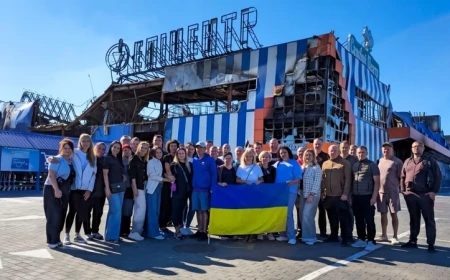
The Petrovka book market in Kyiv’s Obolonskyi district was among the sites affected.
A significant section of the market was reportedly damaged by fire, with some booksellers saying they had lost their entire inventories.
Ukrainian President Volodymyr Zelenskyy praised emergency workers responding to the strikes and accused Russia of deliberately attacking civilian infrastructure.
Zelenskyy also said Russia had launched more than 1,550 attack drones, approximately 1,560 guided aerial bombs and 62 missiles against Ukraine during the previous week.
Those figures were provided by the Ukrainian government and could not be independently verified in their entirety.
Reported drone interception over Romania raises NATO concerns
The latest wave of attacks also reportedly affected NATO airspace.
According to Karar, a Spanish F-18 fighter jet operating as part of a NATO patrol mission shot down a drone that entered Romanian airspace at around 5 a.m.
A NATO military spokesperson was reported as saying that the drone was believed to be Russian.
The reported incident highlights the risk that drones and missiles used in the Russia-Ukraine war could cross into neighboring NATO countries.
Romania and Poland have repeatedly scrambled fighter aircraft during the conflict when Russian attacks have approached or potentially crossed their borders.
Any confirmed military object entering NATO territory raises concerns about escalation, even when officials assess the incident as accidental or the result of a weapon deviating from its intended flight path.
Air defense capacity faces growing pressure on both sides
The growing scale of long-range attacks is placing increasing pressure on both Russian and Ukrainian air defense networks.
Russia must defend an extensive network of military bases, refineries, industrial sites, logistics centers and major cities across a vast territory.
Ukraine, meanwhile, continues to face frequent attacks involving drones, cruise missiles, ballistic missiles and guided bombs.
Ukraine has developed several lower-cost methods to counter relatively slow-moving drones, but ballistic missiles remain much more difficult to intercept.
US-made Patriot systems are among the most capable platforms available to Ukraine for defending against ballistic threats.
However, sustained Russian attacks have created continuing concerns about the availability of interceptor missiles and Ukraine’s ability to maintain adequate air defense coverage.
The latest exchange illustrates how the war has increasingly expanded far beyond the front line.
Long-range drones and missiles now allow both sides to target infrastructure deep inside each other’s territory, while the scale of operations is forcing Russia and Ukraine to devote growing resources to air defense.
The result is a conflict in which the ability to produce drones, protect infrastructure and maintain supplies of air-defense interceptors is becoming as strategically important as developments on the ground.
WiseNewsPress.com
What's Your Reaction?
 Like
0
Like
0
 Dislike
0
Dislike
0
 Love
0
Love
0
 Funny
0
Funny
0
 Wow
0
Wow
0
 Sad
0
Sad
0
 Angry
0
Angry
0

Ahmet Taş is a journalist, editor and Turkey Office Manager of the Wise News Press Media Group. He works across news, digital media and international publishing, focusing on accurate, responsible and accessible journalism. He contributes to the development of media projects that bring important political, social and global developments to a wider international audience.
















Comments (0)