



Türkiye’s F-35 bid hinges on S-400s as Moscow weighs UAE option
Russian newspaper Kommersant says Moscow may not oppose a possible Turkish transfer of S-400 systems to the UAE, a key issue in Ankara’s F-35 bid.



By Ahmet Taş | Wise News Press
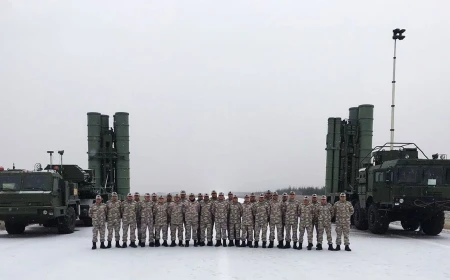
ANKARA, Türkiye — Türkiye’s effort to regain access to the F-35 fighter program remains tied to the future of its Russian-made S-400 systems, as a Russian newspaper suggested Moscow may tolerate a transfer to the United Arab Emirates.
According to Turkish newspaper Karar, citing an analysis by Russia’s Kommersant, Ankara cannot sell or transfer the S-400 systems or critical components to a third country without Russian approval under the terms governing the original purchase.
Kommersant reportedly argued that if Türkiye reached an agreement with the United Arab Emirates, Moscow would be unlikely to block such a transaction. The assessment, however, does not constitute formal approval by the Russian government, and no confirmed agreement involving the UAE has been announced.
The debate has gained importance because Washington’s objections to Türkiye’s possession of the S-400 remain one of the main obstacles to Ankara’s goal of returning to the F-35 program.
Russian approval would be required for a third-country transfer
Kommersant’s analysis focused on the contractual restrictions surrounding the S-400 systems purchased by Türkiye from Russia.


According to the report, Türkiye does not have an unrestricted right to transfer the systems, their components or sensitive technology to another country. Any such move would require consultation with Moscow and, depending on the form of the transaction, Russian approval.
The newspaper also referred to comments made by Kremlin spokesman Dmitry Peskov on July 10, saying contacts between Moscow and Ankara over the future of the S-400 systems were continuing.
Peskov reportedly described the matter as highly sensitive.


That contractual dimension complicates Ankara’s position. Türkiye is trying to resolve a dispute with Washington over a Russian weapons system, but any solution involving the physical transfer of the S-400s could also require Moscow’s consent.
As a result, Ankara’s room for maneuver depends on the interests of both Washington and Moscow.
UAE emerges as a possible destination
The most notable element of the Kommersant analysis was the possibility of transferring the S-400s to the United Arab Emirates.
The Russian newspaper suggested Moscow might have relatively few objections if Ankara and Abu Dhabi reached an agreement.
Kommersant reportedly based that assessment on two factors: the UAE is not a NATO member, and relations between Moscow and Abu Dhabi are not characterized by the kind of strategic confrontation that would make the transfer particularly sensitive for Russia.
From Moscow’s perspective, a transfer to a non-NATO state could therefore be viewed differently from handing the systems or their critical technology to the United States or another NATO military.
Still, there has been no official Russian announcement approving a UAE transfer.
The current discussion remains a media assessment of what Moscow could potentially accept rather than evidence that a deal has already been authorized.
S-400 dispute remains central to Türkiye’s F-35 ambitions
Türkiye continues to seek a path back to the F-35 fighter program after being removed following its acquisition of the Russian S-400 air defense system.
The United States has long argued that operating the S-400 alongside advanced NATO aircraft could create security risks, particularly concerning sensitive F-35 technology.
According to the Kommersant report cited by Karar, the U.S. State Department remains unwilling to approve Türkiye’s return to the F-35 process while Ankara continues to possess the Russian systems.
This creates a strategic dilemma for Türkiye.
Ankara invested heavily in the S-400 purchase but also wants access to advanced U.S. combat aircraft and a broader normalization of defense relations with Washington.
Finding a formula that satisfies U.S. security concerns without violating Türkiye’s agreement with Russia has therefore become one of the central questions in the negotiations.
Erdoğan says he expects Trump to keep his F-35 promise
President Recep Tayyip Erdoğan has publicly maintained that Türkiye expects progress on the fighter aircraft issue.
Karar, citing Erdoğan’s recent interview with Al Jazeera, reported that the Turkish president said he expected U.S. President Donald Trump to fulfill a commitment concerning the F-35s.
“We expect Mr. Trump to keep the promise he made regarding the F-35 fighter jets.”
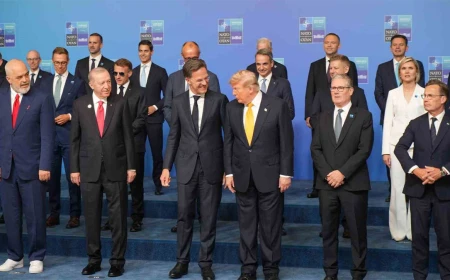
Kommersant also reported that Trump had signaled during the July NATO summit in Ankara that he was prepared to consider Türkiye’s return to the F-35 program.
Despite those political signals, however, the report said negotiations had not produced a breakthrough more than a month later.
According to the Russian newspaper’s assessment, the S-400 issue remains one of the principal reasons for the lack of progress.
The situation highlights the difference between political willingness at the presidential level and the legal, technical and security conditions surrounding a major U.S. defense sale.
U.S. storage scenario seen as more problematic for Moscow
Several possible formulas for resolving the S-400 dispute have reportedly been discussed.
One option mentioned by Kommersant involves taking the Turkish systems out of active service. Another scenario would involve storing certain components under arrangements connected to the United States.
The Russian newspaper argued that such alternatives would be much more difficult for Moscow to accept.
Advanced weapons contracts normally contain strict limitations designed to prevent sensitive technology from being examined or transferred to unauthorized third parties.
According to Kommersant, allowing S-400 components to come under direct American control could therefore conflict with the security principles behind Russia’s original agreement with Türkiye.
For Moscow, that makes a transfer to a non-NATO country such as the UAE potentially less sensitive than any arrangement that would provide the United States with access to the system.
This distinction appears to be one reason the UAE option has attracted renewed attention.
Previous Gulf sale claims were denied
Claims that Türkiye might dispose of the S-400s through a sale to a Gulf country had already surfaced in July.
Turkish columnist Abdulkadir Selvi wrote on July 10 that he had received information suggesting the systems had been sold to a third country in the Gulf.
He said some sources pointed to the UAE while others mentioned Qatar.
However, a Turkish government source subsequently denied reports that Türkiye had agreed to transfer the S-400 systems to another country.
That earlier episode makes it particularly important to distinguish between speculation, negotiations and a completed transaction.
As of the latest Kommersant analysis cited by Karar, there is no officially confirmed sale of Türkiye’s S-400 systems to the UAE or any other Gulf state.
Ankara faces a three-way diplomatic equation
The issue now involves three interconnected sets of interests.
Türkiye wants to restore access to the F-35 program and improve defense ties with Washington.
The United States wants the Russian S-400 systems removed from a position where they could pose a security concern for NATO technology.
Russia, meanwhile, wants to ensure that the systems and their sensitive components are not transferred in a way that exposes Russian military technology or breaches the original sales agreement.
A possible UAE arrangement could theoretically offer a compromise because Abu Dhabi is outside NATO and maintains working relations with Moscow.
But such a scenario would still require negotiations among the relevant parties and would not automatically guarantee Türkiye’s return to the F-35 program.
For now, the S-400 question remains the central unresolved issue linking Ankara’s defense relationships with Washington and Moscow.
Whether a third-country transfer can provide a workable solution will depend on Türkiye reaching an acceptable arrangement with Russia while also meeting the conditions demanded by the United States.
WiseNewsPress.com
What's Your Reaction?
 Like
0
Like
0
 Dislike
0
Dislike
0
 Love
0
Love
0
 Funny
0
Funny
0
 Wow
0
Wow
0
 Sad
0
Sad
0
 Angry
0
Angry
0

Ahmet Taş is a journalist, editor and Turkey Office Manager of the Wise News Press Media Group. He works across news, digital media and international publishing, focusing on accurate, responsible and accessible journalism. He contributes to the development of media projects that bring important political, social and global developments to a wider international audience.

















Comments (0)