



Putin admits fuel shortages in Russia after Ukraine energy strikes
Vladimir Putin said Ukrainian attacks on Russian energy infrastructure have caused fuel shortages in some regions, while Moscow seeks to stabilize supplies.


BY AHMET TAŞ | WISE NEWS PRESS
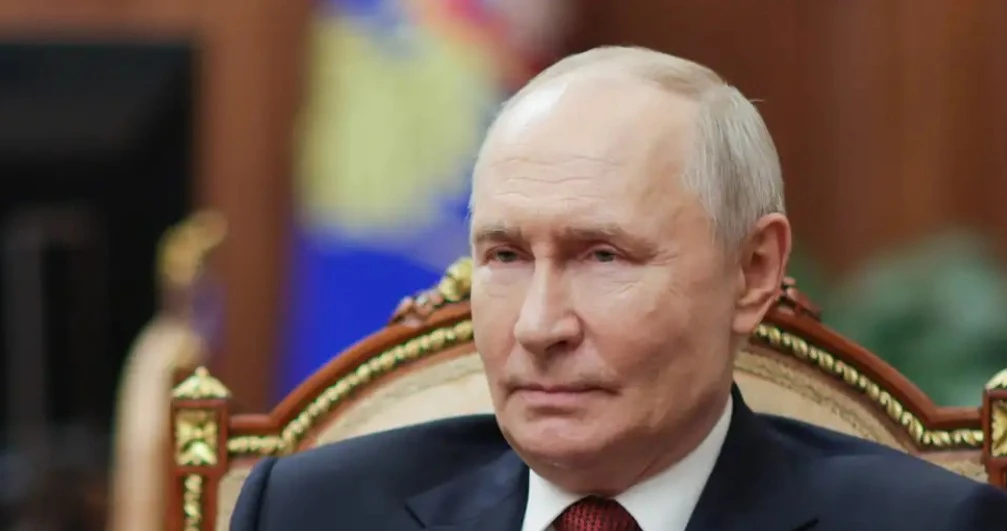
MOSCOW, Russia — Russian President Vladimir Putin acknowledged that Ukrainian attacks on energy and oil infrastructure have caused fuel shortages in parts of Russia, while insisting the situation is not critical.
According to DW Türkçe, Putin made the remarks in an interview published by the Kremlin over the weekend, as Ukraine has intensified strikes on Russian refineries, fuel depots and other energy-related targets. The Russian leader said the attacks on critical infrastructure “naturally create problems” and identified fuel supplies to Crimea as a priority.
Putin acknowledges supply problems
Putin said Russia was facing “a certain fuel shortage” in some regions after Ukrainian attacks targeted parts of the country’s energy infrastructure.
The Russian president argued that the shortages had not reached a critical level, but he said Moscow’s immediate tasks were to strengthen air defense capabilities and stabilize the flow of fuel.
His comments mark a notable public acknowledgment that Ukraine’s long-range attacks are having a measurable effect inside Russia, particularly on fuel logistics and energy infrastructure.


Ukraine steps up attacks on energy sites
Ukraine has increased its attacks on Russian oil and energy facilities in recent weeks. Kyiv says the strikes are intended to weaken Russia’s ability to sustain its war effort.
According to DW Türkçe, a Ukrainian drone caused a fire at a refinery in Russia’s Krasnodar region on Friday. Ukrainian President Volodymyr Zelensky said the attack was part of operations designed to reduce Russia’s war-making capacity.
Ukraine has increasingly focused on refineries, fuel depots and energy facilities, arguing that these targets support Russian military logistics. Moscow, in turn, has accused Kyiv of escalating attacks on civilian and critical infrastructure.


Crimea faces fuel and electricity disruptions
Fuel shortages and power cuts were also reported in Crimea, the Ukrainian peninsula annexed by Russia in 2014. Local authorities declared a state of emergency on Friday after supply disruptions linked to Ukrainian strikes.
Putin said securing fuel supplies to Crimea was a key priority. The peninsula remains strategically important for Russia, both militarily and symbolically.
Ukraine continues to regard Crimea as part of its sovereign territory and has repeatedly targeted Russian military and logistical assets there during the war. Kyiv describes such operations as part of its campaign to weaken Russia’s occupation infrastructure.
Moscow says air defenses must be strengthened
Putin said Russia needed to rapidly improve its air defense capacity in response to Ukrainian strikes.
The growing use of long-range drones has allowed Ukraine to reach targets deep inside Russian territory. Refineries, energy facilities and fuel depots have become increasingly visible targets as the war extends beyond the front line.
For Moscow, the impact is not only military. Fuel disruptions can affect transportation, agriculture, regional administration and industrial activity. Putin’s comments suggest the Kremlin is trying to present the situation as manageable while acknowledging that the pressure on energy infrastructure is real.
Putin rejects Ukraine’s strike moratorium proposal
Putin also rejected Ukraine’s proposal to halt mutual long-range strikes, describing it as an attempt by Kyiv to ease pressure on the battlefield.
The Russian leader said Moscow would not abandon its goal of fully controlling Donetsk, Luhansk, Kherson and Zaporizhzhia. Russia claimed to annex the four Ukrainian regions in 2022, but none of them is fully under Russian control.
Ukraine and its Western allies reject Russia’s annexation claims. Kyiv says the regions remain Ukrainian territory and that restoring control over occupied land remains a central war aim.
Talks with the United States also discussed
Putin also addressed contacts between Moscow and Washington. He said U.S. representatives could return to Moscow for further discussions on Ukraine.
According to DW Türkçe, Putin referred to possible future visits by U.S. representatives Steve Witkoff and Jared Kushner after what he called the end of the “hot phase” of U.S.-Iran-Israel tensions. He also said some options had been discussed during talks with U.S. President Donald Trump in Alaska, but that no agreement had been signed.
The remarks suggest that diplomatic channels remain active, even as battlefield developments and infrastructure attacks continue to shape the conflict.
Zelensky’s meeting offer was turned down
Putin said he rejected a recent personal meeting offer from Ukrainian President Volodymyr Zelensky. He also said Belarusian leader Alexander Lukashenko could play a role in a possible peace process.
Kyiv has accused Moscow of trying to draw Belarus further into the war. Putin did not directly respond to those allegations in the interview.
Belarus has been one of Russia’s closest allies since the start of the full-scale invasion. Ukraine and Western governments have accused Minsk of allowing Russian forces to use Belarusian territory for military purposes.
Energy infrastructure becomes a central front
Putin’s acknowledgment of fuel shortages underlines the growing role of energy infrastructure in the Russia-Ukraine war.
Russia has repeatedly targeted Ukraine’s power grid, heating systems and energy facilities throughout the conflict. Ukraine’s recent strikes on Russian refineries and fuel infrastructure show that Kyiv is seeking to impose similar pressure on Russia’s own energy system.
Although Putin said the shortages were not critical, the declaration of a state of emergency in Crimea, refinery fires and the emphasis on strengthening air defenses point to mounting pressure on Russian energy logistics.
The war is increasingly being fought not only along the front line, but also through attacks on the systems that sustain military operations, fuel supply chains and economic resilience.
What's Your Reaction?
 Like
0
Like
0
 Dislike
0
Dislike
0
 Love
0
Love
0
 Funny
0
Funny
0
 Wow
0
Wow
0
 Sad
0
Sad
0
 Angry
0
Angry
0

Editor | Wise News Press — Delivering accurate, timely global news with integrity, insight, and editorial responsibility.














Comments (0)