



Zelenskyy says Starlink speed cap is hindering Ukraine's drone defense
Zelenskyy says Starlink disconnects above 161 km/h in Ukraine, disabling interceptor drones used against Russia’s jet-powered Shahed attacks.


By Ahmet Taş | Wise News Press
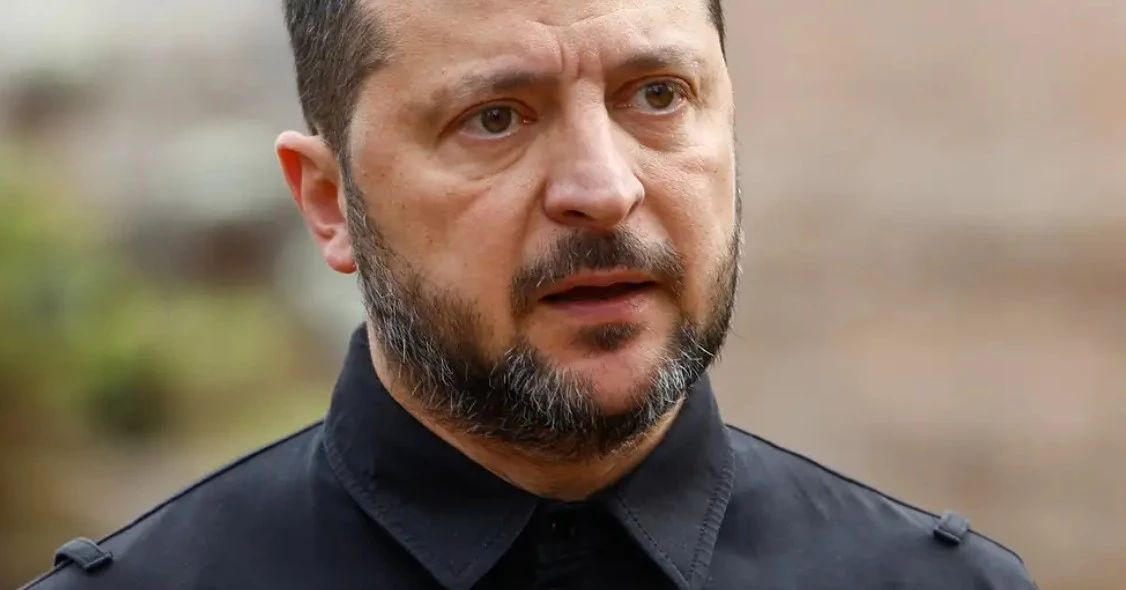
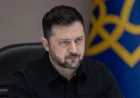
KYIV, UKRAINE — Ukrainian President Volodymyr Zelenskyy said a Starlink speed restriction that disconnects terminals moving above 161 km/h has disabled interceptor drones used against Russian jet-powered Shaheds and weakened Ukraine’s air defenses.
Speaking to journalists on October 17, Zelenskyy said the restriction remains active in Ukraine, while tests conducted in European Union countries showed Starlink terminals continuing to operate at speeds above 180 km/h. Kyiv is seeking to have the limit removed through talks involving the Ukrainian military, diplomats, the United States and SpaceX.
Starlink disconnects above 161 km/h
According to Zelenskyy, mobile Starlink terminals operating inside Ukraine currently lose their satellite connection when the platform carrying them exceeds 161 kilometers per hour, or 100 miles per hour.
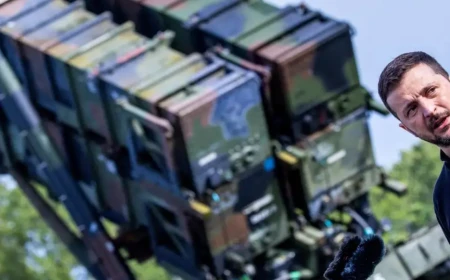
Some Ukrainian interceptor drones must fly faster than that threshold to pursue Russia’s jet-powered Shahed attack drones. When the satellite connection shuts down during flight, the operator may lose control of the interceptor before it reaches its target.
“Our interceptors cannot operate today because of the speed limit,” Zelenskyy said, explaining that Ukraine loses the drone after the Starlink terminal disconnects.


The Ukrainian president said the problem goes beyond a reduction in internet performance. The restriction directly affects an air-defense capability designed to protect Ukrainian cities and civilians from fast-moving Russian attack drones.
Zelenskyy did not say how many interception missions had been affected or how many Ukrainian drones had been lost because of the restriction.
Tests in Europe produced different results
Ukrainian authorities sent several vehicles equipped with Starlink terminals to European countries to determine whether the disruption was caused by a general technical limitation.


According to Zelenskyy, the vehicles were driven at more than 180 km/h in locations where such speeds were permitted. The satellite connection reportedly remained active, and the terminals did not experience the shutdown observed inside Ukraine.
Ukrainian officials say they documented the tests and have technical evidence showing the difference between Starlink performance in Ukraine and elsewhere in Europe.
“At different levels, we are being told that these are technical problems,” Zelenskyy said. “But these technical problems exist in Ukraine, while they do not exist in the European Union.”
The results have led Kyiv to question whether a geographic or operational restriction has been applied specifically to terminals operating in Ukraine. No authority has publicly confirmed who activated the limit or provided a detailed explanation for its introduction.
Why interceptor drones are affected
Jet-powered Shaheds can travel significantly faster than conventional propeller-driven attack drones. Ukrainian interceptors must reach high speeds to approach, track and destroy them before they reach populated areas or critical infrastructure.
A satellite terminal mounted on an interceptor can help maintain communication between the drone and its operator. The connection may carry flight commands, location information and imagery from the aircraft.
If the terminal disconnects when the interceptor accelerates, the operator can lose the ability to guide the drone toward its target. Such a failure may result in the loss of the Ukrainian interceptor while allowing the Russian attack drone to continue its flight.
Zelenskyy stressed that the affected capability is being used for defensive operations rather than exclusively for strikes inside Russia. He said the speed restriction had prevented Ukraine from using one of the tools developed to protect its population from Russian aerial attacks.
Ukraine is seeking the restoration of connection speeds that would allow interceptor drones to perform their defensive missions without losing satellite communication.
A critical system for battlefield communications
Starlink has played a central role in Ukraine’s military and civilian communications infrastructure since Russia launched its full-scale invasion. The satellite network provides connectivity in areas where ground-based systems have been damaged, destroyed or disrupted by electronic warfare.
Zelenskyy said Starlink is not used solely for reconnaissance or combat drones. Satellite-connected unmanned vehicles also transport food and water to frontline positions that are too dangerous for conventional vehicles to reach.
Ukrainian forces use satellite communications to exchange battlefield information, maintain contact with command centers and operate some unmanned systems. Civilian authorities, emergency services, hospitals and critical infrastructure operators have also relied on Starlink during outages of terrestrial networks.
An unexpected technical restriction can therefore affect multiple military and logistical operations rather than a single type of drone mission.
The disruption has also renewed concerns about Ukraine’s reliance on a communications platform whose technical and operational controls remain outside the country.
Trump and Musk offer differing explanations
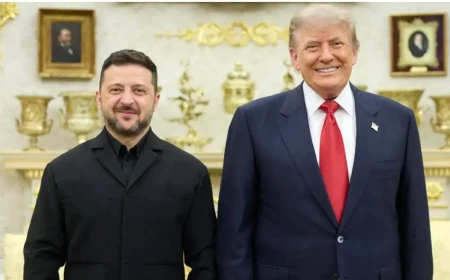
U.S. President Donald Trump denied on October 16 that he ordered any restriction on Ukraine’s access to Starlink or Starshield.
Trump told reporters that he did not believe either he or SpaceX owner Elon Musk was responsible for the reduction in service. He also said the United States had not imposed a limit on Ukraine’s access to Starshield.
Musk had offered a different explanation a day earlier. He said Starshield, the military system developed by SpaceX, belongs to the U.S. government and that decisions concerning speed or usage restrictions are made by the U.S. military and, ultimately, the American president.
Starlink and Starshield use the same underlying satellite constellation, but Starshield was developed for government and national-security customers, particularly the U.S. Department of Defense.
Ukrainian officials and media reports sometimes use the two names interchangeably when discussing military satellite communications. The distinction is important because it affects which institution may have authority over technical restrictions.
The statements from Trump and Musk have left unanswered questions about who authorized the speed cap and why it was applied.
Talks continue as the restriction remains
Zelenskyy said Ukrainian military officials, the Defense Ministry and diplomats are working to resolve the problem. Kyiv is seeking direct engagement with SpaceX and the relevant agencies in the U.S. government.
The Ukrainian president said SpaceX had not been communicating directly with the country’s military. He added that Ukraine had received indications from its partners that the affected capabilities would be restored, but the previous operating conditions had not yet returned fully.
The Associated Press reported that Ukraine was negotiating with SpaceX and the Pentagon to remove the speed limit on its military satellite service. Possible alternatives include using a package designed for high-speed aircraft or gradually expanding access to other satellite networks.
Some parts of the service appear to have improved following the initial disruption, but Ukrainian officials say the restriction affecting high-speed interceptor drones remains in place.
Reuters reported that Trump denied responsibility for the reduction in service. The White House, SpaceX and the Pentagon have not provided a public explanation reconciling the differing accounts or identifying the institution that imposed the cap.
Until the issue is resolved, Ukraine’s ability to use some Starlink-connected interceptor drones against jet-powered Shaheds will remain restricted at a time when Russia is expanding the speed and complexity of its aerial attacks.
WiseNewsPress.com
What's Your Reaction?
 Like
0
Like
0
 Dislike
0
Dislike
0
 Love
0
Love
0
 Funny
0
Funny
0
 Wow
0
Wow
0
 Sad
0
Sad
0
 Angry
0
Angry
0

Ahmet Taş is a journalist, editor and Turkey Office Manager of the Wise News Press Media Group. He works across news, digital media and international publishing, focusing on accurate, responsible and accessible journalism. He contributes to the development of media projects that bring important political, social and global developments to a wider international audience.
















Comments (0)