



Ukraine retakes ground in Donbas as Russia’s 2026 gains slow sharply
Ukraine’s Vivaldi Operation in northern Donbas has slowed Russia’s push toward Sloviansk and Kramatorsk, while Moscow’s 2026 gains have weakened.


By Ahmet Taş | Wise News Press
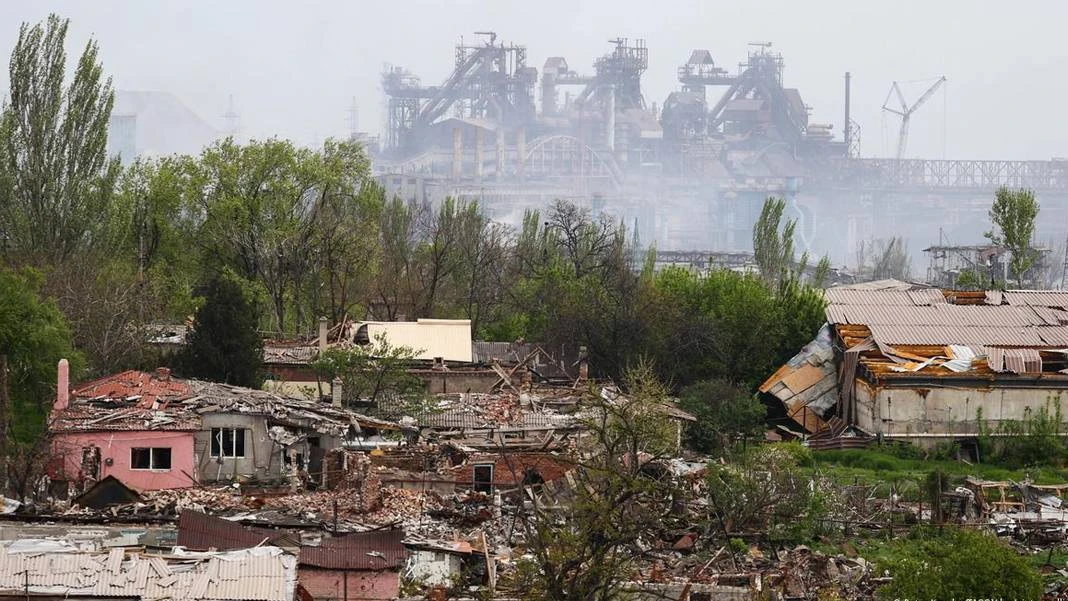
ANKARA, TURKEY — Ukraine has retaken ground in northern Donbas through a months-long operation that slowed Russia’s attempt to encircle Sloviansk and Kramatorsk.
The operation, described in the report as “Vivaldi Operation,” has become one of Ukraine’s most notable battlefield moves in Donbas in 2026. According to the analysis cited in the source text, Ukrainian forces disrupted Russia’s effort to tighten pressure around key cities in the north of the region, while Moscow’s net territorial gains across Ukraine slowed sharply.
The developments contrast with repeated claims by Russian President Vladimir Putin that the fall of Donbas is inevitable and would come faster than Kyiv expects. Battlefield assessments, commanders’ accounts and independent monitoring data point instead to a more complicated front, where Russia continues attacks but has struggled to turn pressure into decisive territorial results.
Russia’s Donbas push slowed in 2026
Military analysts cited in the report say Russia has lost dozens of square kilometers in parts of Donbas during Ukraine’s counteractions. In southern Donbas, Russian forces continue efforts to break Ukrainian defensive lines, but Kyiv has reorganized its defense and so far prevented Russian troops from surrounding major cities.
According to Finland-based military analysis group Black Bird Group, Russia’s territorial gains in Ukraine slowed noticeably in 2026 compared with the previous year. September was described as Russia’s worst month for net territorial gains since June 2023.


The Russian Defense Ministry’s claim that more than 5,000 square kilometers had been captured since the beginning of the year has been questioned by independent military researchers and even some Russian nationalist military bloggers. Analysts cited in the report say Russia’s gains this year have only marginally exceeded the territory it lost.
Vivaldi Operation targeted the northern front
The Ukrainian operation was planned in stages and named after Antonio Vivaldi’s “Four Seasons.” Its purpose was to stop Russia’s advance east of Sloviansk and Kramatorsk, two cities considered central to Ukraine’s defensive belt in Donbas.
The operation came in a battlefield environment where both sides face constant drone surveillance. Hundreds of thousands of unmanned aerial vehicles have made maneuver warfare increasingly difficult, turning parts of the front into highly monitored kill zones.


George Barros, a senior analyst at the Institute for the Study of War, said the operation showed that mechanized armored movement remains possible under heavy drone observation if an army has the required preparation and infrastructure. He also noted that Ukraine needed months of careful preparation to recover even a small portion of lost ground.
Logistics and drone teams were targeted first
According to Colonel Petro Horbatenko, commander of Ukraine’s 3rd Army Corps and the officer directing the operation, the first phase focused on Russian logistics. Ukrainian forces used medium-range missiles and artillery to strike railway and road supply lines.
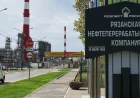
A strategic oil pipeline was also reportedly hit, reducing fuel support for Russian surveillance drones. After that, Ukrainian forces used signals intelligence to locate shelters used by elite Russian drone operators and struck them one by one.
Russian troops had deployed fiber-optic drones to avoid electronic warfare interference. Ukrainian units reportedly countered them by tracking cable reels and destroying launch points. Before the main assault, unmanned armored vehicles were used to open safe corridors through minefields, while drones laid mines along Russian supply routes.
Robotic vehicles and armor shaped the assault
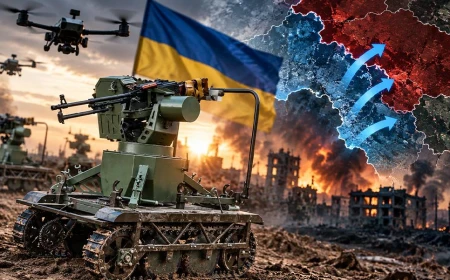
After the preparation stages, Ukraine used robotic ground vehicles armed with machine guns and explosives behind Russian positions. These systems reportedly created confusion in the Russian rear as Ukrainian mechanized units advanced.
The advancing Ukrainian units were protected with upgraded reactive armor designed to respond to FPV drone attacks through controlled detonation. They then moved through Russian shelters and cleared positions step by step.
Ukrainian President Volodymyr Zelenskyy said more than 5,000 Russian soldiers had been killed and 250 captured during the operation. The figures were presented as part of Ukraine’s assessment of the battlefield results.
Delta system helped in southern Donbas
In southern Donbas, Russia’s attempt to push from the Pokrovsk area toward Dobropillia and farther west was reportedly contained by Ukraine’s elite brigades. Although Russian forces captured Pokrovsk, they were stopped before reaching broader strategic goals.
Lieutenant Colonel Kyrylo Dubrovskyi, deputy commander of the Azov 1st Corps, said Ukraine’s domestically developed battlefield management software, known as “Delta,” played a key role in stopping Russian advances. The system provided real-time information that helped identify and destroy Russian infiltration groups.
Analyst Mykola Bielieskov of the Come Back Alive Foundation said unmanned ground vehicles have become an important part of Ukraine’s defense, carrying out tens of thousands of missions and strengthening frontline resistance.
The front has become a wide gray zone
Russian forces have increasingly tried to cross open terrain in small infantry groups, moving through areas saturated with drones. This has created a broad “gray zone” in which control is difficult to define by a simple line on a map.
Colonel Oleksandr Rashevskyi, commander of Ukraine’s Liut Joint Assault Brigade of the National Police, said the situation in Donbas no longer allows a clear division between one side and the other. He described constant fighting for tree lines, isolated buildings and roads where both sides overlap and struggle for control.
Moscow keeps pressure through air attacks
While Russia has struggled to achieve clear battlefield breakthroughs in Donbas, Moscow has intensified missile and kamikaze drone attacks on Kyiv and other major Ukrainian cities. The report notes that Putin continues to present the full annexation of Donbas as a non-negotiable condition for peace.
Kyiv, however, has rejected proposals that would require Ukraine to hand over territory not lost on the battlefield. The source text says this position includes rejecting compromise ideas linked to the Donald Trump administration that would envisage ceding land still held by Ukrainian forces.
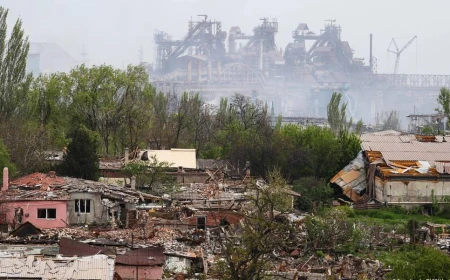
For now, the Donbas front remains contested, fragmented and heavily shaped by drones, artillery, digital battlefield systems and small-unit movement. Ukraine’s gains in northern Donbas do not end Russia’s offensive pressure, but they show that Moscow’s advance has slowed and that Kyiv can still regain ground under difficult battlefield conditions.
WiseNewsPress.com
What's Your Reaction?
 Like
0
Like
0
 Dislike
0
Dislike
0
 Love
0
Love
0
 Funny
0
Funny
0
 Wow
0
Wow
0
 Sad
0
Sad
0
 Angry
0
Angry
0

Ahmet Taş is a journalist, editor and Turkey Office Manager of the Wise News Press Media Group. He works across news, digital media and international publishing, focusing on accurate, responsible and accessible journalism. He contributes to the development of media projects that bring important political, social and global developments to a wider international audience.












Comments (0)