



Istanbul and Izmir Water Crisis Deepens: Why Aren't We Desalinating Seawater?
Dam occupancy rates in Istanbul dropped to 21.87% while Izmir exhausted its reserves. Experts discuss Turkey's 'water stress' and the viability of desalination versus agricultural efficiency.


WISE NEWS PRESS / ISTANBUL, TURKEY — Nov. 10, 2025
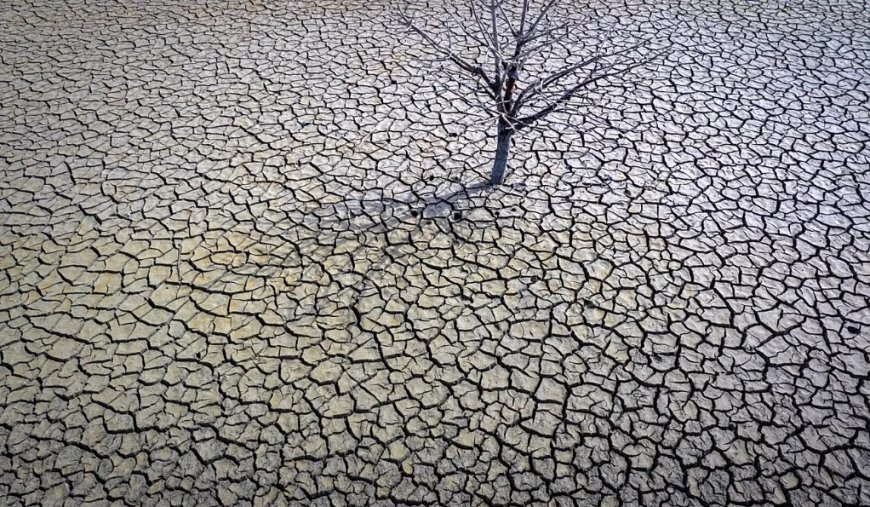
The water crisis is deepening in Turkey's major metropolitan areas, with dam occupancy rates in Istanbul falling to 21.87%, while experts warn that Izmir has already depleted its underground water reserves.
Istanbul Water and Sewerage Administration (İSKİ) announced that the occupancy rates in the dams supplying water to Istanbul dropped to 21.87%. This rate was 66.23% on June 30th. The crisis in Izmir, which has experienced water shortages and cuts since the summer months, is reportedly so severe that its underground reserves have also been exhausted.
Professor Doğan Yaşar of Dokuz Eylül University told DHA that water levels in Izmir's dams are at a critical level. "Bursa uses 10% of its water from underground, and Ankara and Istanbul use 1% from underground. Their reserves remain, but we have spent our reserve water in Izmir," Yaşar stated.
Is Turkey a Water-Poor Country?


Turkey is not classified as "water-poor" but is categorized as a "water-stressed country." However, experts warn that if the current trend continues, Turkey risks entering the water-poor category in the coming years.
Water-poor regions are defined as countries with less than 1,000 m³ of annual available fresh water per capita, a category that includes Middle Eastern nations like Saudi Arabia and the UAE, and African nations like Somalia and Eritrea. Water-stressed countries have an annual water quantity per capita between 1,000 and 1,700 m³. According to 2024 data, Turkey's annual available water per capita is approximately 1,300 to 1,400 m³.
Experts point to climate change and the resulting drought as the primary causes of the water crisis. If large-scale mitigation efforts against global warming are not achieved, drought is expected to become widespread in the Mediterranean basin. Compounding factors include population growth, inefficiency in agricultural irrigation (which accounts for up to 70% of water consumption), and pollution.


Mining and Water Pollution
Mining activities, which have accelerated in recent years and caused nationwide protests, are also significant water polluters. The process of washing extracted minerals and purifying them with substances like cyanide severely contaminates underground and surface water sources, a concern raised regarding thermal power plants and gold mines alike.
In Uşak, where water delivery has been restricted between 4:00 PM and 10:00 PM as a precautionary measure, there is controversy surrounding the local Tüprağ Gold Mine, which is accused of consuming more water than the entire city. Soner Demiröz, Chairman of the Board of Egem TV, recently alleged that the gold mine "consumes nearly all the water used by Uşak alone," and is reportedly using underground water without metered measurement or payment. The company denied these claims, stating it used less than half of its allocated water in recent years.
Inefficient Agricultural Practices
To achieve a more sustainable water usage, radical innovations are necessary, starting with increasing efficiency in agricultural irrigation.
One major factor is surface (wild) irrigation, the most common method in Turkey, which wastes 50% to 60% of water through evaporation and runoff. Another key issue is the wrong product selection, where water-intensive crops like cotton, corn, sugar beet, and rice are grown in water-scarce regions.
Solutions: From Smart Irrigation to Fog Harvesting
Methods to make agricultural irrigation more efficient include micro-irrigation (e.g., drip irrigation), which uses low-pressure systems to deliver water directly to the plant roots, reducing waste by 20% to 50%. Subsurface Textile Irrigation (SSTI) and smart irrigation systems—which use soil moisture sensors and predictive models—are also gaining popularity globally.
For drought-ridden countries, extraordinary innovative methods like harvesting fog and moisture from the air have been developed. Systems using vast, fine mesh nets can condense water vapor from the fog into droplets. Systems installed in Chile's Atacama Desert and Morocco's Dar Si Hmad project have provided thousands of gallons of water per day for local communities.
Is Desalination the Answer?
One of the most debated solutions in the public sphere is seawater desalination. Desalination—the process of removing salt and minerals from seawater to make it potable—is predominantly done through reverse osmosis (RO). Globally, over 20,000 desalination plants are operational, with countries like Saudi Arabia, the UAE, Israel, and the US holding the largest capacities. Israel reportedly sources about 70% of its drinking water through desalination.
The Costs and Consequences
The primary advantage of desalination is the nearly inexhaustible supply of seawater. However, the process is environmentally controversial:
-
Energy Consumption: Desalination facilities still require intensive energy, increasing greenhouse gas emissions if fossil fuels are used. Producing one cubic meter of drinking water requires an average of 3 to 10 kWh of energy.
-
Brine Discharge: The salty wastewater (brine) produced after the process poses a serious environmental risk, potentially lowering dissolved oxygen levels and harming marine ecosystems. A 2021 UNEP report found that global desalination plants produce twice as much salty waste as the fresh water they generate.
-
Cost: Desalinated drinking water is 3 to 5 times more expensive than water from natural sources, making large-scale implementation economically unsustainable for low-income countries.
Professor Peter Gleick of Stanford University stated to Scientific American that "Desalination can be a strategic support tool for the water crisis, but it cannot be placed at the center of water management." According to Gleick, the most effective long-term solution is integrated water management policies supported by water conservation, wastewater reuse, and agricultural efficiency.
While there are discussions and efforts toward desalination in Turkey, experts suggest that widespread application is not common due to the need for larger investments.
What's Your Reaction?
 Like
0
Like
0
 Dislike
0
Dislike
0
 Love
0
Love
0
 Funny
0
Funny
0
 Wow
0
Wow
0
 Sad
0
Sad
0
 Angry
0
Angry
0

Editor | Wise News Press — Delivering accurate, timely global news with integrity, insight, and editorial responsibility.




















Comments (0)