



China’s Middle East security plan tests the region’s U.S.-led order
Xi Jinping’s four-point Middle East security proposal signals a broader Chinese role as regional states diversify alliances beyond the traditional U.S. framework.


By Ahmet Taş | Wise News Press
ANKARA, TURKEY — Chinese President Xi Jinping’s proposal for a new Middle East security architecture has brought Beijing deeper into a debate long dominated by the United States, as regional powers increasingly seek overlapping partnerships rather than dependence on a single external security guarantor.
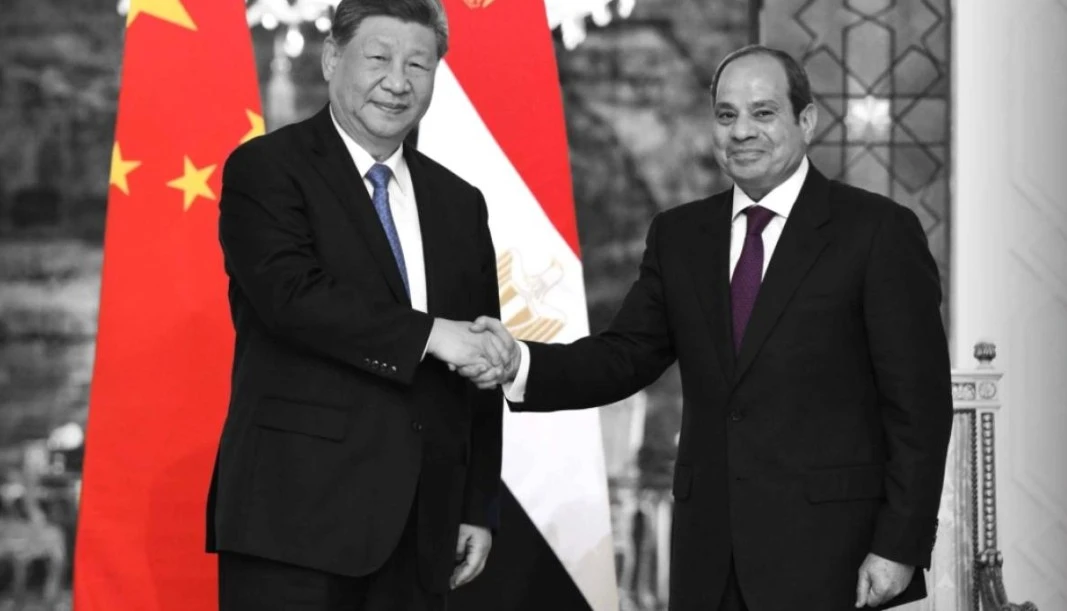
During talks with Egyptian President Abdel Fattah el-Sisi in Cairo on Sept. 2, Xi presented a four-point framework centered on regional ownership, comprehensive solutions to interconnected conflicts, economic development and adherence to the U.N. Charter and international law. China’s Foreign Ministry explicitly described the proposal as an effort to help build a “new security architecture for the Middle East.”
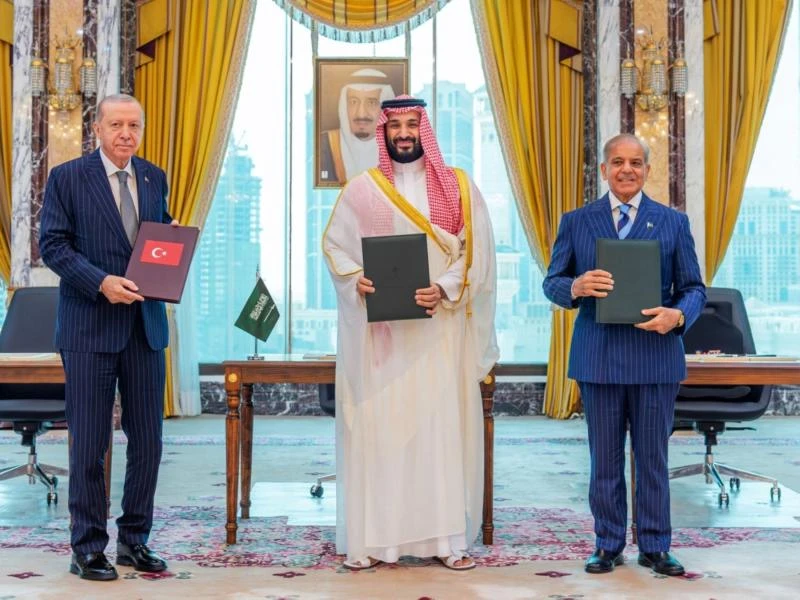
The initiative comes amid wider shifts across the region. Türkiye, Saudi Arabia and Pakistan signed the Mecca Joint Defense Agreement on Aug. 7, Ankara has signaled greater interest in the China- and Russia-led Shanghai Cooperation Organisation, and Gulf states are expanding economic and diplomatic ties with Beijing. Analyst Sherbil Barakat argues that these developments point toward a more multipolar regional system in which China could influence security arrangements without reproducing the U.S. model of bases, troop deployments and formal alliances.
Xi’s four-point proposal puts regional ownership first
The first pillar of Xi’s proposal is that Middle Eastern states should take greater responsibility for shaping their own security environment.
According to the Chinese Foreign Ministry, Xi said the people of the Middle East should be “masters of their own affairs” and called for regional countries to strengthen peace and security dialogue while resisting external interference. Beijing’s stated goal is to encourage governments in the region to discuss the redesign of their own security architecture rather than rely entirely on arrangements imposed from outside.


The second element is a comprehensive approach to regional crises. China argues that conflicts in the Middle East are interconnected and cannot be treated in isolation. Xi specifically placed the Palestinian question at the core of the region’s unresolved problems and warned against allowing it to be marginalized.
The third pillar links security with development. Beijing says lasting stability requires economic growth, greater convergence of interests and protection of international shipping routes.
That emphasis is particularly important for China, whose trade and energy supplies depend heavily on routes through the Strait of Hormuz, the Red Sea and the Bab el-Mandeb. Barakat’s analysis similarly highlights maritime security as a key economic interest behind Beijing’s growing engagement.


The fourth pillar calls for stronger international coordination based on the U.N. Charter and international law, with a larger role for the United Nations in regional affairs.
Why is China moving further into the security debate now?
For decades, China’s Middle East strategy focused primarily on energy, trade, infrastructure and investment.
Beijing became one of the Gulf’s largest energy customers while expanding commercial ties through the Belt and Road Initiative. Unlike Washington, however, China generally avoided building a dense network of military bases and binding defense commitments.
That distinction may now be changing — but only partially.
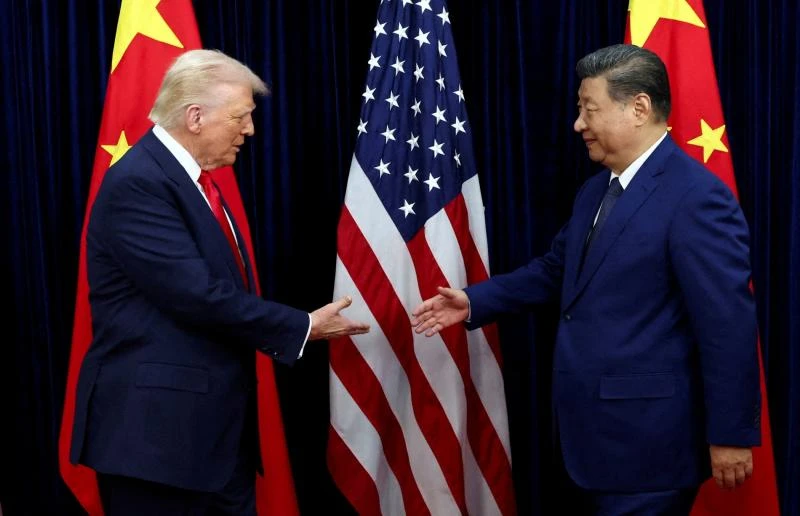
Barakat points to several developments surrounding Xi’s Cairo visit, including growing Chinese-Egyptian military and technology cooperation, as indications that Beijing is beginning to operate in areas where American influence has traditionally been strongest.
Yet China still appears reluctant to assume the costs associated with the U.S. security model.
Washington’s regional architecture has for decades relied on troop deployments, military bases, arms sales and bilateral defense relationships. Beijing’s emerging approach instead appears to favor diplomatic coordination, economic leverage and support for security mechanisms created by regional states themselves.
That model could allow China to expand its influence without assuming responsibility for defending the region in the same way as the United States.
The Mecca defense pact creates an important parallel
The Chinese proposal arrived less than a month after Türkiye, Saudi Arabia and Pakistan signed the Mecca Joint Defense Agreement.
The agreement states that an armed attack against one of the three countries will be regarded as an attack against all, while also calling for stronger collective security, defense cooperation and military coordination. Turkish authorities have stressed that the pact is defensive, does not identify a specific adversary and is intended to complement rather than replace existing alliances.
President Recep Tayyip Erdoğan has also said the agreement is based on collective deterrence, supports defense-industry cooperation and remains open to other friendly countries seeking regional peace and stability.
Barakat identifies several areas where the Mecca pact and Xi’s security vision overlap.
Both emphasize international law. Both give significant weight to the Palestinian question. And both promote the idea that regional governments should develop more of their own defense and security capacity rather than leave those responsibilities primarily to outside powers.
Those similarities do not prove that the two initiatives were coordinated.
The safer conclusion is that they reflect a broader regional trend: governments are increasingly interested in strengthening their own security networks while maintaining multiple external partnerships.
Türkiye is navigating NATO, Mecca and the SCO at the same time
Türkiye illustrates that emerging model particularly clearly.
It remains a member of NATO and continues to maintain close military and political ties with the West.
At the same time, Ankara has entered the trilateral defense framework with Saudi Arabia and Pakistan and is also exploring deeper engagement with the Shanghai Cooperation Organisation.
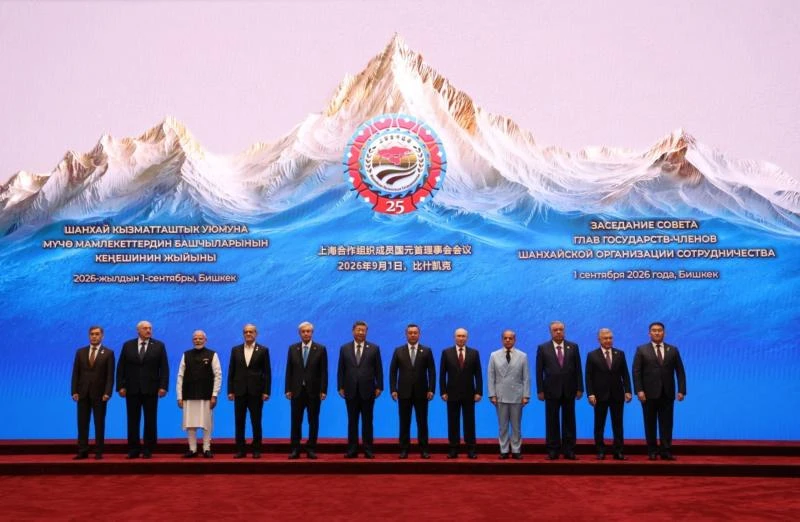
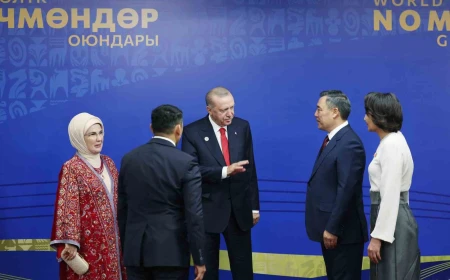
After attending an SCO summit in Bishkek, Erdoğan said Türkiye would consider full membership of the China- and Russia-led organization. He also stressed that closer relations with the SCO should not be interpreted as abandoning NATO or Türkiye’s Western partnerships.
This increasingly resembles a system of overlapping alignments rather than rigid Cold War-style blocs.
Türkiye can simultaneously cooperate with NATO, deepen defense ties with Riyadh and Islamabad, and expand political engagement with Beijing and Central Asian states.
For China, such flexibility creates room to increase its influence without forcing regional partners to choose between Beijing and Washington.
Egypt gives Beijing access to several security theaters at once
Xi’s decision to unveil the proposal in Cairo was also significant.
Egypt sits at the intersection of several major security theaters: Gaza and the Palestinian question, the Red Sea, the Suez Canal, the eastern Mediterranean and the broader Arab political system.
Unlike Türkiye, Saudi Arabia and Pakistan, Egypt is not a party to the Mecca defense pact. But it has been involved in regional discussions with those states and retains strong ties with both Washington and Beijing.
Barakat argues that this makes Cairo a potential bridge between different emerging security arrangements rather than a member of a single competing bloc.
For Beijing, that is advantageous.
China can maintain ties with Saudi Arabia, Türkiye, Pakistan, Egypt, Qatar and Iran even though those countries do not always share the same interests.
That ability to work across political divides has already been part of Beijing’s diplomatic appeal in the region.
Its economic position also gives it leverage. Maritime instability in the Red Sea or Strait of Hormuz directly affects Chinese energy imports and trade with Europe, giving Beijing a strong incentive to support arrangements that reduce disruption without necessarily deploying large military forces.
China is not replacing the United States — at least not yet
The evidence does not support the conclusion that Beijing is about to replace Washington as the Middle East’s dominant security power.
The United States still maintains a military presence across the region and has deeply institutionalized defense relationships with Gulf states and Israel.
China possesses nothing comparable in scale.
Xi’s proposal also does not call for a Chinese military umbrella.
Instead, Beijing appears to be seeking influence over the political rules and diplomatic architecture of regional security.
Barakat describes this as a way for China to enter the security equation without adopting the American model of direct security guarantees and large-scale military deployment.
That could be a particularly attractive strategy for Beijing: participate in mediation, shape diplomatic norms, protect economic interests and support regional security structures — while leaving much of the direct military burden to local states and existing security partners.
The Middle East may be moving toward a multipolar security system
The broader picture is therefore not one of the United States disappearing from the region.
It is one in which Washington is no longer the only major outside power capable of shaping the political conversation.
China is becoming more assertive through diplomacy and economic power.
Türkiye is seeking greater strategic autonomy.
Saudi Arabia is diversifying its defense relationships.
Pakistan is entering new regional security arrangements.
Egypt is maintaining links with competing power centers.
Barakat uses the idea of an emerging “multipolar arena” to describe this environment, in which U.S. alliances, the Mecca defense framework and China’s security initiative could coexist rather than immediately replace one another.
The real test for Beijing will be whether its principles can be converted into practical results.
Can China contribute to a political settlement on Palestine? Can it help reduce tensions around the Strait of Hormuz and the Red Sea? Can it balance relations with Iran and Gulf states during major crises? And will Beijing remain primarily a diplomatic and economic partner when regional conflicts require costly political decisions?
Xi’s Cairo initiative does not yet answer those questions.
But it does mark a notable shift.
China is no longer presenting itself in the Middle East only as a buyer of oil, an infrastructure investor or a trading partner. It now wants a voice in defining how the region’s future security order should work.
The United States retains the stronger military position. But in the diplomatic contest over the architecture surrounding that military power, China increasingly expects a seat at the table.
WiseNewsPress.com
What's Your Reaction?
 Like
0
Like
0
 Dislike
0
Dislike
0
 Love
0
Love
0
 Funny
0
Funny
0
 Wow
0
Wow
0
 Sad
0
Sad
0
 Angry
0
Angry
0

Ahmet Taş is a journalist, editor and Turkey Office Manager of the Wise News Press Media Group. He works across news, digital media and international publishing, focusing on accurate, responsible and accessible journalism. He contributes to the development of media projects that bring important political, social and global developments to a wider international audience.
















Comments (0)