



Ukraine launches largest Moscow drone attack since full-scale war began
Ukraine launched its largest drone attack on Moscow since Russia’s full-scale invasion, striking an oil refinery and disrupting airports.


By Ahmet Taş | Wise News Press
MOSCOW, Russia — Ukraine launched one of its largest drone attacks on Moscow since the start of Russia’s full-scale invasion, hitting energy infrastructure, disrupting airports and bringing the war deeper into the Russian capital’s daily life.
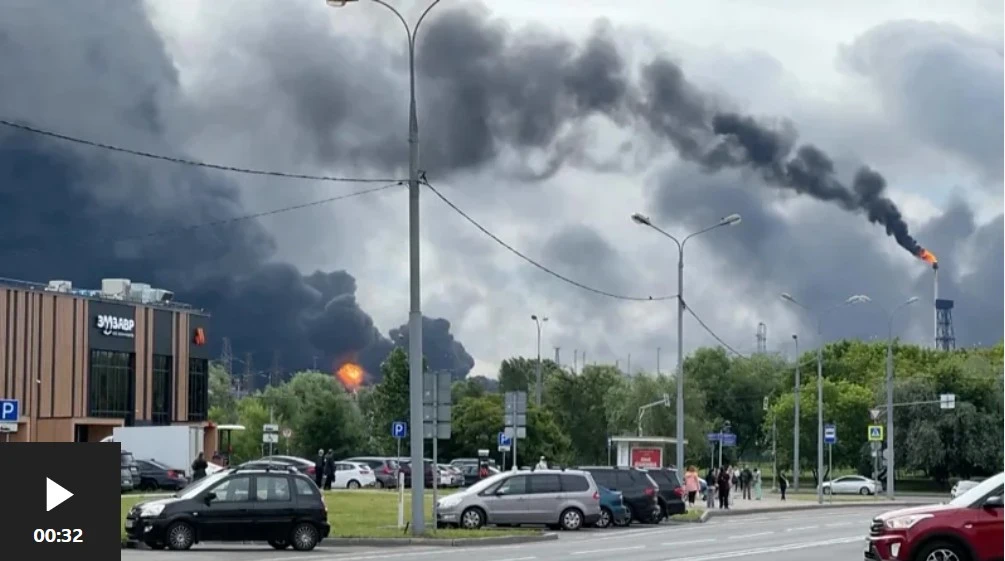
According to BBC, Reuters and other international reports, nearly 200 drones targeted Moscow and its surrounding region on June 18, while Russian authorities said hundreds more drones were intercepted across the country within 24 hours. The attack struck the Kapotnya oil refinery southeast of Moscow, injured civilians in the Moscow region and forced temporary closures at the capital’s major airports.
Moscow hit by a large-scale drone operation
The June 18 strike marked one of the most extensive Ukrainian drone operations against Moscow since February 2022. Russian officials said air defenses intercepted large numbers of drones, but several still reached targets in and around the capital.
Moscow Region Governor Andrei Vorobyov said people were injured in the attack. Reports varied slightly on the number of wounded, with Russian and international outlets citing at least 16 or 17 injuries.
The scale of the operation was unusual. Russia’s defense ministry said it had intercepted or destroyed close to 1,000 drones across the country over a 24-hour period, along with several Ukrainian cruise missiles.


For Moscow residents, the attack was a visible reminder that the war is no longer confined to the front lines in eastern and southern Ukraine. Videos shared on social media appeared to show drones flying in daylight, explosions in industrial zones and smoke rising over the city’s outskirts.
Kapotnya refinery struck again
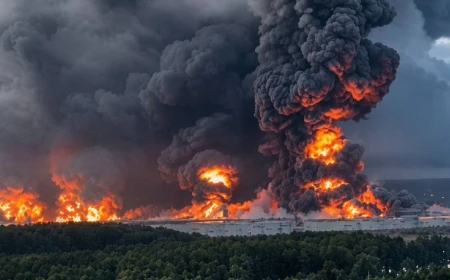
One of the most significant targets was the Kapotnya oil refinery, a Gazprom Neft-operated facility southeast of central Moscow. The refinery is one of the largest fuel suppliers to the Moscow region and has become a repeated target of Ukrainian long-range strikes.
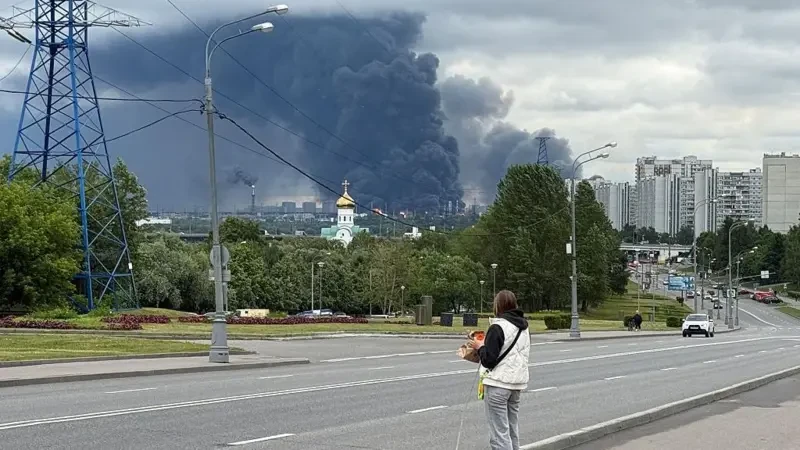


BBC reported that black smoke rose from the refinery area after the attack. The Guardian also described the refinery as one of the key energy sites hit in the raid. According to reports, the facility had already been struck earlier in the week and had been targeted multiple times in recent weeks.
The repeated strikes on the refinery underline Kyiv’s strategy of hitting Russian energy infrastructure. Ukraine has increasingly targeted oil refineries, fuel depots and logistics hubs that it says support Russia’s war machine.
While Moscow has built extensive air defenses around the capital, Ukraine’s use of large drone waves appears designed to saturate those defenses. Even if most drones are intercepted, a small number can still penetrate and cause damage.
Airports closed and flights disrupted
The attack also caused major disruption to Moscow’s air transport system. The city’s major airports were temporarily closed, and hundreds of flights were delayed or canceled.
Reports said more than 500 flights were affected. Such disruption has become one of the strategic consequences of Ukraine’s long-range drone campaign: even when the physical damage is limited, the psychological and economic impact can be significant.
Closing airports in the Russian capital sends a message beyond the immediate military effect. It shows that Ukraine can create pressure on Russia’s logistical, economic and civilian systems far from the battlefield.
The disruption also raises questions about the effectiveness of Russia’s layered air defense system around Moscow. The capital is one of the most heavily defended areas in the country, yet Ukrainian drones have repeatedly managed to reach targets in or near the city.
Zelenskyy frames the strikes as ‘long-range sanctions’
Ukrainian President Volodymyr Zelenskyy described the attacks as part of Ukraine’s “long-range sanctions” campaign, a phrase Kyiv has used for strikes on Russian energy, military and industrial targets.
Zelenskyy said the attack came in response to Russian strikes on Kyiv and other Ukrainian cities, including a recent attack that damaged a historic religious site. He argued that Russia must take meaningful steps toward diplomacy if it wants the war to end.
His message was blunt: Ukraine did not want the war, but if Russia continues to burn Ukrainian cities, Moscow will also feel the consequences.
This framing is important. Kyiv is presenting long-range strikes not only as military operations, but also as a form of pressure on Russian society and the Kremlin. The goal is to make the cost of the war visible inside Russia.
Russia also launched major strikes on Ukraine
The attack on Moscow came amid continued Russian drone and missile strikes against Ukraine. Kyiv said Russia launched more than 200 drones and multiple ballistic missiles against Ukrainian targets during the same period.
This pattern shows how the war has increasingly become a contest of long-range strike capabilities. Russia continues to target Ukrainian cities, energy infrastructure and civilian areas with drones and missiles. Ukraine, meanwhile, is expanding its ability to strike deeper inside Russia.
The result is a widening battlefield. Industrial facilities, oil refineries, airfields and logistics sites far from the front line are now part of the war’s operational map.
For Ukraine, these strikes are intended to degrade Russia’s ability to finance and sustain the war. For Russia, repeated attacks near Moscow create political pressure and force the state to reassure the public that the capital remains protected.
Ukraine’s long-range capabilities are expanding
Ukraine’s first successful drone attacks on Moscow began in 2023, but those operations were smaller and less frequent. Since then, Kyiv has developed longer-range systems and increased production of domestically built drones.
Moscow lies roughly 500 km from the Ukrainian border, yet Ukrainian drones have reached it repeatedly. The June 18 operation suggests that Ukraine now has the capacity to launch larger and more coordinated long-range attacks.
Some reports suggested Ukraine used advanced long-range drone systems capable of penetrating deep into Russian territory. While the exact systems used have not been fully confirmed, the operational trend is clear: Kyiv’s strike range and drone volume are growing.
This expansion is strategically important because Ukraine has often faced limits on the use of Western-supplied long-range weapons. Domestic drone production gives Kyiv a separate tool for striking Russian infrastructure without relying entirely on foreign authorization.
Moscow residents face the war at home
For much of the war, many ordinary Russians in Moscow experienced the conflict as distant. The front line was far away, and state media presented the war through controlled narratives.
Ukraine’s drone campaign is designed partly to change that perception. By striking Moscow, Kyiv is trying to make Russians feel that the war launched by their state has consequences inside their own country.
Ukrainian Foreign Minister Andrii Sybiha addressed that point directly, saying many Moscow residents were asking what was happening. His answer was that Russia had started a war of aggression against Ukraine and had been killing Ukrainians for years.
That message reflects Kyiv’s broader psychological strategy: to connect Russian domestic discomfort with the Kremlin’s decision to continue the war.
Putin remains silent on the attack
Russian President Vladimir Putin did not immediately make a public comment on the large-scale attack on Moscow. At the time, he was hosting Southeast Asian leaders at a summit in Kazan.
The absence of an immediate public response may reflect the Kremlin’s desire to manage the political impact of the raid carefully. Acknowledging the scale of Ukraine’s strike too strongly could fuel public anxiety. Ignoring it completely could make the state look passive.
Russian hardliners, however, have often called for harsh retaliation after Ukrainian strikes on Russian territory. Whether the Kremlin responds with another large missile and drone barrage against Ukraine will be closely watched.
A new phase of the air war
The Moscow strike reflects a new phase in the Russia-Ukraine war. Long-range drones have become central to both sides’ strategies, and energy infrastructure is increasingly at the heart of the conflict.
Ukraine is trying to weaken Russia’s fuel supply, logistics and war economy. Russia is trying to overwhelm Ukraine’s air defenses and damage its energy grid, cities and civilian infrastructure.
This creates a cycle of escalation: Russian strikes on Ukrainian cities lead to Ukrainian attacks on Russian energy sites, which may then trigger new Russian retaliation.
The June 18 attack on Moscow does not change the front line by itself. But it changes the strategic atmosphere. It shows that Kyiv can bring pressure to Russia’s capital and that the war’s consequences are moving deeper into Russian territory.
For Moscow, the strike raises uncomfortable questions about air defense, energy security and public confidence. For Kyiv, it demonstrates expanding reach and a willingness to impose costs far beyond the battlefield.
What's Your Reaction?
 Like
0
Like
0
 Dislike
0
Dislike
0
 Love
0
Love
0
 Funny
0
Funny
0
 Wow
0
Wow
0
 Sad
0
Sad
0
 Angry
0
Angry
0

Editor | Wise News Press — Delivering accurate, timely global news with integrity, insight, and editorial responsibility.















Comments (0)