



Azov rejects Russian claims of seizing three villages in Donetsk region
Azov says Zolotyi Kolodiaz, Novotroitske and Petrivka remain under Ukrainian control, rejecting Russian claims that its forces captured the villages.


By Ahmet Taş | Wise News Press
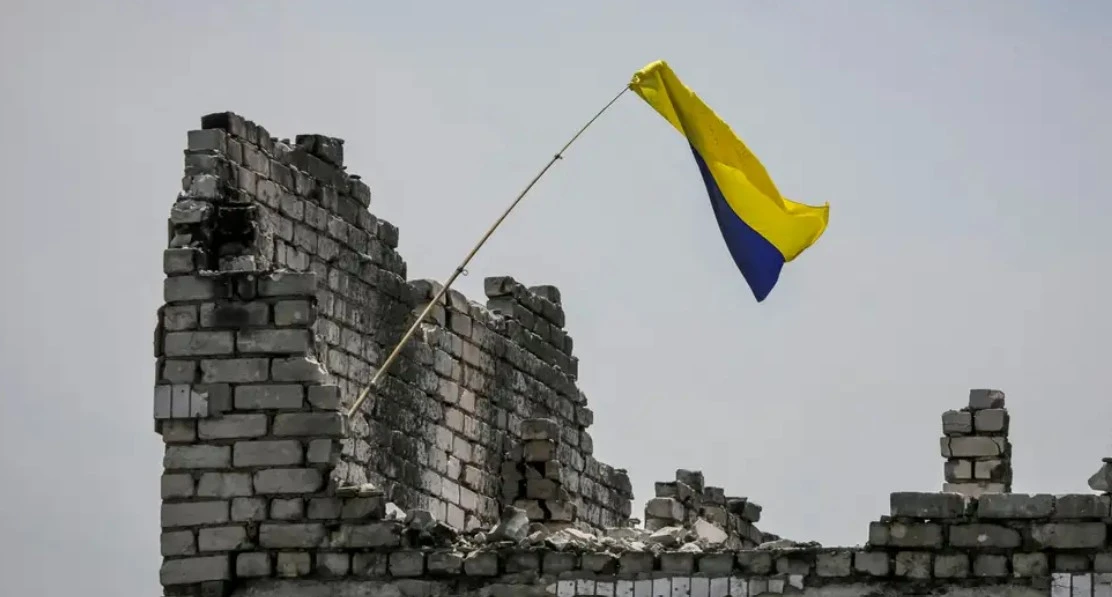
DONETSK, UKRAINE — Ukraine’s 1st National Guard Corps Azov rejected Russian Defense Ministry claims that Russian forces had captured Zolotyi Kolodiaz, Novotroitske and Petrivka, saying all three Donetsk villages remain under Ukrainian control.
In an October 17 statement, the corps said the settlements were being held by the Bureviy Brigade and other Ukrainian Defense Forces units. Russia claimed on October 11 that its troops had captured Novotroitske and Petrivka and had previously made a similar claim about Zolotyi Kolodiaz.
Competing claims over three settlements
The Russian Defense Ministry said on October 11 that units belonging to its Central Group of Forces had taken control of Novotroitske and Petrivka in Ukraine’s Donetsk region.
Moscow argued that capturing the two settlements had improved its tactical position and created conditions for Russian forces to advance further into Ukrainian defensive lines.
Russian authorities had also previously claimed control of Zolotyi Kolodiaz. Ukraine, however, says Russian troops have not established a lasting presence in any of the three villages.


The Azov Corps described the Russian statements as inaccurate and said all three settlements continued to be defended by Ukrainian units.
Because the villages are located in an active combat zone, their status cannot always be independently confirmed in real time. Claims from either side therefore require clear attribution and supporting visual or geolocated evidence.
Azov says Ukrainian forces remain in control
According to the Azov Corps, Zolotyi Kolodiaz, Novotroitske and Petrivka remain under the control of the Bureviy Brigade and other components of the Ukrainian Defense Forces.


The Bureviy Brigade issued a matching statement on its official website, saying coordinated Ukrainian operations had prevented Russian troops from establishing positions inside the settlements.
“All three settlements are under the control of the Bureviy Brigade and other Ukrainian Defense Forces units.”
The brigade said Ukrainian forces were continuing to detect and counter small Russian infantry groups attempting to enter the villages.
It did not disclose the number of troops stationed in the area, the precise positions of Ukrainian units or operational details that could affect ongoing combat.
The Ukrainian statements indicate that fighting and infiltration attempts may be continuing around the settlements, even though Russian forces have not secured enough ground to exercise sustained control.
Small groups used to stage flag videos
The Azov Corps accused Russian forces of sending small infantry groups into Ukrainian-held settlements to create the appearance of a broader advance.
According to the Ukrainian account, the groups attempt to enter a village, place a Russian flag on a building or another visible location and record a short video. The footage is then presented as evidence that the entire settlement has been captured.
Azov said the presence of a small group or a briefly displayed flag does not establish military control over a populated area.
Holding a settlement generally requires forces to maintain a sustained presence, control access routes, establish supply lines and defend their positions against counterattacks.
The corps said Ukrainian troops identify and eliminate Russian groups that infiltrate the area before they can consolidate their positions. Russia has presented flag-raising footage as evidence supporting some of its territorial claims.
Azov alleged that Russian commanders were sacrificing soldiers for footage intended primarily for propaganda purposes, despite the groups having little chance of holding the territory.
ISW questions Russian visual evidence
The Washington-based Institute for the Study of War examined the Russian claims concerning Novotroitske and Petrivka in its October 11 battlefield assessment.
ISW said the Russian Defense Ministry used footage purportedly showing a Russian soldier raising a flag in Petrivka before claiming that Russian forces had seized both Petrivka and nearby Novotroitske.
The institute assessed that the available visual evidence did not demonstrate Russian control of the settlements. A flag-raising mission conducted by a small infiltration group does not, by itself, show that a military force has secured and can hold an area.
ISW has also documented Russian sources using artificially generated or altered footage to support territorial claims in Ukraine. It described the practice as part of an information effort aimed at portraying Ukrainian defensive positions as collapsing.
The assessment said available evidence did not support Russia’s claim that its troops had captured Petrivka and Novotroitske.
ISW’s findings provide an independent analytical assessment broadly consistent with the statements issued by Azov and the Bureviy Brigade. However, battlefield conditions can change rapidly, and later developments may alter the status of individual locations.
Why the Dobropillia sector matters
Zolotyi Kolodiaz, Novotroitske and Petrivka are located in the Dobropillia direction of the Donetsk region, one of the sectors where Russian forces have been attempting to penetrate Ukrainian defensive lines.
Control of small villages and the roads connecting them can affect military supply routes, troop movements and the security of larger population centers nearby.
Russian forces have used infantry infiltration, drones, artillery and airstrikes to pressure Ukrainian positions in the area. Ukrainian units have focused on detecting small assault groups, protecting logistical routes and preventing Russian troops from consolidating inside populated areas.
Even a limited Russian presence can force Ukraine to deploy additional troops and drones to clear buildings, search wooded areas and monitor possible supply routes.
The information battle surrounding these settlements is also significant. Announcing the capture of a village can be used to suggest momentum even when the attacking force has not established lasting control on the ground.
Front-line control remains difficult to verify
Ukraine and Russia regularly release conflicting accounts of territorial gains and the status of settlements along the front line.
A small unit entering the outskirts of a village, recording a flag video or temporarily occupying an isolated building does not necessarily mean that the settlement has changed hands.
Reliable assessments normally require multiple forms of evidence, including geolocated footage, satellite imagery, verified troop movements, control of access roads and confirmation that forces can maintain a stable presence.
As of the Azov and Bureviy statements on October 17, the Ukrainian military maintained that Zolotyi Kolodiaz, Novotroitske and Petrivka remained under the control of Ukraine’s Defense Forces.
The Russian Defense Ministry had not withdrawn its earlier claims that at least two of the settlements had been captured. The competing accounts underscore the difficulty of establishing real-time territorial control in areas where small-unit infiltration and continuing combat are taking place.
WiseNewsPress.com
What's Your Reaction?
 Like
0
Like
0
 Dislike
0
Dislike
0
 Love
0
Love
0
 Funny
0
Funny
0
 Wow
0
Wow
0
 Sad
0
Sad
0
 Angry
0
Angry
0

Ahmet Taş is a journalist, editor and Turkey Office Manager of the Wise News Press Media Group. He works across news, digital media and international publishing, focusing on accurate, responsible and accessible journalism. He contributes to the development of media projects that bring important political, social and global developments to a wider international audience.
















Comments (0)