



Bahçeli's 'Status' Call for Öcalan Sparks Debate in Ankara
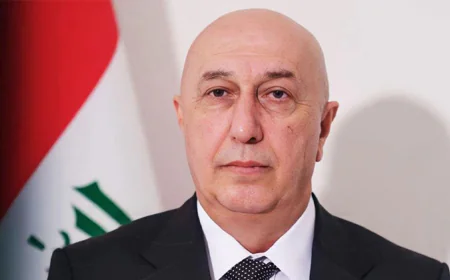
MHP Leader Devlet Bahçeli’s question regarding a new "status" for Abdullah Öcalan has triggered intense political speculation across Turkey's major parties.


By Ahmet Taş | Wise News Press
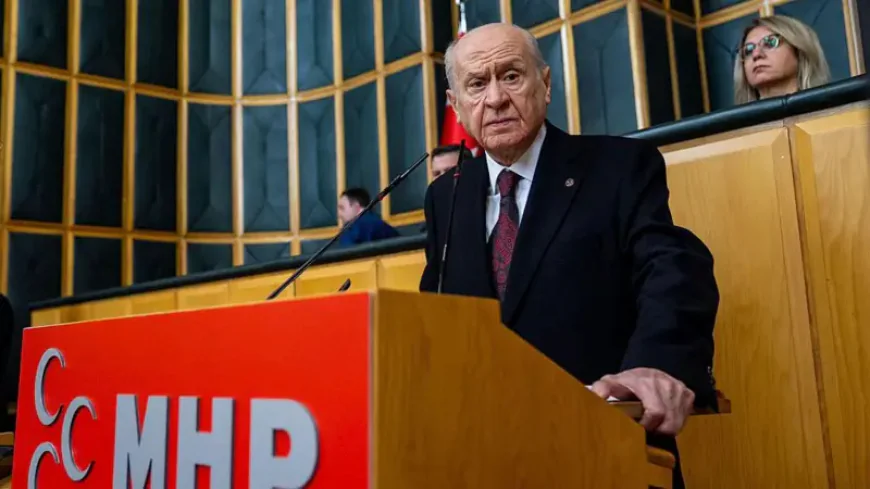
ANKARA, TURKEY — Nationalist Movement Party (MHP) Leader Devlet Bahçeli triggered a new wave of political debate in Ankara on Tuesday by questioning the future legal "status" of imprisoned PKK leader Abdullah Öcalan. Speaking at his party's group meeting following the release of a report by the National Solidarity, Brotherhood, and Democracy Commission, Bahçeli’s remarks have left the Turkish capital's political corridors abuzz with conflicting interpretations.
The statement, which specifically addressed the "founding leadership of the PKK," has been viewed as a significant pivot in the ongoing discourse regarding a "terror-free Turkey." Bahçeli asked, "How will the status problem of the PKK's founding leadership be handled? How will the status gap of Imrali be closed?" These questions have prompted varying responses from the ruling Justice and Development Party (AKP), the pro-Kurdish DEM Party, and internal MHP circles.
The Concept of 'Imrali's Status Gap'
The core of the debate centers on what Bahçeli meant by "status." While the MHP leader did not explicitly detail a legislative roadmap, his questions suggest a recognition that the current framework governing the Imrali prison—where Öcalan is serving a life sentence—may be insufficient for the state's broader strategic goals.
Inside the MHP, the move is largely interpreted as a strategic message directed at both the PKK and the DEM Party. MHP sources suggest that Bahçeli believes Öcalan’s previous calls for peace have not been sufficiently addressed by his own organization or political representatives. According to these sources, the "status" being discussed is not necessarily a release from prison, but a restructuring of Öcalan’s communication channels. The belief is that if Öcalan is given a defined "legal status" for communication, he could exert more effective influence over the PKK to end the violence.
Party-Line Interpretations: Strategy vs. Reform
The AKP and the DEM Party have viewed Bahçeli’s "status" exit through very different lenses, reflecting their distinct political priorities.


1. The AKP: Verified Disarmament as a Prerequisite Within the ruling AKP, the initial reaction was to view Bahçeli’s words as a continuation of his earlier "Right to Hope" (Umut Hakkı) discourse. AKP officials argue that the PKK has been slow to lay down arms and that the DEM Party has failed to act as a proper bridge for Öcalan’s directives. One AKP executive noted that Bahçeli might be implying that if Öcalan is expected to take more significant initiatives to end terror, his "communication channels" must be formally opened.
However, the AKP remains firm on a crucial condition: no legal steps—whether regarding "status" or the "right to hope"—will be taken until there is "confirmation and detection" that the organization has completely disarmed. For the ruling party, the ball remains in the court of the DEM Party and the PKK to prove their commitment to a non-violent path before any legislative changes reach the floor of the Grand National Assembly.
2. The DEM Party: Seeking a 'Chief Negotiator' Role The DEM Party has welcomed the debate, referring to Öcalan as a "chief negotiator" (başmüzakereci). Party sources argue that Öcalan took a massive risk by making a call for dissolution and disarmament on February 27, 2025. They believe that if communication channels were legally defined, the implementation of these calls would be far easier.


DEM Party Co-Chair Tülay Hatimoğulları has called for Öcalan’s "legal status" to be formally recognized via legislation. She defined this role as one where Öcalan could "freely and comfortably" consult with intellectuals, writers, journalists, lawyers, and politicians. The DEM Party is even planning a special meeting to mark the anniversary of the February 27 call, where they intend to share a new message from Öcalan regarding the peace process.
The Government's Response and Procedural Realities
Despite the high-profile debate sparked by Bahçeli, President Recep Tayyip Erdoğan has maintained a more procedural stance. Following his own party's group meeting on February 25, Erdoğan responded to journalists' inquiries by stating, "Imrali is currently being operated by our Ministry of Justice as necessary."
This response suggests that while the political partners in the People’s Alliance (Cumhur İttifakı) may be debating future possibilities, the executive branch is currently sticking to the existing legal and administrative framework.
The debate over "status" is also complicated by the recent commission report. Notably, the commission’s joint report did not use the phrase "Right to Hope," instead opting for indirect descriptions. This cautious language indicates the sensitive nature of the topic among the Turkish public. Prominent Kurdish politician Ahmet Türk remarked that while Bahçeli’s call is important, "the people are now waiting for concrete steps."
As the anniversary of the February 27 call approaches, the focus in Ankara will remain on whether these "status" discussions will transition from rhetorical questions to actual legislative proposals, or whether the demand for "verified disarmament" will remain an insurmountable hurdle for the time being.
What's Your Reaction?
 Like
0
Like
0
 Dislike
0
Dislike
0
 Love
0
Love
0
 Funny
0
Funny
0
 Wow
0
Wow
0
 Sad
0
Sad
0
 Angry
0
Angry
0

Editor | Wise News Press — Delivering accurate, timely global news with integrity, insight, and editorial responsibility.















Comments (0)