



Zelenskyy warns Russia of energy retaliation, urges talks to end war
Zelenskyy says Ukraine will retaliate if Russia attacks its energy grid this winter, while urging diplomacy and renewed negotiations to end the war.



By Ahmet Taş | Wise News Press
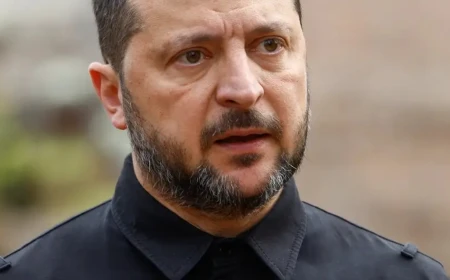
KYIV, UKRAINE — Ukrainian President Volodymyr Zelenskyy said Kyiv would respond if Russia launches another campaign against Ukraine’s energy system this winter, while stressing that diplomacy remains the preferred path to ending the war.
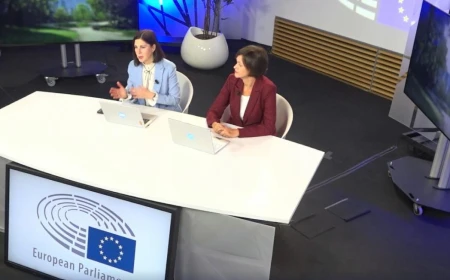
Speaking with journalist Fareed Zakaria during a Yalta European Strategy gathering, Zelenskyy said Ukraine had developed the ability to answer Russian operations and warned that attacks designed to cause widespread power outages would not go unanswered. He nevertheless argued that reciprocal strikes should not become the alternative to negotiations aimed at ending the conflict.
The comments come as both Russia and Ukraine continue long-range attacks far from the front line. Reuters reported on Sept. 11 that Russian strikes hit Kyiv while Ukrainian drones targeted sites inside Russia, including oil-related infrastructure, underscoring how energy and economic assets have become increasingly important elements of the war.
Zelenskyy warns of retaliation if Russia targets Ukraine’s grid
Zelenskyy said Ukrainian authorities believe Russia is preparing to target the country’s energy system again during the coming winter.
He presented Kyiv’s ability to strike back as a form of deterrence rather than as a call for unrestricted escalation.


“If they create blackouts for us, we will try to respond appropriately.”
According to Zelenskyy, Moscow understands that strikes on Ukraine’s power infrastructure could produce consequences for Russian infrastructure as well. He also sought to distinguish Ukraine’s military approach from what Kyiv describes as Russia’s attacks that cause large-scale humanitarian consequences.
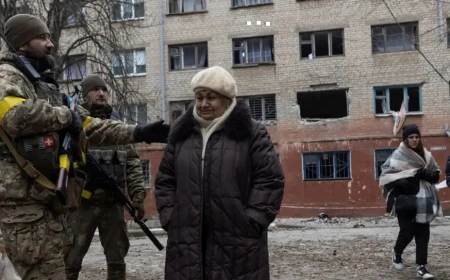
Energy infrastructure has been one of the most sensitive dimensions of the war because damage to generation, transmission and distribution networks can leave millions of civilians without electricity or heating during winter.


Ukraine has spent successive winters repairing damaged facilities, increasing protection around key infrastructure and seeking additional air-defense systems from its Western partners.
In March, Ukraine’s National Security and Defense Council approved regional energy-resilience plans focused on protecting infrastructure, restoring damaged facilities and preparing additional capacity after earlier Russian attacks.
Diplomacy remains Kyiv’s stated alternative
Despite his warning of possible retaliation, Zelenskyy said the alternative should be diplomacy aimed at ending the war.
That message is consistent with Ukraine’s recent public position on negotiations.
On Sept. 7, after meeting U.S. presidential envoys Steve Witkoff and Jared Kushner in Kyiv, Zelenskyy said restarting the negotiation process was important and that talks were preferable to having no diplomatic format at all. Ukraine and the U.S. representatives discussed possibilities for renewing negotiations following the American team’s contacts with the Russian leadership.
Two days earlier, the Ukrainian presidency said Kyiv was prepared to observe a ceasefire on airstrikes against cities involved in the negotiating process, providing another indication that Ukraine is considering limited ceasefire arrangements alongside broader peace efforts.
The two positions — military retaliation and willingness to negotiate — are not necessarily contradictory in Kyiv’s strategy.
Ukraine argues that maintaining the ability to impose costs on Russia strengthens its negotiating position, while diplomacy is necessary for a durable end to the war.
Energy infrastructure has become a central battlefield
Russia has repeatedly targeted Ukraine’s electricity and heating infrastructure during the full-scale invasion, making energy security a major national-security issue.
Ukraine, meanwhile, has expanded long-range attacks against Russian oil refineries, fuel storage sites and other facilities that Kyiv says contribute to Moscow’s ability to finance and sustain the war.
On Sept. 11, Reuters reported renewed Russian drone attacks in Kyiv and Ukrainian strikes across Russian territory. Ukrainian drones were reported to have targeted oil infrastructure in several regions, illustrating the increasingly reciprocal nature of long-range economic warfare.
Ukraine has openly described long-range strikes against Russian logistics, oil refining and military production as an important part of its strategy. In June, Zelenskyy said Ukrainian strikes were already having a significant effect on Russian logistics and oil-processing capacity.
For both sides, energy facilities carry military, economic and political significance.
Russian attacks on Ukraine’s grid can directly affect civilian life and industrial production. Ukrainian attacks on refineries and fuel infrastructure, by contrast, are intended to disrupt fuel supplies, reduce export earnings and increase the economic cost of continuing the war.
Winter raises the stakes for both countries
The approaching winter adds urgency to the dispute.
Ukraine’s electricity system has been repeatedly damaged since 2022, requiring extensive repairs and emergency support from European partners. Kyiv has spent months preparing additional protection around power plants and substations while seeking more air-defense missiles.
At a G7–Ukraine meeting in June, Zelenskyy listed air defense, additional production licenses, winter energy support and increased pressure on Russia among Kyiv’s priorities.
The consequences of another large-scale winter campaign could extend well beyond the battlefield.
Damage to power and heating infrastructure can affect hospitals, water systems, public transport, communications and residential heating during periods of freezing temperatures.
That explains why Zelenskyy’s warning focused specifically on blackouts.
For Kyiv, the message is intended to create a deterrent calculation in Moscow: if Russia uses energy infrastructure as a strategic pressure point, Ukraine says Russia’s own energy assets could face greater risk.
Whether that produces restraint or contributes to further escalation remains uncertain.
Ukraine seeks negotiations without abandoning military pressure
The latest remarks also reflect a broader feature of Ukraine’s current strategy: diplomacy and military pressure are being pursued simultaneously.
Kyiv has repeatedly said negotiations must produce a genuine and lasting peace rather than merely freeze the conflict temporarily. At the same time, Ukrainian officials argue that Russia is unlikely to make meaningful concessions without economic and military pressure.
The Ukrainian presidency said after the Sept. 7 meeting with U.S. envoys that negotiations to end the war are important “in any format” in which meaningful diplomatic steps are possible.
Earlier this year, Zelenskyy also called on Ukraine’s partners to increase sanctions pressure and strengthen Kyiv’s long-range capabilities, arguing that diplomacy would be more effective if Russia faced higher costs for continuing the war.
That dual-track approach helps explain the tone of the latest statement.
Zelenskyy did not say Ukraine would refrain from striking Russian infrastructure. Nor did he frame retaliation as an alternative to negotiations.
Instead, Kyiv is presenting its strike capability as leverage designed to discourage Russian attacks while continuing to support a diplomatic process.
The next test will be whether the winter brings restraint or escalation
Much will depend on how Russia conducts its military campaign during the coming months.
If Moscow again launches sustained attacks on Ukraine’s electricity and heating infrastructure, Kyiv has now publicly indicated that Russian energy assets could face stronger retaliation.
If both sides instead accept limited restrictions on attacks against cities or critical infrastructure, such arrangements could provide an early test of whether broader negotiations are possible.
There is currently no comprehensive peace agreement, and major disagreements remain over territory, security guarantees and the conditions for ending hostilities.
But recent Ukrainian statements show that Kyiv is willing to discuss diplomatic formats while maintaining military pressure.
Zelenskyy’s latest message therefore contains two distinct warnings.
The first is directed at Moscow: a winter campaign aimed at forcing Ukraine into blackouts will carry reciprocal risks.
The second is broader: continued escalation is not the only option.
For Ukraine, the stated alternative remains negotiations capable of ending the war rather than simply delaying the next round of fighting.
As winter approaches, the balance between deterrence and diplomacy may become one of the most consequential tests of whether the conflict moves toward a negotiated settlement or another cycle of attacks on critical infrastructure.
WiseNewsPress.com
What's Your Reaction?
 Like
0
Like
0
 Dislike
0
Dislike
0
 Love
0
Love
0
 Funny
0
Funny
0
 Wow
0
Wow
0
 Sad
0
Sad
0
 Angry
0
Angry
0

Ahmet Taş is a journalist, editor and Turkey Office Manager of the Wise News Press Media Group. He works across news, digital media and international publishing, focusing on accurate, responsible and accessible journalism. He contributes to the development of media projects that bring important political, social and global developments to a wider international audience.















Comments (0)