



Gaza doctor who lost three daughters: ‘I want justice, not revenge’
Palestinian doctor Izzeldin Abuelaish told an Istanbul panel about losing three daughters and a niece in Gaza, calling for justice, civilian protection and peace.


By Ahmet Taş | Wise News Press
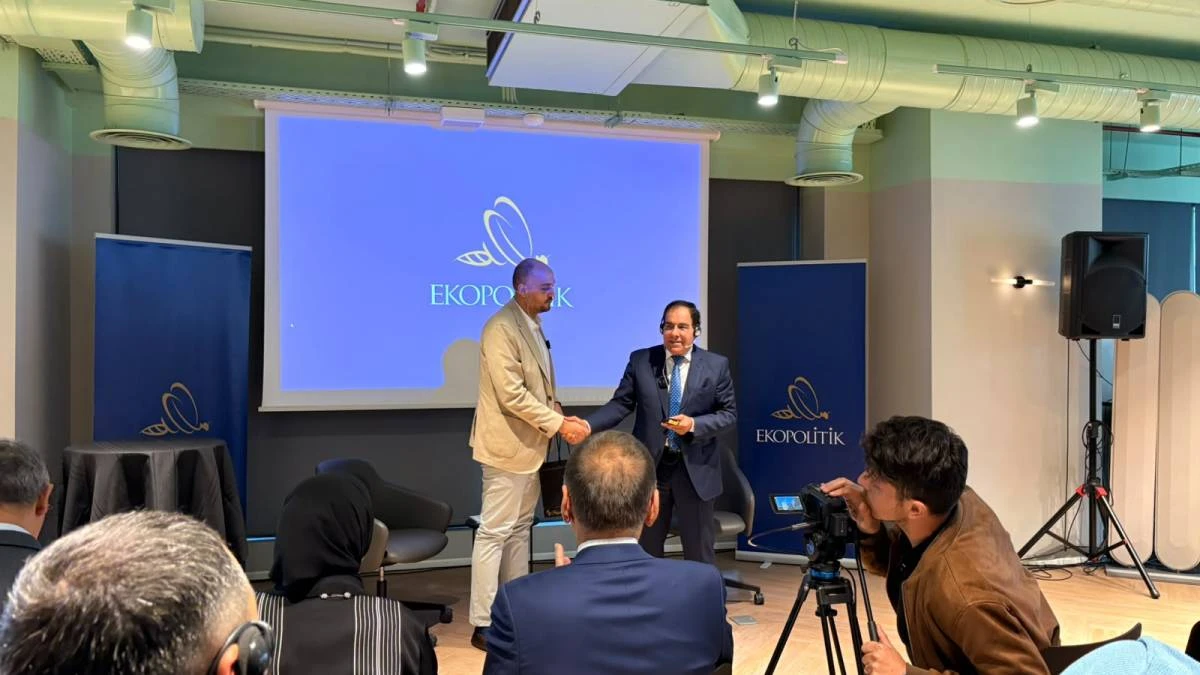
ISTANBUL, TURKEY — Palestinian physician Prof. Dr. Izzeldin Abuelaish, who lost three daughters and a niece in an Israeli attack on his home in Gaza, called for justice rather than revenge during an emotional appearance in Istanbul.
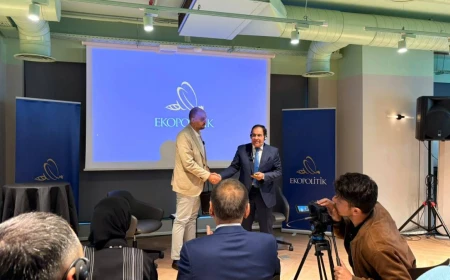
Speaking at the “Those Who Shape the World” panel organized by Ekopolitik, the author of I Shall Not Hate described his childhood in the Jabalia refugee camp, the deaths of his family members and the continuing suffering of civilians in Gaza. According to Karar, Abuelaish repeatedly became emotional as he urged an end to the bloodshed, stronger protection for civilians and renewed respect for international law.
‘I have not forgotten my daughters’
Abuelaish said he was born and raised in the Jabalia refugee camp in Gaza, describing his childhood as a struggle for survival.
Despite poverty, he said, his family placed enormous importance on education and sometimes sacrificed basic needs so that the children could continue studying.
He told the Istanbul audience that whenever he returns to Gaza, one of his first acts is to visit his daughters' graves.


Abuelaish said he tells them that he has neither forgotten them nor abandoned the cause to which he has dedicated much of his life.
He described refugee life not simply as a political or legal status but as an experience in which a person can have a home, family, plans and a future one day and lose all of them the next.
His remarks linked his personal history to the broader experience of displacement among Palestinians living in Gaza.


He recalled the day three daughters and his niece were killed
The most emotional section of Abuelaish's speech came when he described the attack that killed three of his daughters and his niece.
He recalled January 16 as the day his home was struck and said he would not wish what he saw that day on anyone.
Abuelaish, who said he had worked as a Palestinian doctor in an Israeli hospital, emphasized that throughout his medical career he had refused to distinguish between patients according to nationality, ethnicity or religion.
He used the example of newborn babies to make his point, asking whether anyone could identify from a baby's cry whether the child was Palestinian, Turkish, Canadian or Israeli.
For Abuelaish, that shared humanity should remain the foundation for relations between communities that have endured decades of conflict.
He said that although he cannot bring his daughters back, he can continue to preserve their memory and work to prevent other families from enduring the same pain.
‘Revenge will not bring my daughters back’
Abuelaish's central message in Istanbul focused on the difference between revenge and justice.
He said that even if the soldier responsible for his daughters' deaths were placed before him, killing that person would not restore his family.
“I do not want revenge. I want justice.”
Abuelaish argued that accountability, transparency and the rule of law are essential if similar tragedies are to be prevented.
He described justice not only as punishment for past acts but also as a necessary condition for freedom, dignity and lasting peace.
His message echoed the broader theme of his book, I Shall Not Hate, in which his personal loss became the basis for an appeal against hatred and cycles of retaliation.
For Abuelaish, keeping the memory of his daughters alive means continuing to advocate for a future in which other children are not exposed to the same violence.
Abuelaish condemned the killing of civilians on October 7
The Palestinian doctor also addressed the October 7 attacks and explicitly condemned the killing of innocent civilians.
He said no one has the right to kill an innocent person, regardless of where that person lives or which side of a conflict they belong to.
At the same time, Abuelaish argued that the history of Palestinian suffering should not be presented as beginning on October 7, 2023.
He said Palestinians had already experienced years of occupation, blockade, displacement and repeated wars, and urged the international community to consider that broader historical context.
His position was therefore twofold: attacks on civilians must be condemned, while the protection and rights of Palestinian civilians must also remain central to international responses.
Discussing current conditions in Gaza, Abuelaish described widespread destruction, deaths, displacement, hunger and suffering.
He said surviving members of his family continue to live with uncertainty and fear over whether they will survive the next moment.
First priority should be stopping the bloodshed
Asked what should happen first in Gaza, Abuelaish said the immediate priority must be to stop the killing.
He argued that silence and indifference also carry consequences and said hope has meaning only when it leads to action.
During the panel, DEVA Party politician Elif Esen asked whether lasting peace can emerge only after justice is achieved, or whether peace must come first before justice can follow.
Abuelaish responded that peace is more than the absence of war.
He said lasting peace must be based on respect, equality, freedom, human dignity, rights and justice.
He also defined compassion as a form of responsibility rather than simply an emotion, arguing that people who witness wrongdoing have an obligation to act.
Abuelaish said military measures alone would not deliver permanent security for Israelis either.
In his view, Israeli security cannot be separated from Palestinian freedom, safety and dignity.
No political leader should be above the law
Abuelaish was also asked about Israeli Prime Minister Benjamin Netanyahu.
He responded that no leader should be considered above the law and argued that no one should enjoy unconditional immunity.
His remarks were framed as a broader call for accountability under international law rather than as a demand for personal revenge.
Abuelaish also spoke about children growing up in Gaza and challenged the idea that the main question should be whether traumatized children might later join militant organizations.
Instead, he said societies should ask why children become angry and what conditions produce hatred.
He referred to earlier periods in the Israeli-Palestinian conflict, arguing that changes in political circumstances can also change how young people respond.
His message was that improving living conditions, freedom, dignity and rights offers a more sustainable way to address anger than allowing another generation to grow up amid violence.
Call for humanitarian action and UN reform
Abuelaish urged greater humanitarian assistance for Gaza, including food, medicine and water, and called for borders to be opened for patients who need medical treatment.
He said Turkey could play a more active role in humanitarian assistance.
Speaking to journalists and civil society representatives, he also argued that reporting the truth without fear is an important responsibility.
In the final part of the panel, Abuelaish criticized what he described as double standards in the international system.
He questioned why European countries reacted collectively to the war in Ukraine while, in his view, failing to respond with the same determination to Palestinian suffering.
Abuelaish also called for reform of the United Nations, saying institutions created under the conditions of 1945 must adapt to a significantly changed world.
He criticized the veto system in the UN Security Council, arguing that it allows a single country to block decisions backed by much of the international community.
Abuelaish ended his appearance with a message of persistence and hope.
He said he would continue carrying his message throughout his life and had passed it on to his children and grandchildren.
His appeal in Istanbul remained consistent with the principle he emphasized throughout the discussion: ending violence requires more than anger or retaliation — it requires accountability, human dignity, action and justice.
WiseNewsPress.com
What's Your Reaction?
 Like
0
Like
0
 Dislike
0
Dislike
0
 Love
0
Love
0
 Funny
0
Funny
0
 Wow
0
Wow
0
 Sad
0
Sad
0
 Angry
0
Angry
0

Ahmet Taş is a journalist, editor and Turkey Office Manager of the Wise News Press Media Group. He works across news, digital media and international publishing, focusing on accurate, responsible and accessible journalism. He contributes to the development of media projects that bring important political, social and global developments to a wider international audience.











Comments (0)