



Black rain alert in Middle East: Water infrastructure targeted
Following US and Israeli attacks on Iran, toxic black rain has been reported, while strikes on desalination plants deepen the clean water crisis.


By Ahmet Taş | Wise News Press
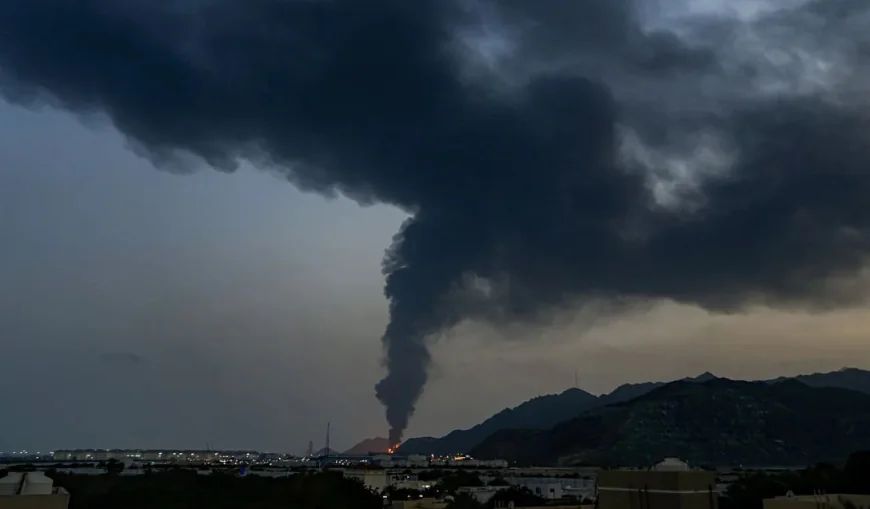
TEHRAN, IRAN — US and Israeli attacks on oil depots and desalination plants in Iran have triggered toxic "black rain" in the region, sparking a deep environmental and clean water crisis.
As heavy metals and carcinogens released into the air directly threaten public health, the targeting of critical water infrastructure risks bringing clean water supplies in Gulf countries to a standstill.
Health risks and environmental fallout
According to AP, polluted precipitation was recorded in some areas following weekend strikes on Iranian oil facilities. Associate Professor Gabriel da Silva from the University of Melbourne's Department of Chemical Engineering stated that the smoke plumes contain gases capable of causing acid rain, alongside hydrocarbons, fine particulate matter (PM2.5), and inorganic materials leaking from damaged infrastructure.
Early reports from the region indicate residents are suffering from shortness of breath and burning sensations in their eyes and throats. Experts warn that these pollutants pose severe long-term risks, potentially leading to cancer, birth complications, and neurological or heart diseases. Furthermore, these toxic substances can settle on buildings and waterways, threatening marine life long after the fires are extinguished.
'Saltwater kingdoms' under threat
The conflict has also devastated the region's most vital resource: water infrastructure. The targeting of desalination plants, which convert seawater into drinking water, has left major Gulf cities facing severe water shortages. Michael Christopher Low, director of the Middle East Center at the University of Utah, described Gulf nations as "saltwater kingdoms" due to their heavy reliance on large-scale water production systems, noting that this reliance creates a critical vulnerability.


Iranian officials argued that a US airstrike on a facility supplying water to 30 villages set a "dangerous precedent." Meanwhile, it is alleged that Iran damaged a water treatment plant in Bahrain on Sunday.
Ed Cullinane, Middle East editor at Global Water Intelligence, recalled that evacuating the capital, Tehran, was even discussed last summer due to severe drought and infrastructure deficits.
"Combined with ongoing attacks, economic crisis, and a severe water shortage, it is hard to even imagine how this summer will unfold," Cullinane noted.


Global emissions and food crisis
The war's impact extends beyond the Middle East, disrupting the global economy and exacerbating the climate crisis. Iran's closure of the Strait of Hormuz has forced approximately 20% of global oil trade and a third of global fertilizer trade to find alternative routes. This rerouting around Africa has increased agricultural and food transport costs while spiking carbon emissions due to longer voyages.
United Nations Secretary-General Antonio Guterres called for a transition to local renewable energy sources, emphasizing that clean, renewable energy cannot be blockaded or used as a weapon.
Meanwhile, Neta Crawford from Brown University's Watson Institute highlighted the direct climate cost of conflicts. Pointing out that global militaries are responsible for about 5.5% of annual greenhouse gas emissions, Crawford warned that pollution generated by military activities and the current war could easily overshadow the gains of transitioning to green energy.
What's Your Reaction?
 Like
0
Like
0
 Dislike
0
Dislike
0
 Love
0
Love
0
 Funny
0
Funny
0
 Wow
0
Wow
0
 Sad
0
Sad
0
 Angry
0
Angry
0

Editor | Wise News Press — Delivering accurate, timely global news with integrity, insight, and editorial responsibility.





















Comments (0)