



Fed keeps policy rate unchanged at 3.50–3.75 percent range
The US Federal Reserve left interest rates unchanged at 3.50–3.75 percent, citing resilient growth and inflation that remains above its 2 percent target.
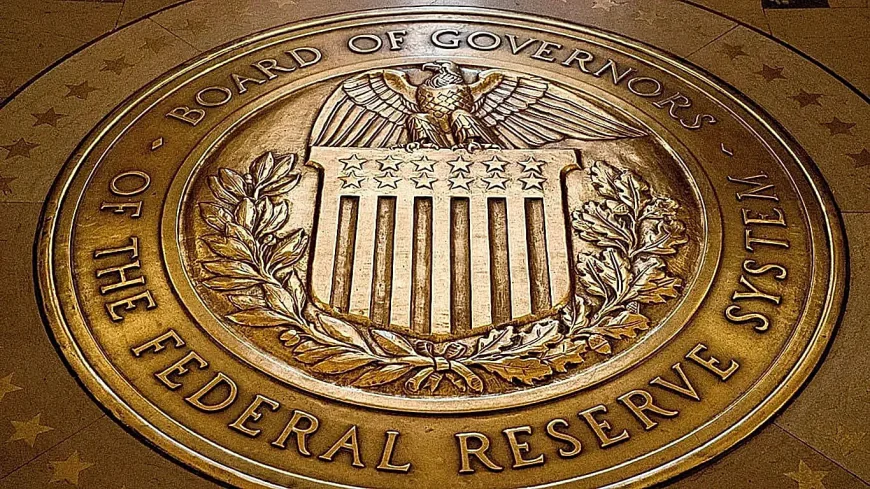


By Ahmet Taş | Wise News Press
WASHINGTON, United States —The US Federal Reserve on Wednesday decided to keep its benchmark policy interest rate unchanged in the 3.50–3.75 percent range, citing solid economic growth and inflation that remains above its long-term target.
The decision comes after a series of rate cuts carried out in 2025, as the central bank signaled it sees little urgency to ease monetary policy further while the economy continues to expand at a healthy pace.
Fed officials acknowledged that inflation has cooled from its peak but stressed that price pressures remain elevated enough to warrant caution before making additional cuts.
Economic growth described as “solid”
In its latest policy statement, the Federal Reserve upgraded its assessment of the US economy, describing growth as “solid,” compared with the previous month’s characterization of expansion as “modest.”
The central bank said labor market conditions remain stable, with no clear signs of deterioration in hiring. Officials noted that employment gains and steady consumer demand continue to support overall economic momentum.


This resilience, the Fed said, reduces the need for immediate action on interest rates, even as financial markets and political leaders push for further easing.
Inflation remains above the Fed’s target
According to the Fed’s preferred inflation gauge, consumer prices rose 2.8 percent year-on-year in November 2025, slightly higher than the level recorded a year earlier and still above the central bank’s 2 percent goal.
Several policymakers emphasized that they want to see clearer and more sustained evidence that inflation is moving toward target before supporting additional rate cuts.


The Fed reiterated that its future decisions will remain data-dependent, with inflation trends and labor market developments playing a central role.
Two policymakers dissent from decision
The decision to hold rates steady was not unanimous. Governors Stephen Miran and Christopher Waller dissented, arguing in favor of a 0.25 percentage point rate cut.
Miran was appointed to the Federal Reserve’s Board of Governors by President Donald Trump in September 2025. Waller, meanwhile, is seen by the White House as a potential successor to Fed Chair Jerome Powell, whose term is set to expire in May 2026.
The dissent highlights internal debate within the central bank over the timing and pace of future rate reductions.
Trump’s criticism of the Fed likely to intensify
President Donald Trump has repeatedly criticized the Federal Reserve and Chair Jerome Powell for what he views as insufficient rate cuts, arguing that lower borrowing costs are needed to support economic growth.
The decision to keep rates unchanged is expected to further fuel tensions between the White House and the central bank, which has consistently defended its independence in setting monetary policy.
Fed officials have stressed that policy decisions are guided by economic data, not political pressure.
Impact of interest rates on borrowing costs
When the Federal Reserve cuts its policy rate, borrowing costs for mortgages, auto loans, and business credit typically decline. However, these rates are also influenced by broader market conditions, including bond yields and investor expectations.
Despite last year’s rate reductions, many households and businesses continue to face relatively high financing costs compared with pre-pandemic levels.
Background: why the Fed cut rates in 2025
The Federal Reserve lowered interest rates three times in 2025 to support the economy after widespread tariffs introduced by the Trump administration in April of that year led to a slowdown in hiring and raised concerns about a sharper economic downturn.
Those cuts were aimed at cushioning the impact of trade-related uncertainty and preventing a more severe weakening in the labor market.
Recent data, however, suggest that the US economy has regained momentum, reducing the urgency for further monetary easing.
Expectations for 2026 rate cuts
At the Federal Open Market Committee’s December meeting, 12 of the 19 participating members indicated they expected at least one rate cut in 2026.
Most economists now forecast that the Fed could lower interest rates twice this year, with the first move likely to come at or after the June meeting, provided inflation continues to trend lower.
Until then, policymakers appear content to keep rates steady while monitoring incoming economic data for clearer signals on inflation and growth.
What's Your Reaction?
 Like
0
Like
0
 Dislike
0
Dislike
0
 Love
0
Love
0
 Funny
0
Funny
0
 Wow
0
Wow
0
 Sad
0
Sad
0
 Angry
0
Angry
0

Editor | Wise News Press — Delivering accurate, timely global news with integrity, insight, and editorial responsibility.






















Comments (0)