



Zelensky says Putin lifted rules for Russian air attacks on Ukraine
Zelensky said Ukrainian intelligence indicates Putin removed limits on Russian air attacks, increasing strikes on cities and civilian infrastructure.


By Ahmet Taş | Wise News Press
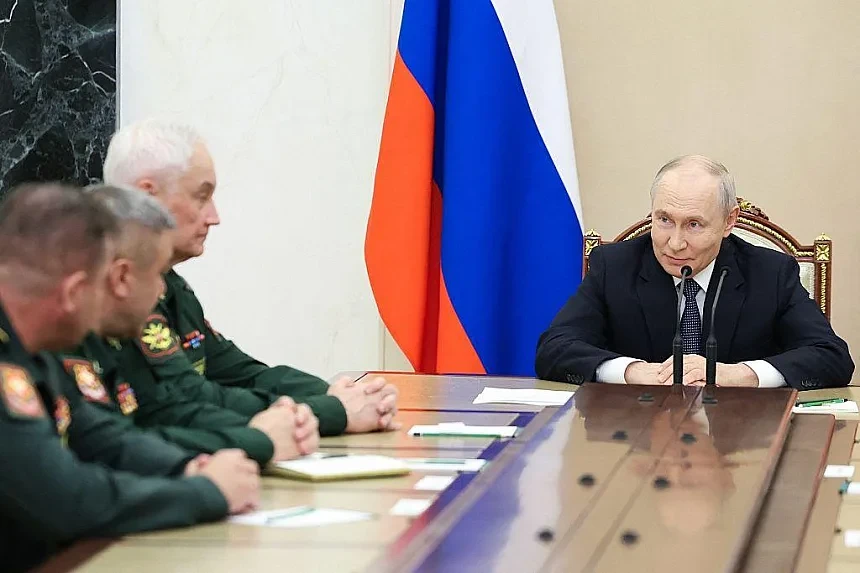
KYIV, Ukraine — Ukrainian President Volodymyr Zelensky said Russian President Vladimir Putin ordered military commanders to remove limits on air attacks against Ukraine, leading to intensified strikes on cities and civilian infrastructure.
Zelensky made the claim in an interview with the Financial Times, saying Ukrainian intelligence learned of the alleged order through intercepted communications involving Kremlin officials. The same account was later reported by several outlets, including DW, Ukrinform and Meduza, all citing the Financial Times interview.
Zelensky cites intelligence intercepts
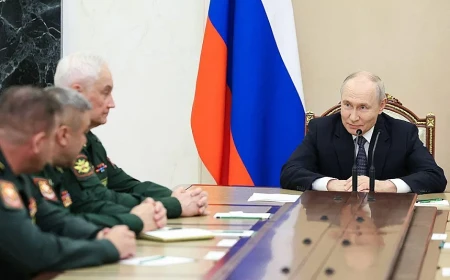
According to Zelensky, the order was given in September, as Russia stepped up its air campaign against Ukraine. The Ukrainian president said Putin had told military officials that “there are no rules now,” a phrase Zelensky used to describe what he sees as a shift in Moscow’s approach to aerial attacks.
The claim has not been independently confirmed through a publicly released intelligence document. It is based on Zelensky’s statement and reporting around the Financial Times interview. Still, the allegation has drawn attention because it comes at a time when Ukraine says Russian attacks on civilian infrastructure are becoming more frequent and more deliberate.
Zelensky argued that the change in tactics followed Russia’s inability to achieve its military goals on the ground, particularly in eastern Ukraine. In his view, Moscow is now trying to increase pressure on Ukrainian cities through mass strikes, psychological intimidation and attacks on services that civilians rely on every day.


Civilian infrastructure comes under pressure
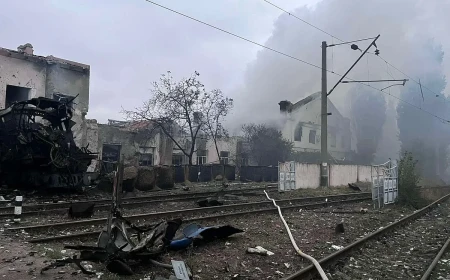
Zelensky said the intensified campaign has involved strikes on schools, hospitals, bridges, data centers, internet infrastructure, mobile networks and other civilian systems. Ukraine has repeatedly accused Russia of targeting facilities that are essential for daily life, especially as winter approaches.
The Ukrainian government says such attacks are designed not only to cause physical damage but also to weaken public morale. Disrupting electricity, communications, health services and transport can make cities harder to live in and increase pressure on local authorities.
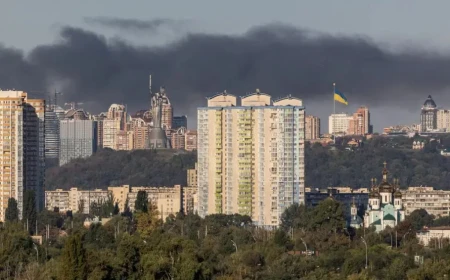
Russia has carried out repeated missile and drone attacks on Ukrainian cities since the full-scale invasion began in 2022. Kyiv has said that civilian buildings, power facilities, residential districts and public service sites have been damaged in waves of attacks. International organizations have also documented widespread damage to civilian infrastructure during the war.


Major cities named as possible targets
Zelensky warned that Russia may be preparing to intensify attacks on Ukraine’s largest cities in an attempt to isolate them before winter. He named Kyiv, Kharkiv and Odesa as major targets. Ukrainian and European security officials cited in the reporting also said Lviv appears in Russian planning assessments.
Each of these cities carries strategic and symbolic importance. Kyiv is the political center of the country. Kharkiv, near the northeastern front, has endured repeated attacks throughout the war. Odesa remains central to Ukraine’s Black Sea trade and logistics, while Lviv has served as a key hub for displaced people, diplomacy and international assistance.
A wider campaign against these cities would put additional pressure on Ukraine’s air defenses, emergency services and energy networks. It would also raise the risk of civilian casualties in densely populated areas far from the front line.
Russia denies deliberately hitting civilians
The Kremlin has denied accusations that Russian forces deliberately target civilian infrastructure. According to the Financial Times report, Kremlin spokesman Dmitry Peskov said Russian forces do not strike civilian sites.
Ukraine rejects that position, pointing to repeated damage to residential buildings, schools, hospitals, energy facilities and public infrastructure. Kyiv says the pattern of strikes shows that civilian life and essential services are being placed under direct pressure.
The dispute over targeting is central to how both sides present the air war. Russia frames its strikes as military operations. Ukraine says many of those attacks have hit civilian areas or infrastructure with no immediate military purpose, creating a broader campaign of coercion against the population.
Faster drones stretch air defenses
Zelensky also pointed to Russia’s increasing use of faster drones, including jet-powered unmanned aircraft that are harder to intercept than conventional models. He said Ukraine’s air defense systems can destroy many standard drones, but newer and faster systems create additional challenges.
According to Zelensky, Ukraine is testing several interceptor drone models and aims to produce hundreds of units by the end of October. He said the country is working to close gaps in its air defense network while facing shortages in engines, funding and production capacity.
The rise of faster drones could change the burden on Ukrainian air defense crews. Slower drones can often be tracked and intercepted by a mix of missiles, mobile fire groups and electronic systems. Faster drones reduce reaction time and may force Ukraine to use more expensive or scarce defensive weapons.
Kyiv seeks more support before winter
The timing of Zelensky’s warning is significant. Ukraine is entering another winter under the threat of attacks on energy infrastructure, a tactic Russia has used in previous years to disrupt heat, electricity and water supplies.
Kyiv is asking Western partners to move faster on air defense systems, interceptor technology, ammunition and maintenance support for aircraft. Zelensky has also argued that Ukraine needs more rapid military and financial help to withstand a prolonged campaign against cities and infrastructure.
For Ukraine, the issue is not only battlefield defense. Protecting the power grid, hospitals, communication systems and urban transport is also part of national resilience. If Russia expands attacks on major cities, Ukraine will need to defend both military positions and the civilian systems that keep the country functioning.
A warning about the next phase of the war
Zelensky’s statement presents the air campaign as a new stage of pressure rather than an isolated escalation. He argues that Moscow is using mass attacks to compensate for limited progress on the battlefield and to frighten civilians into leaving their cities.
The claim that Putin removed restrictions on air attacks remains an intelligence-based allegation, not a publicly documented order. But the broader trend described by Zelensky matches Ukraine’s repeated warnings that Russia is preparing a harsher winter campaign against civilian infrastructure.
As winter approaches, Kyiv expects the threat to remain high. Zelensky’s message to allies is that Ukraine’s air defense needs must be treated as urgent, because the next phase of the war may be fought not only at the front, but over the skies of Ukraine’s largest cities.
WiseNewsPress.com
What's Your Reaction?
 Like
0
Like
0
 Dislike
0
Dislike
0
 Love
0
Love
0
 Funny
0
Funny
0
 Wow
0
Wow
0
 Sad
0
Sad
0
 Angry
0
Angry
0

Ahmet Taş is a journalist, editor and Turkey Office Manager of the Wise News Press Media Group. He works across news, digital media and international publishing, focusing on accurate, responsible and accessible journalism. He contributes to the development of media projects that bring important political, social and global developments to a wider international audience.
















Comments (0)