



Hotel prices plunge in Turkey as war diverts tourists to Europe
Middle East tensions have caused hotel prices in Turkey and Cyprus to drop sharply, while Western European destinations see surging demand and costs.


By Ahmet Taş | Wise News Press
ISTANBUL, TURKEY — The ongoing war in the Middle East has significantly disrupted global tourism, triggering a sharp decline in hotel prices across Eastern Mediterranean destinations like Turkey and Cyprus.
According to a recent report by the Financial Times, tourists seeking to avoid conflict zones are increasingly canceling their reservations in the East, causing an unexpected surge in demand and accommodation costs across safer perceived Western European hotspots. This sudden shift is actively redrawing the global tourism map, heavily impacting the financial outlook of major travel companies and forcing regional governments to implement emergency economic measures just ahead of the crucial summer season.
Booking cancellations hit Cyprus and Turkey
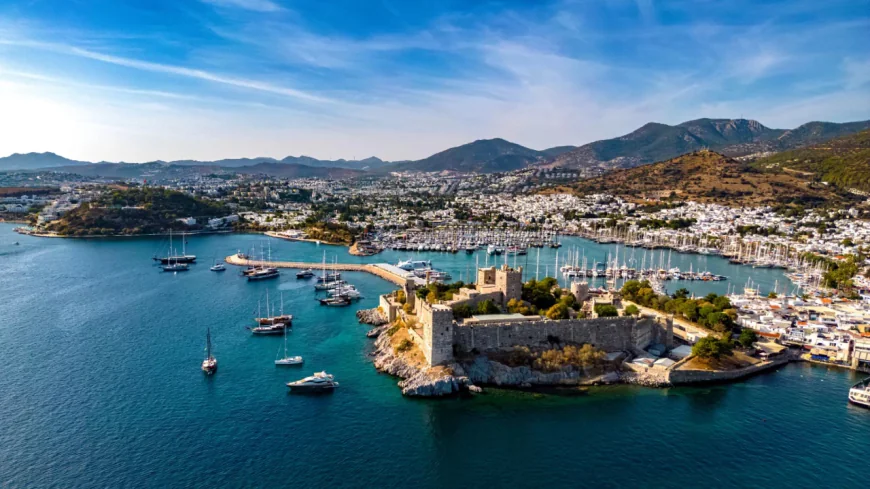
The immediate impact of the war is most visible in accommodation pricing and occupancy rates. Data from Lighthouse Intelligence indicates that accommodation prices in Cyprus for April and May have fallen by more than 12 percent compared to the previous week following the escalation of the conflict. Meanwhile, in Bodrum, one of Turkey's most popular holiday destinations, hotel prices have plummeted by over 25 percent.
Nick Aristou, Commercial Director of Muskita Hotels, which operates three luxury properties in Southern Cyprus, revealed that they have experienced massive cancellations for March and April, alongside a noticeable slowdown in bookings for the rest of 2026.
"The tourism sector can withstand a certain amount of turbulence, but if the tourists do not return quickly and the war drags on for another two to three weeks, the summer season will take a massive hit. That is when the situation will become truly serious for us," Aristou stated.


Natasha Michaelides, an executive at Thanos Hotels and Resorts, noted that there is a "widespread anxiety about the broader Middle East" among tourists. Furthermore, recent military activities, including drone attacks on the British RAF Akrotiri base in Cyprus in early March and the expected arrival of the British warship HMS Dragon, have significantly contributed to potential visitors postponing their travel plans.
Western Europe sees surging demand and rising prices
As the Eastern Mediterranean loses its appeal due to security concerns, tourists are rapidly shifting their routes to Spain, Italy, Portugal, and the Caribbean. Kenton Jarvis, CEO of EasyJet, told the Financial Times that the demand has shifted exactly as expected under these circumstances. He pointed out a clear drop in demand across Cyprus, Turkey, and Northern Africa, contrasted by a strong surge towards Spain's Balearic and Canary Islands, as well as Cape Verde.
This shift in demand has effectively created a price inflation wave across Western Europe:


-
Explosion in Italy: According to data from tour operator Kuoni, reservations for Italy have surged by 55 percent compared to the same period in 2025. Caribbean bookings have also seen a 20 percent increase.
-
Skyrocketing Prices: Irene Hays, Owner of Hays Travel, emphasized that the sudden rush of holidaymakers to destinations perceived as "safer," such as Italy, Malta, and Croatia, is already driving up prices.
-
Agencies Overwhelmed: Steve Witt, Co-founder of the travel agency Not Just Travel, reported that their phone lines are ringing constantly as families scramble to find alternative locations for the upcoming school holidays, particularly for Easter and early May breaks.
Economic impact and government interventions
The economic fallout of this crisis has quickly reflected on the balance sheets of major tourism companies. Shares of the package holiday company On The Beach have lost more than 12 percent of their value over the past month after the firm reported a "significant slowdown" in reservations for popular destinations like Turkey, Greece, Cyprus, and Egypt.
In response to the growing crisis, regional governments are stepping in to minimize the damage. Nikos Christodoulides, Leader of the Greek Cypriot Administration, announced measures to support the April salaries of hotel workers to prevent mass layoffs. Similarly, Egypt has updated its incentive system to attract airlines, reducing the required flight occupancy rate from 75 percent to 60 percent to qualify for a $4,000 bonus per flight.
Despite the prevailing anxiety, top figures in the aviation sector are attempting to dispel the panic. Willie Walsh, Director General of the International Air Transport Association (IATA), offered a calm perspective on the situation, stating, "I would go to Greece right now. I would even confidently travel to certain places in the Gulf."
What's Your Reaction?
 Like
0
Like
0
 Dislike
0
Dislike
0
 Love
0
Love
0
 Funny
0
Funny
0
 Wow
0
Wow
0
 Sad
0
Sad
0
 Angry
0
Angry
0

Editor | Wise News Press — Delivering accurate, timely global news with integrity, insight, and editorial responsibility.





















Comments (0)