



Russia’s economy leaves Putin with few good options, Åslund argues
Economist Anders Åslund says weak growth, persistent inflation and a widening budget deficit are narrowing Vladimir Putin’s options as the Ukraine war continues.


By Ahmet Taş | Wise News Press
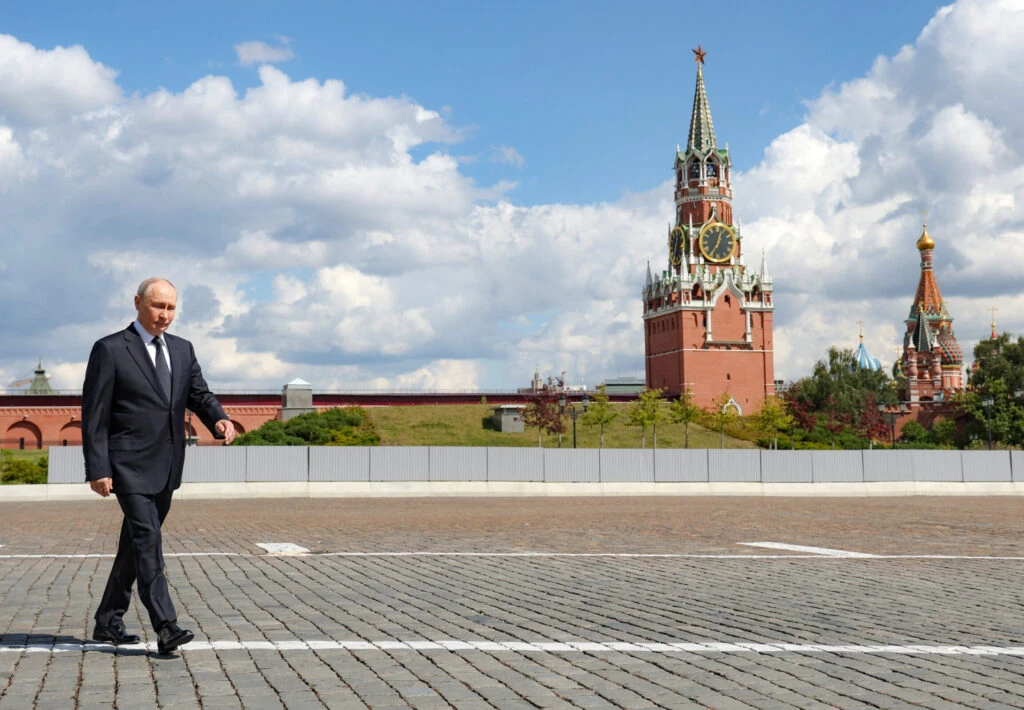
MOSCOW, RUSSIA — Russia’s slowing economy, persistent inflation and widening budget deficit are leaving President Vladimir Putin with increasingly costly choices as the war in Ukraine continues, economist Anders Åslund argues.
In a commentary published by Project Syndicate and republished in Türkiye by Karar, Åslund described Putin’s position using the chess concept of zugzwang — a situation in which every available move makes a player’s position worse. While several of Åslund’s conclusions are assessments rather than established outcomes, recent official economic data support his broader argument that Russia is facing weaker growth alongside significant fiscal and inflationary pressure.
Åslund sees a growing stagflation risk
Åslund argues that Russia is entering a prolonged period of stagflation, combining weak economic growth with inflation that remains well above the central bank’s target.
The International Monetary Fund’s July forecast projects Russian real GDP growth of 1.1% in 2026, while consumer-price inflation is projected at 5.6%. The Bank of Russia’s most recent data put annual inflation at 6% in July, compared with its official 4% target.
The central bank has also kept monetary policy tight. On July 24, it lowered its key interest rate by only 25 basis points to 14%, warning that inflation expectations and a more expansionary fiscal policy required caution.


The Bank of Russia now expects inflation of 6% to 7% for 2026 and says underlying inflation remains in the 4%–5% range.
Households appear considerably more pessimistic about future prices. A Bank of Russia survey found that one-year inflation expectations rose to 14.7% in July, up from 12.4% in June.
For Åslund, the combination of weak growth, high borrowing costs and stubborn inflation sharply limits the Kremlin’s ability to stimulate the economy while simultaneously financing the war.


Budget deficit has already exceeded the full-year target
Fiscal pressure is one of the strongest pieces of evidence behind Åslund’s argument.
Russia’s original 2026 federal budget projected revenues of about 40.28 trillion rubles, expenditures of roughly 44.07 trillion rubles and a deficit of 3.79 trillion rubles. The deficit was planned at around 1.6% of GDP.
But preliminary Finance Ministry figures showed that the deficit reached 6.455 trillion rubles in the first seven months of 2026, equivalent to 2.8% of GDP — already substantially above the full-year target.
The ministry attributed part of the gap to advance financing of expenditures. Revenues increased year on year, but spending climbed 14.5%, while oil and gas revenues fell 16.8%.
Reuters reported in July that higher-than-planned spending could push the annual deficit more than 1 trillion rubles above the government’s target. Russia recorded a deficit equivalent to 2.6% of GDP in 2025.
Åslund argues that this leaves Moscow with an uncomfortable set of choices: raise taxes further, increase domestic borrowing, draw more heavily on reserves or tolerate greater inflationary pressure.
High interest rates make more wartime borrowing expensive
Russia’s relatively low public-debt ratio has long been presented by Moscow as evidence of fiscal resilience. But Åslund argues that the picture is more complicated because international sanctions have sharply restricted Russia’s access to external capital markets.
That increases Moscow’s dependence on domestic banks and government bond issuance.
With the central bank’s key rate at 14%, domestic financing is significantly more expensive than it was before the full-scale invasion. High interest rates also weigh on businesses and investment outside the defence sector.
Russia still has financial reserves, but the liquid portion available for immediate use is much smaller than the headline size of the National Wealth Fund.
Finance Ministry data showed the fund at 12.72 trillion rubles as of Aug. 1, equivalent to about 5.4% of projected GDP. Its liquid assets amounted to approximately 3.69 trillion rubles, or $46.2 billion, equivalent to 1.6% of GDP.
Åslund therefore argues that a major new surge in military spending could increasingly come at the cost of inflation, higher taxes, greater domestic borrowing or reduced civilian expenditure.
September election fuels new mobilization speculation
Another potential economic risk is manpower.
Russia is due to hold elections for the State Duma from Sept. 18 to Sept. 20, with President Putin’s United Russia party expected to retain a dominant position amid heavily constrained political competition.
The only registered Russian party openly campaigning against the war, Yabloko, has been barred from contesting the parliamentary election, while other prominent anti-war political figures have also faced legal restrictions.
Speculation has meanwhile increased over whether the Kremlin could announce another large mobilization after the vote.
Ukrainian President Volodymyr Zelenskyy said on Aug. 23 that Putin intended to draft an additional 300,000 troops after the September elections. Russia has not publicly announced such a mobilization, and the Ukrainian claim has not been independently verified.
Åslund argues that another mobilization could impose a substantial economic cost. Putin’s September 2022 mobilization prompted large numbers of Russians, particularly younger and skilled workers, to leave the country. A repeat would intensify labour shortages in an economy already struggling to balance civilian production and military demand.
Wise News Press has previously reported on growing political pressures surrounding Russia’s September parliamentary election and changes in support for Kremlin-approved parties.
Russian military losses add another long-term burden
Åslund also points to the human consequences of the war as a potentially serious postwar political and economic problem.
He cited estimates suggesting that Russian military deaths could be approaching 500,000. Such figures remain highly uncertain and should not be treated as a confirmed total.
Independent open-source counts are considerably lower but are also explicitly incomplete. Mediazona, working with BBC Russian and volunteers, says its verified database already contains age information for around 225,000 Russian personnel reported killed, while warning that the real number is higher because many deaths take months or years to become publicly documented.
Beyond fatalities, Russia faces the eventual reintegration of a very large population of wounded soldiers and veterans, some of whom may require extensive medical, psychological and social support.
Åslund argues that these costs help explain why ending the war may itself create political risks for the Kremlin, even if continuing it places increasing pressure on the economy.
Ukraine’s long-range strikes are adding pressure inside Russia
The war is also increasingly affecting economic activity inside Russian territory.
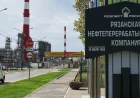
Ukraine has expanded long-range drone operations against Russian energy, logistics and industrial infrastructure. Recent attacks have included oil facilities and major warehouses far from the Ukrainian border.
Fuel-market disruptions have become significant enough for the Bank of Russia to identify higher fuel prices as an important contributor to the recent acceleration in inflation and household inflation expectations.
Åslund argues that Ukraine’s growing use of drones illustrates another problem for Moscow: maintaining technological competitiveness while relying heavily on a centralised, state-dominated defence-industrial system.
That conclusion is contested and Russia continues to expand production of missiles, drones and other weapons. The broader economic issue, however, is that the war increasingly requires Moscow to allocate capital, labour and industrial capacity to defence while civilian sectors face expensive credit and weaker growth.
Ending the war could help the economy — but Åslund sees little sign of it
The clearest way to relieve many of these economic pressures would be a durable end to the war.
Lower military expenditure could reduce pressure on the federal budget, ease competition for workers and capital, and potentially allow monetary policy to normalise more quickly.
But Åslund considers that option politically unlikely because Putin may view the risks of ending the conflict without a result he can present domestically as a victory as greater than the economic costs of continuing it.
Diplomatic efforts have continued, but there is still no agreed framework for ending the war. Wise News Press previously reported that the Kremlin said it had received no concrete new proposal capable of producing a breakthrough in negotiations.
Åslund’s central argument is therefore not that Russia is on the verge of immediate economic collapse. Official data do not support such a conclusion.
Rather, he argues that the Kremlin’s room for manoeuvre is narrowing: more military spending risks greater fiscal and inflationary instability; renewed mobilization could worsen labour shortages; while a ceasefire could generate political and security challenges of its own.
Russia still possesses substantial resources, industrial capacity and financial reserves. But with growth close to 1%, inflation at 6%, interest rates at 14% and the budget deficit already above its annual target after seven months, the economic cost of Putin’s available choices is becoming increasingly visible.
WiseNewsPress.com
What's Your Reaction?
 Like
0
Like
0
 Dislike
0
Dislike
0
 Love
0
Love
0
 Funny
0
Funny
0
 Wow
0
Wow
0
 Sad
0
Sad
0
 Angry
0
Angry
0

Ahmet Taş is a journalist, editor and Turkey Office Manager of the Wise News Press Media Group. He works across news, digital media and international publishing, focusing on accurate, responsible and accessible journalism. He contributes to the development of media projects that bring important political, social and global developments to a wider international audience.













Comments (0)