



German Economy Minister calls for bold reforms as stagnation persists
Economy Minister Katharina Reiche urges "uncomfortable" decisions to revive Germany's stalling economy, while union leader Christiane Benner calls on companies to invest domestically.
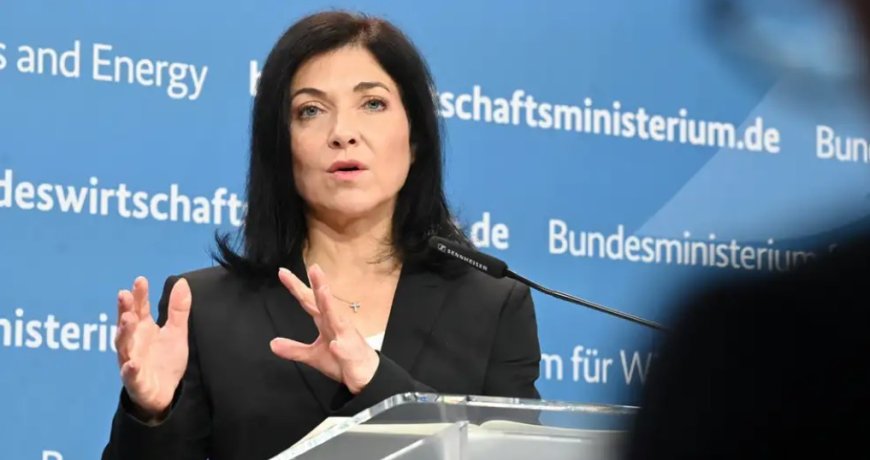


WISE NEWS PRESS / BERLIN, GERMANY — Nov. 25, 2025
German Economy Minister Katharina Reiche has issued a stark warning to lawmakers, declaring that "bold and possibly uncomfortable decisions" are now critical to pulling Europe's largest economy out of persistent stagnation.
Speaking during budget discussions in the federal parliament on Tuesday, Reiche emphasized that while Germany possesses the strength and expertise for a turnaround, immediate action is required. The economy has flatlined for three consecutive years, a situation she attributed to a mix of external shocks and deep-seated structural issues such as demographic shifts and excessive bureaucracy.
"We haven't progressed as quickly as others in some areas. Not because we got worse, but because others got much faster and much better," Reiche stated, outlining her goal to restore Germany as Europe's growth engine.
Structural reforms and trade


To achieve this, Reiche called for a holistic economic policy that provides businesses with more freedom, ensures sound public finances, and creates better opportunities for advancement. She also highlighted the importance of European solidarity and free trade agreements, specifically mentioning the Mercosur deal as a vital component for future growth.
Unions demand domestic investment
Meanwhile, Christiane Benner, head of IG Metall, Germany's most influential trade union, urged the corporate sector to remain committed to the country. Acknowledging that the "golden years" before the pandemic are over, Benner insisted that Germany remains a powerhouse for technology and skilled labor.


"We are a country that can produce technology. We must invest in the future," Benner said. She called on companies to take advantage of the conditions the government is trying to create rather than moving operations abroad.
Benner also pushed back against debates regarding longer working hours and rhetoric labeling workers as lazy. "We expect employers and politicians to stop discussing whether people are too sick or too lazy. Many employees are worried about their future," she said, warning that such discussions are counterproductive and exploitative.
What's Your Reaction?
 Like
0
Like
0
 Dislike
0
Dislike
0
 Love
0
Love
0
 Funny
0
Funny
0
 Wow
0
Wow
0
 Sad
0
Sad
0
 Angry
0
Angry
0

Editor | Wise News Press — Delivering accurate, timely global news with integrity, insight, and editorial responsibility.






















Comments (0)