



Kalın says NATO will remain central to global security architecture
Türkiye’s intelligence chief İbrahim Kalın said NATO will remain a core pillar of global security as Ankara prepares to host the 2026 summit.
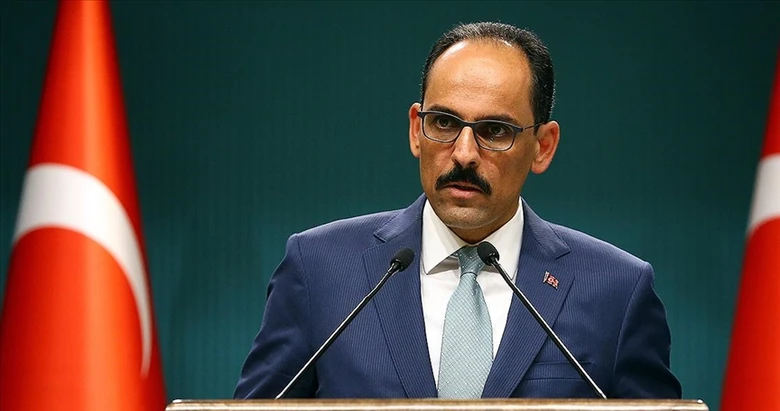


By Ahmet Taş | Wise News Press
ANKARA, Türkiye — Turkish intelligence chief İbrahim Kalın said NATO will remain one of the central pillars of international security, but warned that the alliance must reassess its priorities in a changing threat environment.
Speaking ahead of the 36th NATO Summit, which Ankara is scheduled to host on July 7-8, 2026, Kalın addressed an international event titled “NATO Ankara Summit: Intelligence and Resilience.” His remarks focused on the future of the alliance, the growing importance of intelligence cooperation, technological transformation and the need for stronger resilience against new forms of security risk.
Kalın: NATO will remain a core security pillar
İbrahim Kalın, head of Türkiye’s National Intelligence Organization, said NATO’s role in international security would continue in the years ahead.
“NATO, as it is today, will continue to be one of the most fundamental elements of the international security architecture in the future,” Kalın said.
His remarks came at a time when NATO members are preparing for a major summit in Ankara. The meeting is expected to address not only traditional defense issues, but also intelligence sharing, technological risks, resilience and the alliance’s ability to adapt to rapidly changing threats.


Kalın’s message positioned NATO as a continuing anchor of security cooperation, while also emphasizing that continuity alone is not enough. According to his assessment, the alliance must update its role and priorities in line with new strategic realities.
Ankara to host the 36th NATO Summit
Türkiye is set to host the 36th NATO Summit in Ankara on July 7-8, 2026. The upcoming summit is expected to bring together alliance members at a time when global security debates are becoming more complex and multidimensional.
Before the main summit, the “NATO Ankara Summit: Intelligence and Resilience” event provided a platform for discussing the issues likely to shape the agenda. The title itself pointed to two central themes: intelligence coordination and resilience.


For Ankara, hosting the summit also carries diplomatic and strategic significance. Türkiye has long occupied a key position within NATO because of its geography, military capacity and role in regional security. The 2026 summit is expected to underline Ankara’s position as both a host country and an active contributor to discussions on the alliance’s future.
A difficult negotiation process ahead
Kalın said the coming days would bring a difficult process in which key issues would be discussed and negotiated among members.
“In the coming days, there will be a difficult process in which the main issues will be addressed and mutually negotiated,” he said.
This statement suggested that preparations for the Ankara summit will involve more than ceremonial diplomacy. The alliance is expected to confront a wide range of questions, from threat perception and defense priorities to emerging technologies and legal frameworks.
Kalın’s reference to a difficult process also reflected the reality that NATO members do not always have identical priorities. Different regions, security concerns and national interests often shape how member states approach the alliance’s agenda. The Ankara summit is therefore likely to become a venue for strategic bargaining as well as policy coordination.
Changing threats require new priorities
One of Kalın’s main points was that NATO must evaluate its role and priorities according to new conditions. He said the changing threat environment makes such reassessment necessary.
Security challenges today are no longer limited to conventional military threats. Cyberattacks, hybrid warfare, disinformation campaigns, critical infrastructure vulnerabilities, energy security risks, artificial intelligence and technological dependency all shape modern security debates.
Kalın’s remarks indicated that NATO’s future relevance will depend on its ability to respond to this broader threat landscape. Military deterrence remains important, but it is no longer sufficient by itself. Intelligence, technology, digital infrastructure, legal regulation and social resilience have become essential parts of the security architecture.
Intelligence and resilience move to the center
The event’s focus on intelligence and resilience reflected two areas that are increasingly central to NATO’s future strategy.
Intelligence cooperation allows allies to identify threats earlier, understand hostile activities more accurately and coordinate responses more effectively. In an environment where risks can emerge from state actors, non-state groups, cyber networks and information operations, intelligence sharing becomes a key part of collective security.
Resilience, meanwhile, refers to the ability of states, institutions and societies to withstand pressure and recover from crises. This includes resilience against cyberattacks, energy disruptions, economic pressure, terrorism, disinformation and attacks on critical infrastructure.
Kalın’s speech suggested that the Ankara summit will not treat resilience as a secondary topic. Instead, it is likely to be discussed as one of the foundations of a modern security strategy.
Technology and algorithms are becoming security issues
Kalın also highlighted the need for broad work on technology, from production and use to software algorithms and legal regulations.
He said one of the major challenges in the coming period would be carrying out comprehensive work on these issues. This point reflected the growing link between technology and national security.
Modern defense and intelligence systems increasingly depend on software, artificial intelligence, data analysis, autonomous systems and digital infrastructure. As a result, the question is no longer only who has the strongest military equipment, but also who controls the technology, the data, the algorithms and the legal frameworks that govern their use.
Kalın’s comments pointed to a future in which technological governance becomes a core security concern for NATO members. The production, deployment and regulation of technology may shape the balance of power as much as traditional defense capabilities.
Türkiye’s role in NATO debates
Türkiye’s hosting of the Ankara summit gives it a prominent role in shaping the next stage of NATO discussions. As a country located at the intersection of Europe, the Middle East, the Black Sea and the eastern Mediterranean, Türkiye brings a broad security perspective to alliance debates.
The summit comes amid continued global uncertainty and shifting threat perceptions among NATO members. In this environment, Ankara’s role as host will be watched closely.
Kalın’s speech showed that Türkiye is placing strong emphasis on intelligence, resilience and technology as future security priorities. These themes are likely to shape not only the summit’s agenda, but also wider debates about how NATO should adapt in the coming years.
A message of continuity and adaptation
Kalın’s remarks combined two messages: NATO will remain central, but it must also change. The alliance is still described as a fundamental element of international security, yet its effectiveness will depend on how well it adapts to emerging threats.
That balance between continuity and adaptation is likely to be one of the key themes of the Ankara summit. NATO’s traditional role as a collective defense alliance remains important, but the definition of security has expanded.
For Kalın, the challenge is not whether NATO will continue to matter. His message was that it will. The more urgent question is how the alliance will update its priorities, strengthen resilience and manage the technological and intelligence challenges of a new era.
As Ankara prepares to host the 36th NATO Summit, Türkiye’s message is clear: NATO’s future will be shaped not only by military strength, but also by intelligence, adaptability, technology and the ability to remain resilient in an increasingly complex world.
What's Your Reaction?
 Like
0
Like
0
 Dislike
0
Dislike
0
 Love
0
Love
0
 Funny
0
Funny
0
 Wow
0
Wow
0
 Sad
0
Sad
0
 Angry
0
Angry
0

Editor | Wise News Press — Delivering accurate, timely global news with integrity, insight, and editorial responsibility.















Comments (0)