



Telegraph: Erdoğan Turns Middle East Vacuum Into Leverage
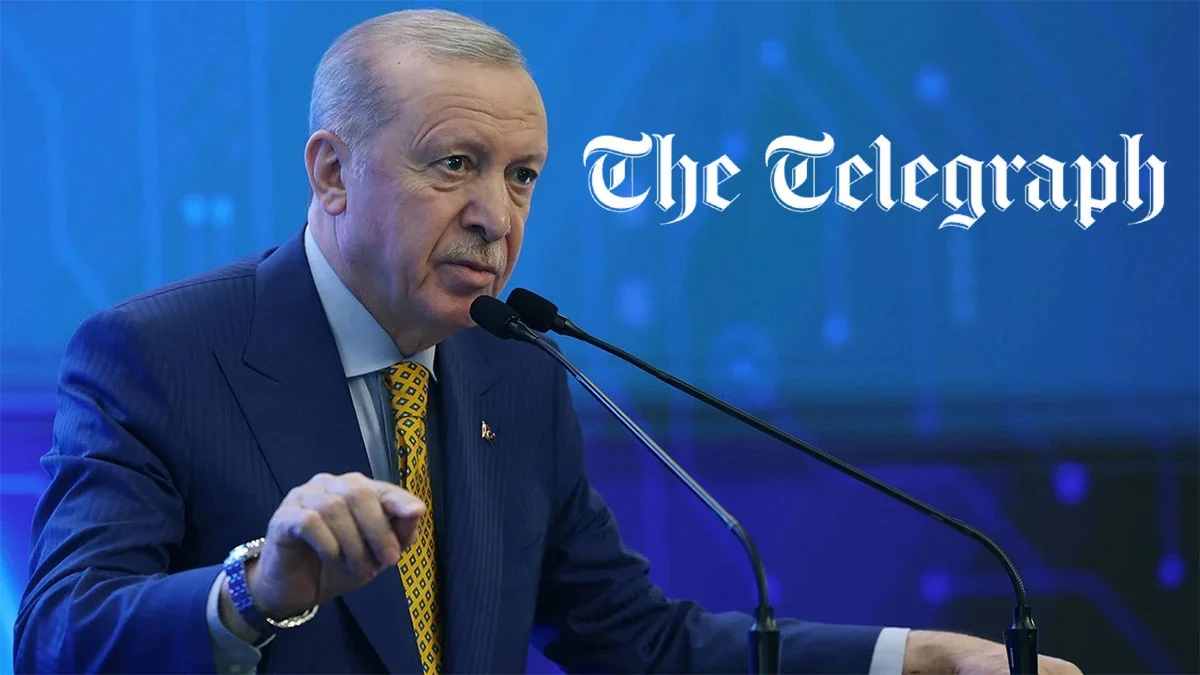
he Telegraph said Erdoğan is using Middle East instability, NATO tensions and Türkiye’s defense rise to strengthen Ankara’s regional and global leverage.


By Yusuf İnan | Wise News Press
ANKARA, Türkiye — The Telegraph said Turkish President Recep Tayyip Erdoğan is trying to turn the strategic vacuum created by Middle East turmoil into political and geopolitical leverage for Türkiye.
According to a report by Karar, the British newspaper analyzed recent developments in Türkiye, including court decisions involving the main opposition Republican People’s Party, police intervention at the CHP headquarters and pressure on opposition figures, within the wider context of regional wars and shifting global power balances. The analysis argued that Erdoğan is seeking to weaken the opposition at home while strengthening Türkiye’s position in defense, energy and NATO diplomacy.
Police intervention at CHP headquarters
The Telegraph’s analysis described the police intervention at the CHP headquarters as one of the most symbolic moments in Türkiye’s latest political crisis.
According to the report, riot police forced their way into the party headquarters, used tear gas to disperse party members inside the building and moved in while CHP leader Özgür Özel was resisting a court decision at the headquarters.
The newspaper said the images deepened concerns that the remaining space for civil and political freedoms in Türkiye was coming under further pressure.
The analysis argued that the crisis inside the CHP is not merely an internal party dispute, but a critical moment for the institutional survival of Türkiye’s opposition.


Court decision reshapes opposition leadership
The Telegraph also focused on the court decision that reportedly removed Özgür Özel from office and temporarily returned former CHP leader Kemal Kılıçdaroğlu to the party leadership.
According to the analysis, the move is being seen as part of a broader effort to weaken the opposition ahead of the next presidential election.
The CHP is Türkiye’s main opposition party, and any intervention in its leadership structure has consequences beyond internal party politics. The Telegraph said the developments could reshape the political field before the next national vote, expected in 2028, although the possibility of an early election remains part of the political debate.


The report framed the legal and political pressure on the CHP as part of a wider strategy to limit the opposition’s ability to organize and compete.
Middle East crisis gives Ankara room to maneuver
The Telegraph linked Türkiye’s domestic political situation to the broader instability in the Middle East.
The analysis said the international agenda has been dominated by the U.S.-Israel conflict and rising tensions with Iran, giving Erdoğan a more favorable environment to act at home with less external pressure.
The report cited Gönül Tol, director of the Türkiye program at the Washington-based Middle East Institute, who described the current international environment as a highly favorable setting for Erdoğan.
According to Tol’s assessment, geopolitical shocks have encouraged Erdoğan to move more confidently against what remains of Türkiye’s democratic space.
Western reaction to İmamoğlu case seen as limited
The Telegraph also included the legal cases against Istanbul Mayor Ekrem İmamoğlu in its analysis.
İmamoğlu is widely seen as one of Erdoğan’s strongest political rivals. The report noted that he faces accusations involving corruption and organized crime leadership in a lengthy case file, while İmamoğlu has denied the allegations.
The newspaper said that despite the seriousness of the case and İmamoğlu’s political profile, Western criticism has remained limited.
The analysis added that the United Kingdom’s governing Labour Party, despite its ideological closeness to the CHP, has kept its response relatively restrained.
According to the Telegraph, this muted reaction reflects a broader shift in Western priorities, as strategic and security concerns increasingly outweigh democracy-related criticism.
Economic pressure weighs on Erdoğan’s base
The Telegraph said Erdoğan has consolidated power in Turkish politics for nearly a quarter of a century, but economic problems have weakened public support in recent years.
The analysis pointed to the impact of high inflation since the 2023 elections, arguing that economic hardship has pushed the government toward tighter political control.
The report cited Yusuf Can of Amena Strategies, who said Erdoğan’s government knows it no longer enjoys the same level of broad public support as in the past.
According to Can, this awareness has contributed to a more aggressive effort to neutralize the CHP and reduce the opposition’s political effectiveness.
Türkiye’s geopolitical value rises
While the Telegraph criticized what it described as domestic authoritarian trends, it also emphasized Türkiye’s growing geopolitical importance.
The report said Russia’s invasion of Ukraine, questions over U.S. reliability under Donald Trump and the security vacuum in the Middle East have made Türkiye a more indispensable partner for many countries.
European states, NATO allies, regional actors and some countries in Africa increasingly feel they must work with Erdoğan, the analysis said.
This has given Ankara greater diplomatic weight at a time when Western governments are balancing concerns over democracy with urgent defense, energy and security needs.
Defense industry strengthens Ankara’s hand
The Telegraph paid particular attention to Türkiye’s growing defense industry.
The report said Türkiye has the second-largest army in NATO after the United States and has become the world’s 11th-largest arms exporter under Erdoğan.
Turkish unmanned aerial vehicles have become especially prominent in the global defense market. The Telegraph noted that Turkish weapons have been tested in several conflict zones, giving Ankara stronger credibility as an arms supplier.
The analysis said Iraq has signed an agreement to purchase Turkish air defense systems, while Indonesia is expected to become one of the first foreign buyers of the Bayraktar Kızılelma unmanned combat aircraft.
It also noted that a military support ship export to Portugal would mark Türkiye’s first such sale to a NATO and EU member state.
Erdoğan sends a message of reliability
According to the Telegraph, Türkiye’s defense exports have given Erdoğan an important foreign policy tool.
Gönül Tol said Erdoğan uses this record to tell regional governments that they can rely on him. Defense deals provide Türkiye with economic resources while also strengthening Erdoğan’s international profile at a time when his domestic legitimacy is being questioned, the analysis said.
The report argued that Ankara’s defense sector allows Erdoğan to present Türkiye as a practical and capable partner in a world of growing security uncertainty.
This makes it harder for Western governments to isolate or strongly criticize Türkiye, even when they are concerned about democratic backsliding.
Energy and trade hub ambitions
The Telegraph also said Erdoğan wants Türkiye to become not only a defense power, but also a central hub for energy and trade corridors.
The analysis pointed to Türkiye’s position in critical minerals, pipelines, seaports and energy trade as part of a broader strategy to become a global connector.
Erdoğan’s message that Türkiye aims not to be a spectator but a “playmaker” was interpreted within this framework.
The newspaper said Ankara’s expanding role in defense, energy and logistics is increasing its strategic value to the West, regional powers and global markets.
NATO summit may boost Türkiye’s bargaining power
The Telegraph also referred to Türkiye’s upcoming role as host of the NATO summit in July.
According to the analysis, before the Iran war, Türkiye had been seen as one of the more vulnerable countries inside NATO. But after the regional conflict, Ankara is expected to enter the summit in a stronger position.
The newspaper argued that Erdoğan now has more bargaining power with NATO allies.
This is partly because Türkiye’s military capacity, defense production, geographic position and role in regional crises have become harder to ignore.
West may overlook democratic backsliding
The analysis concluded with a warning that Western countries may increasingly overlook democratic backsliding in countries such as Türkiye.
Gönül Tol said NATO was once described as the defense organization of the democratic world, but that this description no longer carries the same weight.
According to Tol, Western governments are now more focused on whether Türkiye can produce drones, maintain a strong defense industrial base and respond to strategic needs than on its democratic record.
However, she also warned that working with authoritarian leaders carries risks. Such leaders prioritize regime survival, and when their rule is threatened, they may not remain committed to international agreements.
The Telegraph’s broader conclusion was that Türkiye’s rising strategic value gives Erdoğan more room to pursue a tougher domestic political course with less external pressure.
What's Your Reaction?
 Like
0
Like
0
 Dislike
0
Dislike
0
 Love
0
Love
0
 Funny
0
Funny
0
 Wow
0
Wow
0
 Sad
0
Sad
0
 Angry
0
Angry
0

Editor | Wise News Press — Delivering accurate, timely global news with integrity, insight, and editorial responsibility.












Comments (0)