



U.S. Press Says Putin Is Cornered After Romania Drone Strike Slug: us-press-says-putin-cornered-after-romania-drone-strike
The Washington Post said Russia’s drone strike in Romania showed Putin is under growing battlefield pressure and turning to more dangerous moves.


By Yusuf İnan | Wise News Press
WASHINGTON, United States — The Washington Post Editorial Board said Russia’s latest moves near NATO territory show Vladimir Putin is under growing pressure in Ukraine and becoming more unpredictable.
According to a report carried by Karar, the Washington Post analysis argued that the Russian president is increasingly cornered as the war in Ukraine enters its fifth year. The editorial pointed to a Russian drone incident in Romania, repeated violations of NATO airspace, Moscow’s “shadow fleet” strategy and threats against Western satellites as signs not of strength, but of pressure and weakness.
Drone strike in Romania raises alarm inside NATO
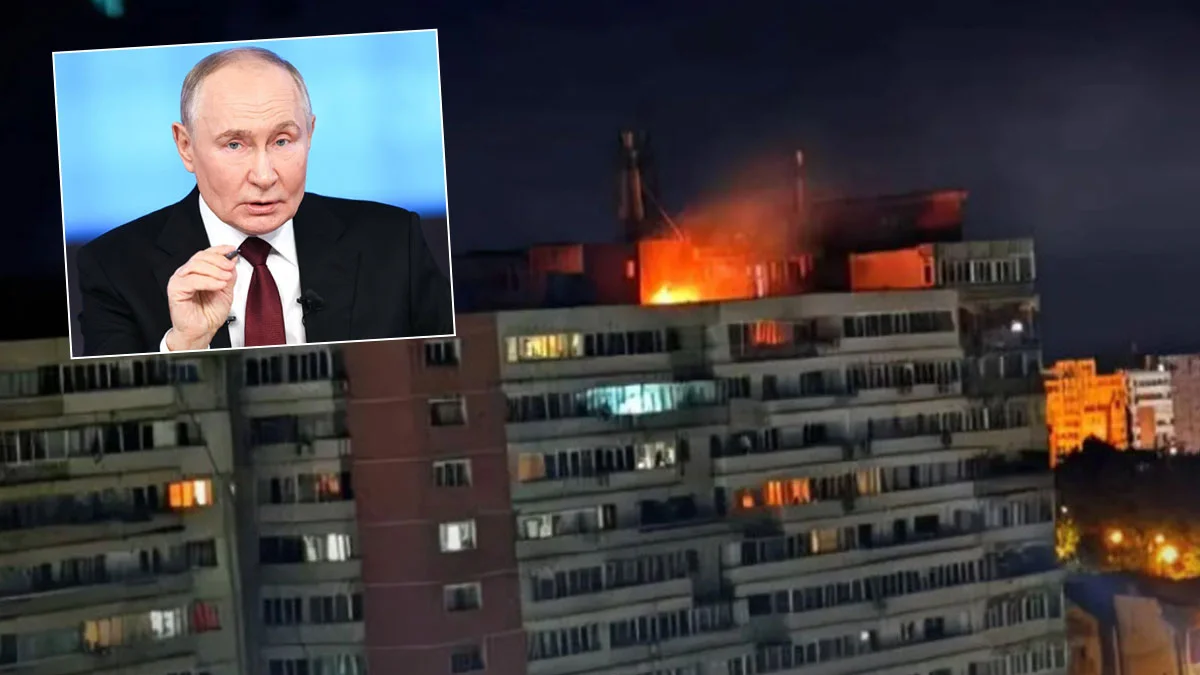
One of the main incidents highlighted in the Washington Post analysis was the reported entry of a Russian drone into Romanian airspace before it struck an apartment building in the city of Galați.
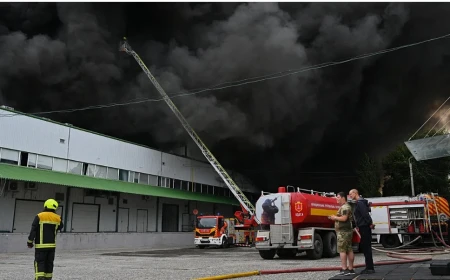
The strike reportedly caused a fire in the building and injured two people. The incident was described as part of a wider Russian drone attack wave targeting Ukraine, involving hundreds of unmanned aerial vehicles.
Romanian officials described the violation of the country’s airspace as a serious and irresponsible escalation. Bucharest said the incident was not only a threat to Romania’s sovereignty, but also a direct security concern for NATO’s eastern flank.
The Washington Post noted that Russian drones have repeatedly crossed into Romanian airspace since Moscow began targeting Ukrainian port infrastructure along the Danube River. The latest incident has renewed concerns that Russia’s war against Ukraine could continue spilling into neighboring NATO territory.


Washington Post: A sign of weakness, not strength
The Washington Post Editorial Board argued that Moscow’s aggressive moves should not be seen simply as a display of confidence or military power.
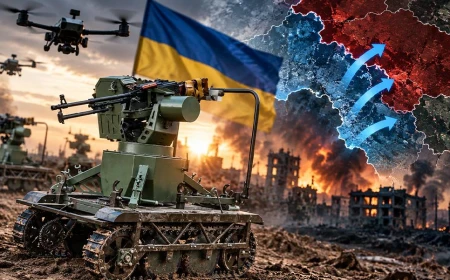
Instead, the editorial said Putin’s actions increasingly reflect pressure on the battlefield. Ukraine has strengthened its defense capacity and expanded its ability to strike targets deeper inside Russian territory through drones and missiles.
According to the analysis, Putin has long relied on a strategy of wearing down the West and waiting for allied support for Kyiv to weaken. However, recent developments show that the Russian leader does not hold all the cards.


The editorial suggested that Russia’s willingness to test NATO boundaries may be a consequence of strategic frustration rather than confidence. In this reading, Moscow’s escalation is linked to its inability to secure decisive gains in Ukraine.
Medvedev’s warning adds to European concerns
The Washington Post analysis also cited comments by Dmitry Medvedev, deputy chairman of Russia’s Security Council.
Medvedev reportedly suggested that similar incidents could continue and warned that citizens of European Union countries would not be able to sleep peacefully. The Washington Post described such rhetoric as another example of the Kremlin’s increasingly threatening posture toward Europe.
The editorial board did not interpret these statements as evidence of Russian strength. Instead, it argued that Moscow’s threats reveal a more unstable and unpredictable approach as pressure grows.
Since the beginning of the full-scale invasion, Russia has used military strikes, energy pressure, cyber operations and psychological intimidation as part of its broader war strategy. The latest threats toward European countries appear to fit that pattern.
Russia faces mounting battlefield pressure
The analysis also focused on Russia’s battlefield position in Ukraine.
Citing Western assessments, the Washington Post said Russian forces have suffered heavy losses since 2022. It also referred to battlefield data suggesting that Russia recently experienced a net territorial loss for the first time since 2024.
The editorial emphasized that Ukraine is no longer only defending its territory. Kyiv has also developed the ability to hit targets inside Russia, including locations near Moscow.
This growing Ukrainian strike capability has created a psychological and military challenge for the Kremlin. Russia’s homeland is no longer fully insulated from the consequences of the war it launched.
According to the Washington Post, this shift helps explain why Putin has become more willing to use risky tools outside the direct battlefield, from drone incursions near NATO territory to threats against Western infrastructure.
Shadow fleet tensions broaden the conflict
Another issue raised in the Washington Post editorial was a new Russian legal move connected to the deployment of military forces abroad.
According to the analysis, Putin signed a law allowing Russian forces to be deployed abroad under the pretext of protecting Russian citizens facing prosecution in foreign courts. Moscow presented the move as a response to what it describes as anti-Russian hostility in the West.
However, the Washington Post suggested that the real purpose may be connected to Russia’s so-called shadow fleet — a network of vessels used to bypass Western sanctions on Russian oil exports.
The editorial argued that the new law could be used to justify Russian military intervention if foreign coast guards detain tankers linked to this shadow fleet.
This interpretation suggests that Moscow is not only under pressure on the battlefield, but also in economic and logistical areas where sanctions have made its operations more difficult.
Western satellites may become another flashpoint
The Washington Post also pointed to Russia’s activities in space.
According to open-source tracking systems cited in the analysis, several Russian military satellites reportedly carried out unusual maneuvers in mid-May. They moved into the same orbital plane as a commercial radar satellite said to be providing targeting imagery to Ukraine.
The editorial recalled that Russia declared in 2022 that Western commercial satellites assisting Ukraine could be considered legitimate targets.
This adds a new dimension to the conflict. The war is no longer limited to land, air and sea. Space-based systems, satellite imagery and commercial technology have become increasingly important to Ukraine’s military resilience.
A Russian move against Western satellites could raise the risk of a wider confrontation with countries supporting Kyiv.
Trump accused of misreading Putin’s weakness
The Washington Post Editorial Board also criticized U.S. President Donald Trump’s approach to Putin.
The analysis argued that Trump has often claimed to recognize weakness in foreign leaders, but has failed to apply the same judgment to the Russian president. According to the editorial, Putin’s latest actions should be understood as signs of vulnerability and pressure, not strength.
The Washington Post also raised concern over reports that the United States may reduce the forces it would assign to NATO in a crisis.
The editorial acknowledged that Europe must increase its own defense capacity. However, it warned that reducing U.S. commitments at a time when Russian drones are entering NATO territory and Moscow is threatening Western satellites could send the wrong message to the Kremlin.
Call for stronger support for Ukraine
The Washington Post concluded that Ukraine has become more resilient as the war has continued, while Russia is facing growing pressure.
The editorial argued that Putin becomes more dangerous when he feels cornered. For that reason, it said Western support for Kyiv should not be reduced, but increased.
According to the analysis, the Kremlin would likely interpret a smaller U.S. commitment to NATO as a sign that the alliance is stepping back. That, the editorial warned, could encourage Putin to act even more recklessly.
The Washington Post said Washington should focus less on burden-sharing disputes and more on finding ways to pressure Russia into ending the war.
In its conclusion, the analysis framed the Romania drone incident, threats against satellites and the shadow fleet issue as parts of the same pattern: a Russian leadership under pressure, seeking to intimidate the West while trying to regain initiative in a war it has failed to win decisively.
What's Your Reaction?
 Like
0
Like
0
 Dislike
0
Dislike
0
 Love
0
Love
0
 Funny
0
Funny
0
 Wow
0
Wow
0
 Sad
0
Sad
0
 Angry
0
Angry
0

Editor | Wise News Press — Delivering accurate, timely global news with integrity, insight, and editorial responsibility.














Comments (0)