



Russia issues nuclear warning as Ryabkov says Moscow must not be tested
Russian Deputy Foreign Minister Sergey Ryabkov warned that Moscow could use nuclear weapons if Russia’s territorial integrity is threatened.


By Ahmet Taş | Wise News Press
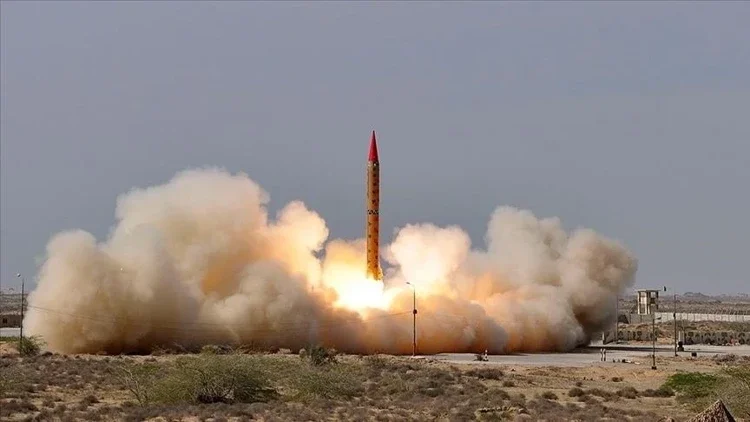
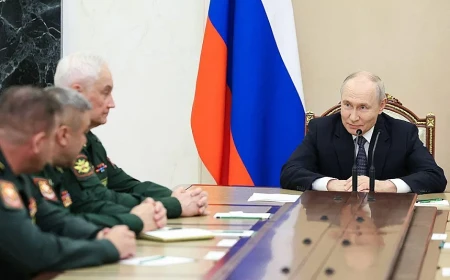
MOSCOW, Russia — Russian Deputy Foreign Minister Sergey Ryabkov warned that Moscow could use nuclear weapons if Russia’s territorial integrity is threatened, urging other countries not to test Russia’s resolve.
Speaking to reporters at the St. Petersburg International Economic Forum, Ryabkov addressed several major issues on Russia’s foreign policy agenda, including nuclear doctrine, Iran, Armenia’s relations with the European Union, the Zaporizhzhia Nuclear Power Plant and Ukrainian drone attacks targeting St. Petersburg.
Ryabkov issues nuclear warning
Ryabkov said the circumstances under which Russia may use nuclear weapons are already defined in the country’s military doctrine.
He warned that any attempt by an aggressor, including a state that does not possess nuclear weapons, to threaten Russia’s territorial integrity could lead to the most serious possible response.
“If aggressors, including those who do not possess such weapons, attempt to violate Russia’s territorial integrity, in the worst-case scenario this could lead us to respond with nuclear weapons,” Ryabkov said.
The Russian diplomat added that the warning should be taken seriously.


“Do not try to test whether Russia is determined on this issue,” he said.
The statement came amid continued tensions between Moscow, Kyiv and Western capitals over the war in Ukraine, long-range strikes, arms deliveries and the future of European security.
Russian doctrine placed back in focus
Ryabkov’s remarks again placed Russia’s nuclear doctrine at the center of international attention.


Moscow has repeatedly referred to nuclear deterrence since the start of its full-scale war against Ukraine. Russian officials have often framed nuclear warnings around Western military support for Kyiv, attacks on Russian territory and what Moscow describes as threats to national security.
Ryabkov’s reference to “territorial integrity” is especially sensitive because Russia has declared several occupied Ukrainian regions as part of the Russian Federation, a claim rejected by Ukraine and most of the international community.
As a result, nuclear rhetoric from Moscow is watched closely by NATO members, European governments and arms control experts. Such statements raise concerns that nuclear language may be used not only as deterrence but also as political pressure.
Iran also on the agenda
Ryabkov also commented on the situation involving Iran, saying renewed mutual attacks were pushing the parties further away from the possibility of reaching an agreement.
He recalled that Russia had previously offered a proposal related to the removal of enriched uranium from Iran. However, he said that proposal was not currently needed.
“For now, there is no need for our proposal. We hope the negotiating parties will return to this issue,” Ryabkov said.
The comments show that Moscow is still trying to position itself as a diplomatic actor in the Iran file, even as broader regional tensions continue to rise.
Russia has long maintained relations with Tehran while also presenting itself as a participant in nuclear and security-related diplomatic discussions.
Message to Armenia over EU ties
Ryabkov also addressed Armenia’s growing engagement with the European Union.
He said recent developments showed that Armenia needed to make a choice. The Russian diplomat expressed hope that Yerevan would choose to strengthen its traditional and deep ties with Moscow.
“I hope this choice will be in favor of strengthening traditional, deep and brotherly relations with Russia. This would be historically correct,” Ryabkov said.
He added that the Armenian people had always benefited from relations with Russia and would continue to do so.
The statement reflects Moscow’s growing unease over Armenia’s foreign policy direction. In recent years, Yerevan has shown increasing interest in closer relations with the European Union and Western partners, especially after the deterioration of Armenian trust in Russia following developments in Nagorno-Karabakh.
Moscow criticizes the IAEA over Zaporizhzhia
Ryabkov also accused the International Atomic Energy Agency of applying double standards regarding the Zaporizhzhia Nuclear Power Plant.
He claimed that Ukrainian forces had carried out attacks against the plant, which is under Russian control. Moscow has repeatedly accused Kyiv of creating security risks around the facility.
The Zaporizhzhia Nuclear Power Plant remains one of the most sensitive nuclear safety issues in Europe. Since the beginning of the war, the plant and its surrounding area have raised concerns among international observers because of military activity, shelling accusations and the risk of a nuclear incident.
Ryabkov’s criticism of the IAEA reflects Russia’s continued attempt to shape the international narrative around responsibility for security threats at the plant.
Drone attack on St. Petersburg condemned
The Russian deputy foreign minister also strongly condemned a Ukrainian drone attack targeting St. Petersburg.
Ryabkov accused Kyiv of being supported by Western countries and said those countries did not want to end what he called provocative actions against Russia.
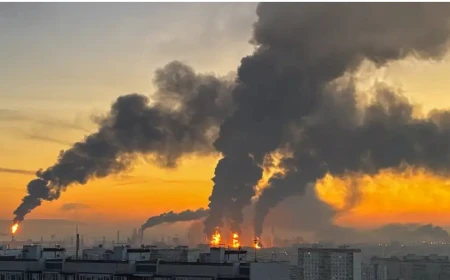
The St. Petersburg drone attack drew attention because it showed that Russia’s deep rear areas are no longer fully insulated from the effects of the war. Ukrainian drones have increasingly targeted energy facilities, military sites, logistics infrastructure and industrial targets far from the front line.
Such attacks are intended to put pressure on Russia’s military supply chains and show that Moscow cannot attack Ukrainian cities while keeping its own strategic infrastructure completely safe.
Russia sends a broader message to the West
Ryabkov’s comments were not limited to one issue. His remarks on nuclear weapons, Iran, Armenia, Zaporizhzhia and St. Petersburg formed part of a broader message from Moscow to the West.
The nuclear warning was the strongest part of the statement, but the overall tone suggested that Russia sees itself under growing pressure on multiple fronts: the war in Ukraine, regional diplomacy, nuclear security debates and shifting alliances in Eurasia.
By invoking nuclear doctrine, Moscow is attempting to remind its opponents of its red lines. At the same time, such rhetoric increases concern that the language of nuclear deterrence is becoming more frequent in a highly unstable security environment.
Nuclear rhetoric raises international concern
Ryabkov’s warning is likely to be closely watched by Western governments and security analysts.
Russia’s nuclear statements have often been interpreted as attempts to deter further Western support for Ukraine, especially when Kyiv receives more advanced weapons or conducts long-range strikes against targets inside Russia.
However, the frequent use of nuclear language also creates risks. It can raise tensions, complicate crisis management and increase the possibility of miscalculation.
The latest comments from Ryabkov show that Russia continues to use nuclear deterrence as a central part of its political and military messaging.
For Moscow, the message is clear: Russia does not want its territorial claims or strategic depth to be challenged. For the international community, the concern is equally clear: the continued war in Ukraine is keeping nuclear risk at the center of global security debates.
What's Your Reaction?
 Like
0
Like
0
 Dislike
0
Dislike
0
 Love
0
Love
0
 Funny
0
Funny
0
 Wow
0
Wow
0
 Sad
0
Sad
0
 Angry
0
Angry
0

Editor | Wise News Press — Delivering accurate, timely global news with integrity, insight, and editorial responsibility.














Comments (0)