



Kremlin expands pressure on exiled Russians with sweeping new sanctions
Russia’s new law allows authorities to freeze bank accounts, restrict property transactions and deny consular services to targeted citizens living abroad.


By Ahmet Taş | Wise News Press
MOSCOW, RUSSIA — Russia has introduced a sweeping new law allowing authorities to freeze bank accounts, restrict property transactions and cut access to consular services for citizens living abroad who have been convicted or penalized under a wide range of offenses.
According to a report by DW Türkçe, the legislation targets Russians outside the country who are considered to be avoiding punishment imposed by Russian authorities, including journalists, activists, politicians and human rights defenders who have publicly criticized the Kremlin or Russia’s war against Ukraine.
Lawyers describe the measure as a form of de facto loss of citizenship
The legislation carries the formal title: “On temporary restrictive measures against persons located outside the Russian Federation who evade the execution of punishments imposed on them.”
Although those affected will formally retain their Russian passports and citizenship, exiled lawyer Evgeny Smirnov told DW that the practical consequences could be far more extensive.
Smirnov described the legislation as effectively depriving targeted individuals of many of the rights associated with Russian citizenship.


Their passports may remain valid, but access to a broad range of state and consular services can be blocked.
This can include the issuance or renewal of certain official documents, preparation of powers of attorney and other consular services normally available to Russian citizens abroad.
Authorities may also impose restrictions on property and financial assets inside Russia.


Broad list of offenses can trigger restrictions
The law, signed by President Vladimir Putin after being unanimously approved by the State Duma, applies to Russians living abroad who have either been convicted of criminal offenses or held responsible for certain administrative violations.
One of the main categories concerns accusations of “discrediting the Russian armed forces.”
Since Russia’s full-scale invasion of Ukraine, this provision has been used against individuals who publicly criticize the conduct of the Russian military or the war itself.
The legislation also covers people designated as “foreign agents” who fail to pay administrative fines.
More than 1,000 individuals and organizations, many of them critics of the Russian government, have reportedly been placed under the foreign-agent designation.
Cooperation with organizations classified by Russian authorities as “undesirable” can also lead to restrictions. Around 400 organizations are reported to fall under that classification.
Public calls that Russian authorities consider to threaten the territorial integrity of the Russian Federation are included as well.
Bank accounts, property and consular services may be blocked
The measures available to authorities go beyond financial penalties.
Targeted individuals can be denied access to government services inside Russia and consular assistance abroad.
Passport-related services and the preparation of powers of attorney can be restricted.
Authorities may also prohibit the sale of real estate and vehicles registered in Russia.
Bank accounts may be frozen.
For Russians who have left the country but still own homes, vehicles, businesses or financial assets there, these measures could significantly limit their ability to manage their property from abroad.
The Ministry of Justice will determine who is subject to the restrictions.
The same ministry is also responsible for maintaining Russia’s lists of individuals and organizations classified as foreign agents.
State Duma backed the law unanimously
The law passed through the State Duma without opposition before being signed by Putin.
State Duma Speaker Vyacheslav Volodin publicly defended the legislation and portrayed Russians abroad who criticize the state as traitors rather than legitimate political opponents.
According to DW Türkçe, Volodin argued that people who leave Russia and then act against their own country should be treated as criminals.
He accused such individuals of attempting to undermine the Russian state, insulting soldiers and officers and escaping abroad in order to avoid punishment.
After the vote, Volodin highlighted the fact that parliamentary opposition groups had also supported the legislation.
He described their backing as an example of what he called “responsible opposition.”
Russia’s parliamentary opposition has remained formally represented in the State Duma, although its influence on Kremlin policy is widely considered limited.
Human rights defenders call it a ‘civil death law’
Russian human rights activists operating from exile have sharply criticized the legislation.
The organization Pervy Otdel, or First Department, said the law could effectively strip politically active Russian emigrants of fundamental civil rights if they have been convicted in absentia or fined on politically related charges.
The group has described the measure as a “civil death law.”
Lawyer Evgeny Smirnov said the main targets are likely to be people who are already under pressure from Russian authorities.
He specifically identified journalists, activists, politicians and human rights defenders.
For those groups, exile may no longer provide the same degree of protection from legal and economic pressure inside Russia.
Even when Russian authorities cannot physically detain an individual abroad, they may still be able to restrict that person’s assets, documents and ability to conduct legal affairs in Russia.
Critics say the aim is to silence opposition to the Ukraine war
Anastasia Burakova, a lawyer with the exile-support organization Kovcheg, described the legislation as an extremely severe measure affecting large numbers of people.
Kovcheg assists Russians who have left the country.
Burakova said the law could deprive many Russians abroad of citizenship-related rights while creating fear among emigrant communities.
In her assessment, the purpose is to pressure individuals Russian authorities cannot physically reach and to silence opposition to the war in Ukraine.
The new restrictions follow a series of measures introduced since Russia launched its full-scale invasion in February 2022.
Shortly after the war began, Russian lawmakers introduced penalties for spreading what authorities describe as “false information” about the armed forces and for “discrediting” the military.
Convictions under those provisions can carry lengthy prison sentences.
Independent media and critics have increasingly moved into exile
The legal environment also changed how the war itself could be described inside Russia.
Independent media outlets faced restrictions on using terms such as “war” or “invasion,” while Russian authorities continued to officially describe the conflict as a “special military operation.”
Numerous independent news organizations eventually suspended their domestic operations or moved staff abroad.
Journalists, activists and opposition politicians also left Russia as criminal cases, foreign-agent designations and other legal pressures increased.
Estimates cited in the DW Türkçe report suggest that hundreds of thousands of Russians have left the country over the past four years.
Many continue to publish, campaign or organize politically from Europe and other regions.
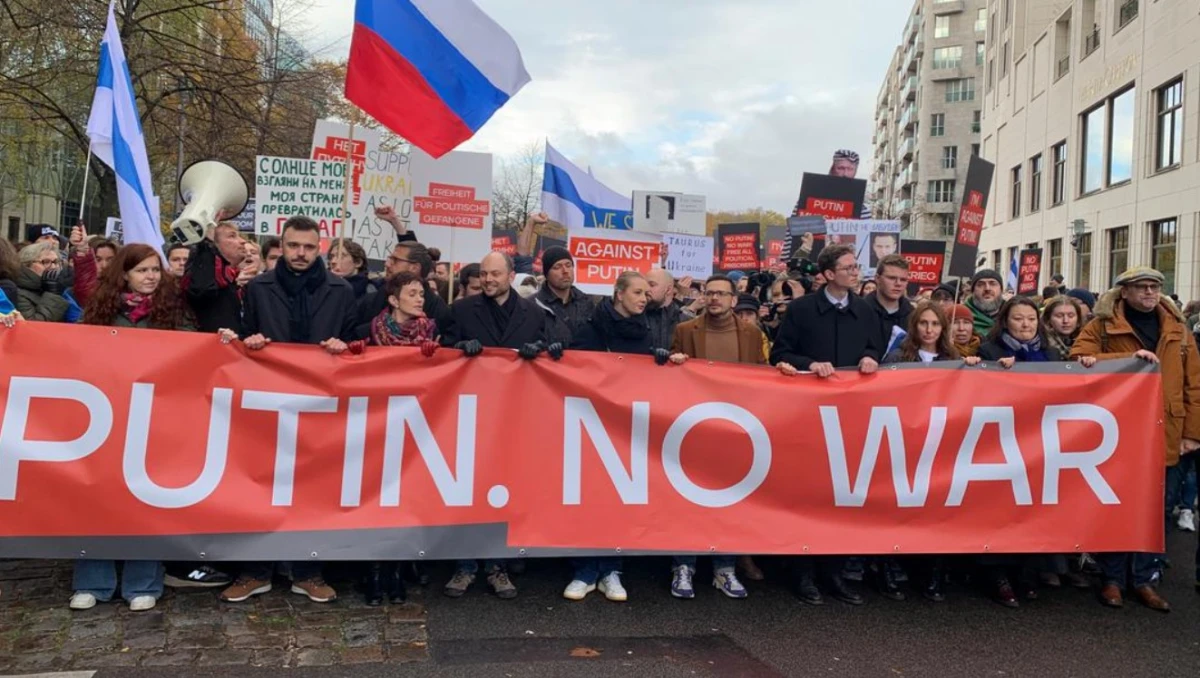
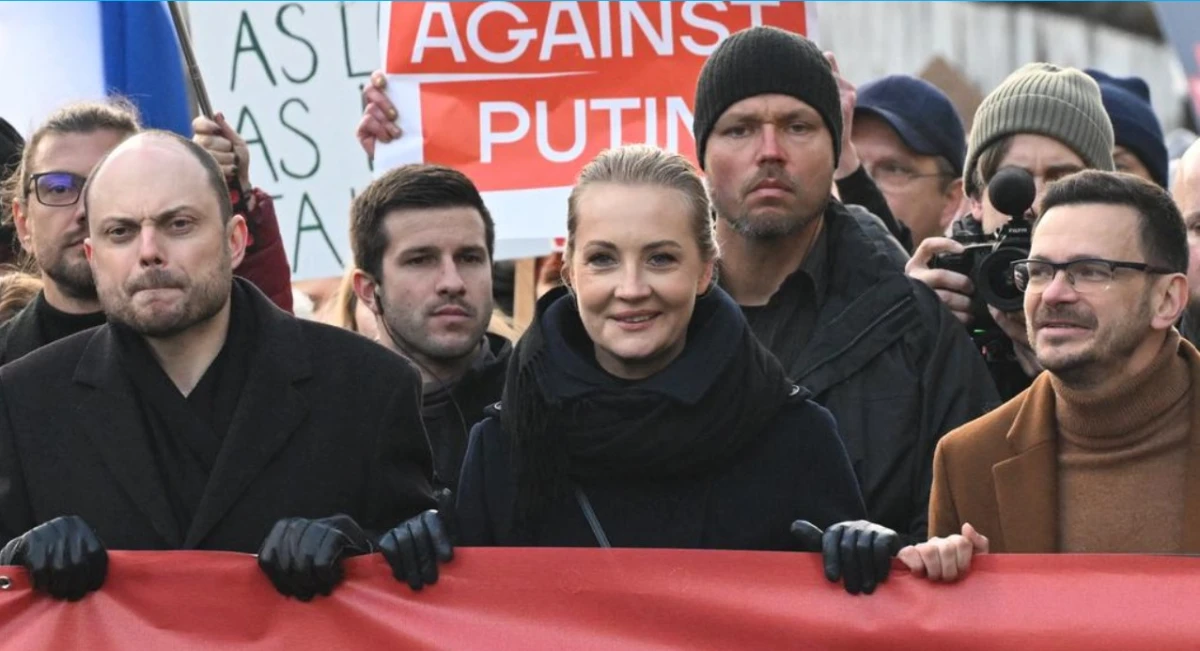
Prominent Russian opposition figures living abroad have also continued participating in anti-war demonstrations, including protests in Berlin and other European cities.
Pressure increasingly follows Kremlin critics beyond Russia’s borders
The new law marks a further step in extending the practical consequences of Russian domestic legislation to citizens who have already left the country.
Previously, leaving Russia could make it more difficult for authorities to enforce fines, sentences or other measures against a political opponent.
Under the new framework, the state can instead target that person’s remaining legal and economic ties to Russia.
Homes may become difficult to sell.
Bank accounts may become inaccessible.
Consular documents may be withheld.
Powers of attorney, which are often essential for managing legal and financial affairs remotely, may also become unavailable.
Human rights advocates argue that this combination of restrictions is what makes the law particularly significant.
A Russian citizen may remain formally recognized as a citizen while becoming unable to exercise many of the practical rights connected to that status.
The Kremlin presents the legislation as a tool against people who evade punishment and act against the Russian state.
Its critics see it differently: as the latest mechanism for expanding political pressure beyond Russia’s borders and making exile increasingly costly for those who continue to oppose the government or criticize the war in Ukraine.
WiseNewsPress.com
What's Your Reaction?
 Like
0
Like
0
 Dislike
0
Dislike
0
 Love
0
Love
0
 Funny
0
Funny
0
 Wow
0
Wow
0
 Sad
0
Sad
0
 Angry
0
Angry
0

Ahmet Taş is a journalist, editor and Turkey Office Manager of the Wise News Press Media Group. He works across news, digital media and international publishing, focusing on accurate, responsible and accessible journalism. He contributes to the development of media projects that bring important political, social and global developments to a wider international audience.















Comments (0)