



Russia strikes passenger train carrying 340 people in Odesa with drone
A Russian drone struck the locomotive of a passenger train carrying 340 people in Odesa region, killing the driver and assistant while passengers escaped unharmed.


By Yusuf İnan | Wise News Press
ODESA, UKRAINE — A Russian attack drone struck the locomotive of a moving passenger train carrying 340 people, including 67 children, in Ukraine’s Odesa region, killing the train driver and his assistant while no passengers were reported injured.
Odesa Regional Military Administration Governor Oleh Kiper said the attack hit the locomotive directly. Ukrainian President Volodymyr Zelenskyy later said the operator of the drone could not have been unaware that the target was civilian and called for stronger international pressure on Russia and additional air defence support for Ukraine.
Drone struck the locomotive directly
According to Ukrainian officials, the train was travelling through the Odesa region when a jet-powered attack drone hit its locomotive.
The train was carrying 340 passengers, including 67 children, as well as members of the railway crew.
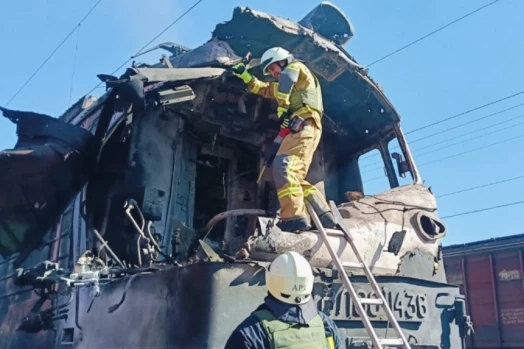
The strike caused severe damage to the front of the train and killed the driver and assistant driver, who were inside the locomotive at the time.


Initial reports indicated that the passenger carriages were not directly hit and that none of the passengers suffered injuries.
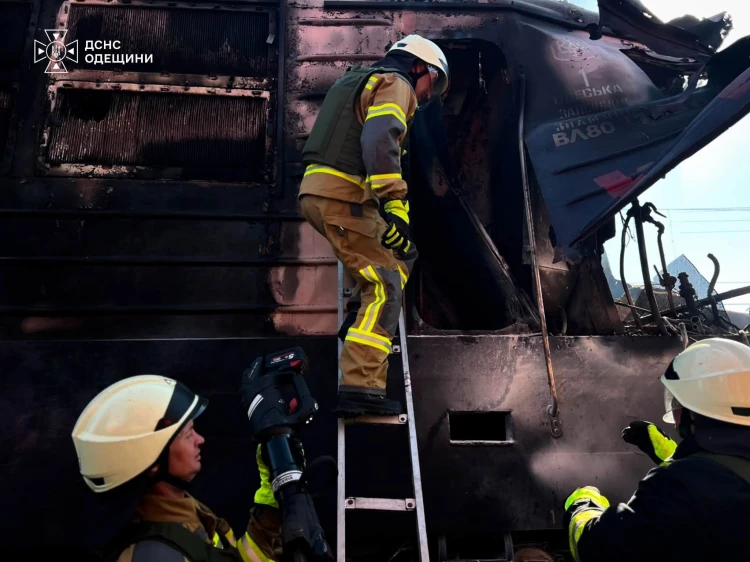
Images released after the attack showed significant damage to the locomotive, particularly around the driver’s cabin, while emergency crews worked at the scene.
Ukrainian authorities began documenting the circumstances of the strike shortly after emergency teams brought the immediate situation under control.


Sixty-seven children were among 340 passengers
Oleh Kiper said the train was carrying a large number of civilians when it was attacked.
Among the 340 passengers were 67 children, making the immediate evacuation of the train a priority for local authorities and emergency services.
Following the strike, the Odesa Regional Military Administration coordinated a large-scale evacuation involving Ukraine’s State Emergency Service, police and local government bodies.
Officials arranged 12 buses to transport passengers away from the site and take them to a safe location in the city of Odesa.
Ambulances were also positioned along the evacuation route so medical assistance could be provided quickly if any passenger developed health problems.
Despite the scale of the attack and the number of people aboard, officials said no injuries were recorded among passengers.
Train driver and assistant killed
The two fatalities were members of the railway crew working in the locomotive.
The driver and his assistant were killed when the drone struck the front section of the train.
Ukrainian media reported that the locomotive suffered extensive damage as a result of the impact.
Emergency crews extinguished the resulting fire and secured the area before investigators began examining the wreckage.
The deaths of the two railway workers were confirmed by Ukrainian authorities, while President Zelenskyy expressed condolences to their families.
The fact that the passenger carriages were not directly struck prevented a potentially far greater loss of life.
The attack nevertheless raised renewed concerns about the safety of Ukraine’s civilian railway network, which remains one of the country’s most important forms of public transport during the war.
Zelenskyy says the civilian nature of the target was clear
President Volodymyr Zelenskyy accused Russia of deliberately attacking a clearly civilian target.
He said the drone operator would have been able to identify the passenger train and argued that the nature of the target could not reasonably have been mistaken.
Zelenskyy said:
“Today in the Odesa region, the Russians once again struck the locomotive of an ordinary passenger train with a jet-powered drone. There were 340 people on the train.”
The Ukrainian president said the person controlling the drone “certainly knew” that the target was entirely civilian.
He also linked the train strike to a broader overnight wave of Russian drone attacks across Ukraine.
According to Zelenskyy, more than 130 drones were used during attacks affecting 11 other regions overnight.
He said Russia continues to launch daily strikes that threaten civilian lives and argued that international responses have not always been strong enough to deter further attacks.

Passengers evacuated to Odesa by bus
Once the passengers were moved away from the train, authorities organized their onward transportation by road.
Twelve buses were sent to the scene to carry passengers to Odesa.
Officials said the evacuation was conducted under the coordination of the regional military administration with assistance from emergency personnel, police and local authorities.
Special attention was given to children and passengers who might require medical assistance during the journey.
Ambulance crews remained on standby along the route.
The evacuation allowed all passengers to leave the strike area without reported casualties among those travelling in the passenger carriages.
The railway journey itself could not continue normally because of the destruction of the locomotive and the emergency response around the site.
Ukraine’s railway network has faced repeated attacks
The Odesa strike comes amid continuing Russian attacks on Ukraine’s transport and logistics infrastructure.
Railways have played an unusually important role in Ukraine since the beginning of Russia’s full-scale invasion.
They are used not only for ordinary civilian travel but also for evacuating people from dangerous areas, connecting cities and maintaining critical transport links across the country.
Attacks on railway infrastructure can therefore have consequences beyond the immediate damage at the site.
Passenger trains and railway stations have previously been affected by missile and drone attacks in different regions of Ukraine.
The latest incident is particularly significant because hundreds of civilians were aboard the train at the moment the locomotive was struck.
Ukrainian officials say the attack demonstrates the continuing vulnerability of civilian transport infrastructure to long-range and precision drone strikes.
Zelenskyy calls for more air defence
Following the attack, Zelenskyy renewed Ukraine’s appeal to international partners for stronger air defence support.
He said Ukraine requires additional assistance to protect civilian areas from continuing Russian drone and missile attacks.
The president also called for greater international pressure on Moscow.
In his statement, Zelenskyy argued that if the international community is serious about ending the war in Europe, it must respond more forcefully to attacks on civilian targets.
Ukraine has repeatedly requested additional air defence systems and interceptor missiles from its partners as Russia has increased the scale and frequency of drone and missile attacks.
The Odesa passenger train strike adds a civilian railway target to a growing list of infrastructure damaged during recent attacks.
Authorities investigating circumstances of the strike
Ukrainian law enforcement and security authorities are examining the site and documenting evidence connected to the attack.
Ukraine maintains that the passenger train was a clearly identifiable civilian target and that the locomotive was deliberately struck.
The final legal classification of the attack would depend on investigations by the competent Ukrainian authorities and, where applicable, international legal mechanisms.
For Ukrainian officials, however, the central fact remains that 340 civilians, including 67 children, were aboard the train when its locomotive was hit.
The driver and assistant driver were killed, while the passengers were evacuated without reported injuries.
The attack has again focused attention on the risks facing civilians using Ukraine’s transport network and strengthened Kyiv’s calls for additional air defence capabilities and greater international pressure on Russia.
WiseNewsPress.com
What's Your Reaction?
 Like
0
Like
0
 Dislike
0
Dislike
0
 Love
0
Love
0
 Funny
0
Funny
0
 Wow
0
Wow
0
 Sad
0
Sad
0
 Angry
0
Angry
0

Yusuf İnan is a journalist, columnist, strategic analyst and head of the Wise News Press Media Group. His work focuses on international affairs, geopolitics, security and major social issues. Through his journalism, he promotes peace, dialogue, mutual understanding and responsible reporting while contributing to the development of international media projects.














Comments (0)