



Zelenskyy: US raised Donbas-for-security-guarantees plan in talks
Zelenskyy said US officials raised NATO-like security guarantees without membership in exchange for Ukraine changing its position on Donbas.


By Yusuf İnan | Wise News Press
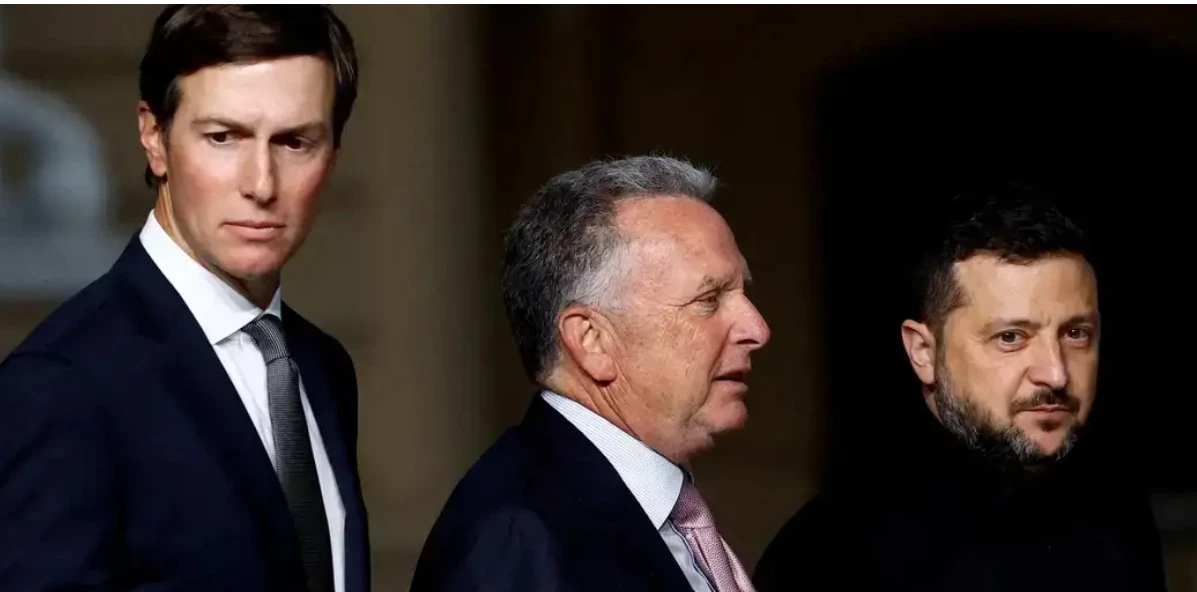
KYIV, UKRAINE — Ukrainian President Volodymyr Zelenskyy said US officials raised the possibility of NATO-like security guarantees in exchange for Kyiv changing its position on Donbas, an option he questioned as insufficient.
Zelenskyy described the discussion in an interview with Danish public broadcaster DR Nyheder, excerpts of which were published on the Ukrainian president’s social media channels on Tuesday, November 10.
No formal proposal accepted by the parties has been released publicly, and Washington has not announced a detailed agreement making security guarantees conditional on Ukraine relinquishing Donbas. The account therefore reflects Zelenskyy’s description of options discussed during negotiations.
What the US reportedly raised in the talks
According to Zelenskyy, the American side raised a framework under which Ukraine could receive postwar security guarantees if Kyiv changed its position on Donbas.
The Ukrainian president said he asked whether the guarantees would include membership in the North Atlantic Treaty Organization. US officials responded that they were not discussing NATO membership but a security mechanism resembling the alliance’s collective defence system, Zelenskyy said.
A US official speaking to Reuters before the latest negotiations also said security guarantees would be a central subject of the talks. The official indicated that a mechanism resembling NATO’s Article 5 collective defence provision was among the possibilities under consideration.
However, no detailed text explaining the proposed mechanism has been made public. It remains unclear which countries would act as guarantors, what obligations they would assume and whether an attack on Ukraine would trigger an automatic military response.
What NATO-like guarantees could mean
Article 5 of the North Atlantic Treaty is based on the principle that an armed attack against one member is considered an attack against all members. Each ally is expected to take the action it considers necessary to restore and maintain security.
A NATO-like arrangement for Ukraine would attempt to create comparable deterrence without granting the country formal alliance membership. Such an arrangement could include military assistance, air defence support, intelligence sharing, weapons deliveries and coordinated sanctions following another attack.
The phrase “NATO-like,” however, does not by itself establish a legally binding defence commitment. Any credible agreement would need to define how quickly guarantor countries must respond, what military capabilities they must provide and what would happen if one of them refused to fulfil its obligations.
Kyiv has repeatedly sought guarantees with clearly defined responsibilities and enforcement mechanisms. Ukrainian officials argue that broad political promises without operational commitments would not be enough to prevent another Russian invasion.
Why Donbas remains central to negotiations
Donbas refers primarily to Ukraine’s eastern Donetsk and Luhansk regions. Russia supported separatist entities there before launching its full-scale invasion of Ukraine in February 2022 and later claimed to have annexed both regions.
Ukraine and most of the international community reject those annexation claims and continue to recognise Donetsk and Luhansk as Ukrainian territory.
Zelenskyy said the future of Ukrainian territory could not be considered as an abstract question on a map. Donbas includes communities, industrial facilities, transport routes and defensive positions that affect Ukraine’s long-term security and economic capacity.
Reports that Washington was seeking Ukrainian flexibility on territory emerged before the US-mediated negotiations in Abu Dhabi. Russia has demanded control over all of Donbas, while Kyiv maintains that decisions about Ukrainian territory cannot be imposed without Ukraine’s agreement.
The discussions have not produced an agreed territorial formula. It also remains unclear whether the American side presented a formal offer or raised the Donbas issue as one of several possible negotiating scenarios.
Zelenskyy doubts Russia would stop in Donbas
Zelenskyy said he did not believe transferring Donbas to Russian control would guarantee lasting peace. In his assessment, the Kremlin could use an agreement as an opportunity to pause, rebuild its forces and launch another attack after one, two or five years.
The Ukrainian president recalled that Moscow had long justified its actions by claiming to defend Russian-speaking residents of Donbas. He argued that Russia’s subsequent attempt to seize Kyiv and its military operations across other Ukrainian regions showed that the war was not limited to protecting Donbas.
Zelenskyy also referred to the Russian advance toward Kyiv in 2022 and alleged war crimes uncovered after Russian troops withdrew from Bucha and surrounding communities.
Russia denies targeting civilians and says any settlement must address what it describes as the underlying causes of the conflict. Moscow has demanded that Ukraine remain outside NATO and has sought restrictions on Kyiv’s armed forces and security relationships with Western countries.
Ukraine rejects those conditions, arguing that they would weaken its sovereign right to determine its defence and foreign policy.
Ukraine recalls its nuclear disarmament experience
Zelenskyy also referred to Ukraine’s decision to relinquish the nuclear weapons left on its territory after the dissolution of the Soviet Union.
Under the 1994 Budapest Memorandum, Ukraine joined the Treaty on the Non-Proliferation of Nuclear Weapons as a non-nuclear state and completed the transfer of the nuclear warheads located on its territory.
Russia, the United States and the United Kingdom provided assurances concerning Ukraine’s independence, sovereignty and existing borders. The memorandum, however, did not include an automatic military intervention mechanism comparable to NATO’s collective defence provision.
Kyiv views Russia’s subsequent occupation of Ukrainian territory as evidence that political assurances alone may not provide sufficient deterrence.
Ukrainian officials therefore want any future agreement to include specific and enforceable responsibilities. These could cover air and missile defence, arms supplies, intelligence cooperation, financial support and coordinated action if Russia launches another attack.
Kyiv’s red lines and the next stage
Zelenskyy has previously said territorial questions could be discussed during peace negotiations, but that final decisions must be made at the level of national leaders and with Ukraine’s full participation.
He has rejected direct territorial exchanges, a neutral status dictated by Russia and limits on the size or capabilities of Ukraine’s armed forces. Zelenskyy has also said Moscow cannot be allowed to determine the terms of Ukraine’s security guarantees.
Kyiv argues that a postwar security arrangement must strengthen Ukraine’s defensive capacity rather than leave the country vulnerable to renewed aggression.
For negotiations to advance, the parties would need to clarify the future of occupied territories, the location and monitoring of any ceasefire line, the responsibilities of guarantor states and the consequences of violating an agreement.
Other unresolved questions include sanctions, reconstruction funding, the return of prisoners and civilians, and the possible deployment of an international monitoring mission.
Zelenskyy’s remarks indicate that territorial concessions and security guarantees are being considered within the same negotiating process. They do not, however, indicate that Ukraine has accepted such an exchange or that a final US proposal has been approved.
The next stage of diplomacy is expected to show whether Washington can turn the broad concept of NATO-like guarantees into a written and enforceable framework acceptable to Ukraine and its European partners.
WiseNewsPress.com
What's Your Reaction?
 Like
0
 Dislike
0
 Love
0
 Funny
0
 Wow
0
 Sad
0
 Angry
0
Yusuf İnan is a journalist, columnist, strategic analyst and head of the Wise News Press Media Group. His work focuses on international affairs, geopolitics, security and major social issues. Through his journalism, he promotes peace, dialogue, mutual understanding and responsible reporting while contributing to the development of international media projects.








Comments (0)