



Russia faces renewed fuel shortages as Ukrainian strikes hit refineries
Russia is facing renewed fuel shortages as Ukrainian strikes damage refineries, forcing regional restrictions and raising pressure on domestic supplies.


By Ahmet Taş | Wise News Press
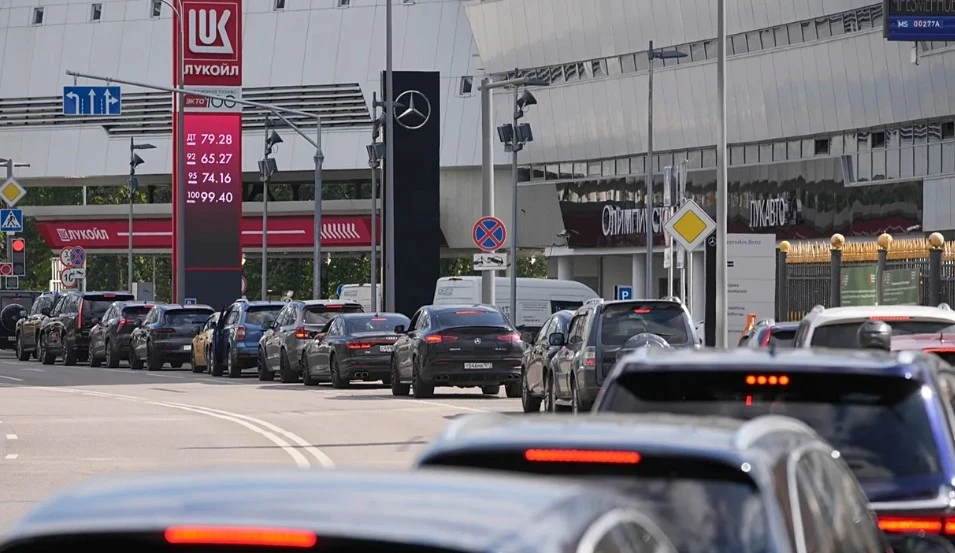
MOSCOW, RUSSIA — Russia is facing renewed fuel shortages in several regions as Ukrainian drone and missile strikes continue to damage oil refineries, adding pressure to domestic supplies and forcing authorities to introduce restrictions.
According to Euronews, Russian officials acknowledged Friday that fuel supply conditions remained strained in parts of the country, while oil companies were instructed to increase deliveries to the regions facing the most serious shortages.
Fuel supplies remain strained in several regions
The Russian government said the situation surrounding fuel deliveries to filling stations remained difficult in some parts of the country.
Officials said energy companies were taking measures to increase shipments to regions considered most vulnerable to shortages.
The government also held a meeting focused specifically on the fuel situation. Deputy Prime Minister Alexander Novak, who oversees the energy sector, ordered officials to monitor fuel prices as concerns grew over both availability and possible increases at filling stations.


Businesses and motorists in several Russian regions have already experienced repeated shortages in recent months as the war places increasing pressure on the country’s energy infrastructure.
According to Euronews, nearly every region in Russia has at some stage introduced measures such as limits on fuel purchases or restrictions on filling portable containers.
The shortages come despite Russia’s position as one of the world’s major oil-producing countries, highlighting the difference between producing crude oil and maintaining sufficient refining and distribution capacity for domestic fuel supplies.


Orsk refinery could remain offline for six months
One of the most significant recent developments involves the large refinery in Orsk, located around 1,300 kilometres from the front line.
The facility was hit this week and has been taken out of operation, with repairs expected to take several months.
The governor of Russia’s Orenburg region, where the refinery is located, said Thursday that operations had been suspended and repair work would take months.
Euronews reported that the refinery could remain out of service for approximately six months.
The lengthy shutdown could place additional pressure on Russia’s refining network at a time when several energy facilities have already been targeted.
Ukraine has for months used long-range drones and missiles against Russian energy facilities, describing the campaign as an effort to weaken an important source of revenue and logistical support for Russia’s military operations.
Kyiv has increasingly demonstrated the ability to strike targets hundreds of kilometres inside Russian territory.
Krasnodar among regions facing significant shortages
The southern Krasnodar region, known for its Black Sea resorts and large seasonal tourist population, has been among the areas most affected by supply problems.
Regional Governor Veniamin Kondratyev acknowledged that the situation at filling stations had become increasingly difficult.
He said oil companies had again begun imposing limits on the amount of fuel supplied and, in some cases, reducing the operating hours of filling stations.
Kondratyev said the situation was creating concern among both local residents and visitors and called for additional fuel deliveries to the region.
Restrictions can have a particularly visible effect in Krasnodar during the summer period because of the large number of people travelling to the region’s Black Sea resorts.
The difficulties there illustrate how refinery disruptions can quickly affect distribution networks far beyond the facilities directly targeted in attacks.
Putin previously acknowledged a domestic fuel deficit
Russian President Vladimir Putin publicly acknowledged in June that the country was facing what he described as a limited fuel shortage.
The admission was notable because Russian authorities had previously sought to play down the impact of Ukrainian attacks on domestic energy infrastructure.
During a meeting with officials focused on fuel supplies, Putin said Russia was going through a difficult period but insisted that the state would continue meeting its social obligations.
He later told Russian state television that the country would increase the production of air defence systems in an effort to protect critical infrastructure against Ukrainian attacks.
Putin maintained that the problems were not critical and described the shortages as temporary.
He also said Russia planned to increase fuel imports and accelerate repairs at damaged oil facilities in an effort to stabilise domestic supplies.
The decision to consider additional imports underscored the pressure being placed on refining capacity even though Russia remains a major crude oil producer and exporter.
Ukraine targets energy infrastructure with long-range attacks
Ukraine has steadily expanded attacks against Russian oil refineries, storage facilities and other energy infrastructure.
Kyiv argues that these facilities contribute directly to Moscow’s ability to finance and sustain its military campaign.
Ukrainian President Volodymyr Zelenskyy has described attacks against energy infrastructure deep inside Russia as “long-range sanctions,” presenting them as a way to impose economic costs on Moscow beyond conventional battlefield operations.
The strategy is aimed at infrastructure that serves both civilian and economic functions but is also important to Russia’s broader wartime economy.
Repeated refinery disruptions can reduce the amount of petrol and diesel available for domestic distribution even when crude oil production itself remains relatively stable.
That distinction has become increasingly important as Russian regions report shortages despite the country’s substantial oil resources.
Repairs and supply redistribution become key challenge
Russian authorities are now attempting to respond through a combination of refinery repairs, redistribution of existing fuel supplies and increased imports.
Oil companies have been instructed to prioritise the most vulnerable regions, while federal authorities continue monitoring prices and regional availability.
The duration of the Orsk refinery shutdown could prove particularly important. If the facility remains offline for months, other refineries and supply networks may have to compensate for its lost production.
At the same time, the continuation of Ukrainian strikes creates uncertainty over whether additional facilities could be damaged before existing plants return to full operation.
For motorists and businesses, the immediate effects are already visible through purchase restrictions, shorter filling station hours and local shortages.
For Moscow, the wider challenge is protecting an extensive network of refineries and energy facilities spread across a vast territory while maintaining stable domestic fuel supplies.
The latest shortages therefore represent both an economic problem and a test of Russia’s ability to shield critical infrastructure from Ukraine’s expanding long-range strike campaign.
WiseNewsPress.com
What's Your Reaction?
 Like
0
Like
0
 Dislike
0
Dislike
0
 Love
0
Love
0
 Funny
0
Funny
0
 Wow
0
Wow
0
 Sad
0
Sad
0
 Angry
0
Angry
0

Ahmet Taş is a journalist, editor and Turkey Office Manager of the Wise News Press Media Group. He works across news, digital media and international publishing, focusing on accurate, responsible and accessible journalism. He contributes to the development of media projects that bring important political, social and global developments to a wider international audience.
















Comments (0)