



Ukraine and Middle East wars expose European defense flaws
The massive cost gap between cheap drones and expensive interceptors in Ukraine and the Middle East requires a radical shift in European air defense.


By Ahmet Taş | Wise News Press
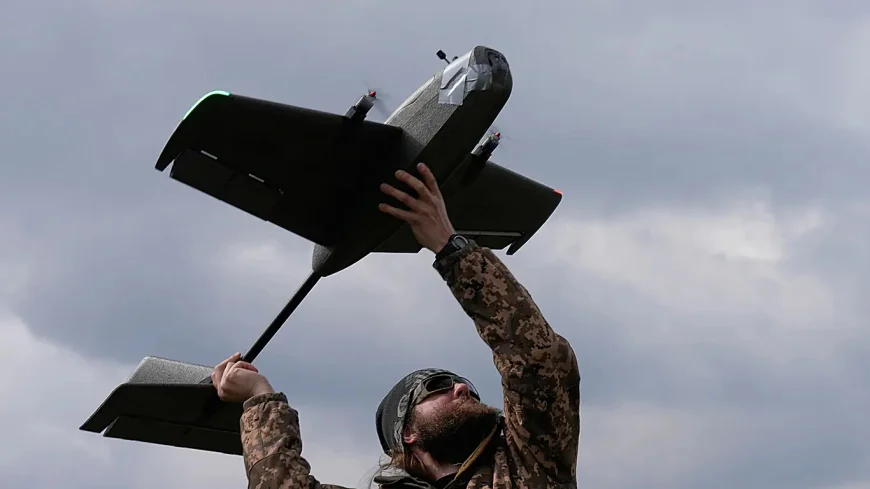
BRUSSELS, BELGIUM — The massive cost asymmetry seen in recent conflicts in Ukraine and the Middle East requires Europe to urgently shift towards low-cost interceptors and deep strike capabilities, according to a Brussels-based think tank.
A new report by Bruegel highlights that using multimillion-dollar Patriot missiles against cheap drones is financially unsustainable, urging European militaries to fundamentally rethink their defense strategies against adversaries with massive industrial infrastructures like Russia. According to an AP report detailing the analysis, the defense calculations on the modern battlefield have been completely overturned.
Guntram Wolff and Alexandr Burilkov, authors of the Bruegel report, noted that precision-guided drones and missiles—once highly expensive and limited to advanced militaries—have become cheap enough to be deployed on a devastating scale. While the United States and Israel spend approximately $4 million for each Patriot interceptor used to down an Iranian Shahed drone that costs only tens of thousands of euros, experts warn that relying solely on defense in a prolonged campaign will lead to rapid depletion of stockpiles.
The primary threat to Europe
The report emphasizes that the real defense risk for Europe is not Iran, which has a relatively primitive air force, but Russia. Russia possesses a powerful air force and a highly advanced integrated air and missile defense network, making it a much more formidable adversary.
In a potential widespread conflict, it is anticipated that massive salvos of Russian drones and missiles would quickly saturate and overwhelm European air defenses. This scenario is already playing out in Ukraine, where the government has been forced to make agonizing decisions about when to use its scarce, high-value interceptor missiles and which targets to let through. These tough choices serve as a critical early warning for European capitals regarding their own military preparedness.


Innovation and low-cost interceptors
Bruegel's strategic analysis points to two concrete priorities that European defense planners must act upon immediately. First, there must be large-scale investment in cheap anti-drone capabilities to reduce the massive cost asymmetry between offense and defense. Ukrainian companies have already developed cost-effective interceptor drones that Gulf nations are now seeking to acquire, clearly indicating where battlefield innovation is currently taking place.
Relying on high-end interceptors that cost millions per shot to destroy cheap drones is viewed as a path to financial exhaustion. Recognizing this shift, the UK government recently hosted a meeting focused on the rapid procurement of defense equipment against drone and missile attacks. The gathering included defense companies, as well as ambassadors and defense attachés from Saudi Arabia, Kuwait, Bahrain, Qatar, the UAE, Iraq, and Jordan.
According to Dealroom data, European defense technology startups raised $1.8 billion in 2025—nearly triple the previous annual record. In the early months of 2026, an additional $854 million was raised. Startups like Estonia-based Frankenburg Technologies and the Ukrainian-UK joint venture Uforce are among the companies leading the development of these low-cost drone and missile interceptors.


Targeting the source of production
The second, and perhaps more militarily crucial lesson from the report, is the urgent need for Europe to build its own deep strike capabilities. According to Bruegel, a war of attrition against an adversary with a massive military-industrial complex cannot be won relying solely on air defense systems.
"Russia's defense industrial base can produce far more modern drones and missiles than a highly advanced Ukrainian air defense could ever intercept," the report warned.
The only way to break this imbalance is to degrade the attacker's capacity at its source. Ukraine's successful use of domestically produced long-range drones and missiles to strike refineries, weapons depots, and production facilities deep inside Russia proves the effectiveness of this strategy. Wolff and Burilkov conclude that instead of spending expensive interceptors to shoot down cheap drones one by one, Europe must stockpile cost-effective air defense munitions while simultaneously developing offensive capabilities designed to cripple the enemy's production infrastructure.
What's Your Reaction?
 Like
0
Like
0
 Dislike
0
Dislike
0
 Love
0
Love
0
 Funny
0
Funny
0
 Wow
0
Wow
0
 Sad
0
Sad
0
 Angry
0
Angry
0

Editor | Wise News Press — Delivering accurate, timely global news with integrity, insight, and editorial responsibility.
















Comments (0)