



Putin invites European representatives to Moscow for Ukraine talks
Putin said EU representatives were invited to Moscow to discuss Ukraine peace talks, security concerns and Europe’s future support for Kyiv.


By Ahmet Taş | Wise News Press
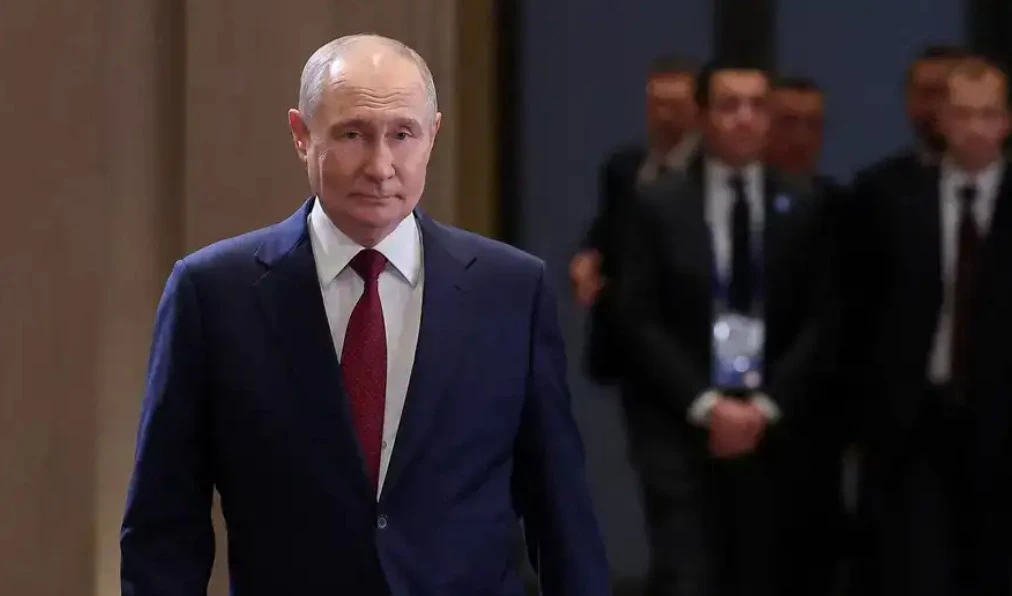
SHENZHEN, CHINA — Russian President Vladimir Putin said European Union representatives had been invited to Moscow to clarify their position on the Ukraine war before the format of further negotiations is determined.
The invitation comes as European governments seek direct representation in any future talks on ending the conflict. Moscow wants to hear Europe’s position on security and assistance for Ukraine, while Kyiv and several European leaders favour negotiations on neutral territory.
Invitation delivered through diplomatic channels
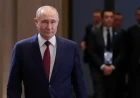
Russian President Vladimir Putin announced the proposal during a press conference in Shenzhen, China, on November 19, 2026.
Putin said Russia had contacted European representatives through diplomatic channels and invited them to Moscow. He said the purpose of the meeting would be to establish what position Europe intended to bring to future negotiations.
The Kremlin considers European governments important participants because of their political, economic and military support for Ukraine. Moscow wants Europe to formulate a clear position and present its expectations directly to Russian officials.
Putin said Russia would decide how to continue dialogue concerning Ukraine after meeting European representatives. He did not identify all the countries or institutions that received the invitation.
No date has been announced, and it remains unclear whether Moscow expects representatives from individual governments, European Union institutions or a combined European delegation.
Future negotiating format remains undecided
The proposed meeting appears to be intended as a preliminary consultation rather than a formal peace conference.
According to Putin, Moscow first wants to understand Europe’s position and then consider the structure of subsequent negotiations. Whether Ukraine, Europe, Russia and the United States would participate within the same framework has not yet been determined.
The parties have also not agreed on who would represent Europe. Some governments support a delegation consisting of several major European countries, while others argue that European Union and NATO officials should also take part.
Moscow has called for Europe to adopt a coordinated position before entering negotiations. European leaders, meanwhile, maintain that decisions affecting the continent’s security cannot be made exclusively by Washington and Moscow.
The purpose, agenda and level of representation at the proposed Moscow meeting would therefore be crucial. These questions are likely to form part of the diplomatic discussions taking place before Europe formally responds to the invitation.
European support for Ukraine on the agenda
Putin said Russia was concerned about the forms of assistance that European countries intended to provide to Ukraine.
The issue is expected to include possible postwar security guarantees, military training, intelligence cooperation and the continued delivery of weapons. Moscow wants these matters to be discussed as part of a wider security framework.
Putin said Ukraine’s security could be considered within the broader structure of European security. However, he argued that Russia’s security concerns must also be addressed in the same negotiations.
The Kremlin opposes certain forms of military cooperation between Ukraine and European countries. This position conflicts with European demands for guarantees capable of protecting Ukraine against another attack after a potential settlement.
European governments argue that an agreement without credible security arrangements could leave Ukraine vulnerable. Moscow, however, views some proposed guarantees as an extension of Western military influence.
Security guarantees are therefore expected to become one of the most difficult issues in any future negotiations. The proposed meeting could provide an opportunity for the parties to clarify their positions, but it is unlikely to eliminate the fundamental disagreements immediately.
Moscow rejects deployment of Western forces
Putin repeated Russia’s opposition to the possible deployment of Western troops in Ukraine.
Several European governments have considered establishing an international force to support a long-term settlement. Such a mission could monitor a ceasefire, assist Ukrainian forces and deter renewed military action.
Russia argues that the presence of Western military personnel would create a new security threat and could undermine a peace agreement. European officials say the purpose of such a force would be defensive and intended to strengthen the implementation of any settlement.
Putin said talks with European representatives should address the security of Ukraine, Russia and Europe as a whole. His remarks suggest that Moscow wants the negotiations to cover more than the immediate conditions for ending the war.
The Kremlin has long sought discussions on the wider European security order, including NATO’s military presence and Ukraine’s future relationships with Western institutions.
European governments remain cautious about linking a settlement in Ukraine to major changes in the continent’s security architecture. They argue that European security arrangements cannot be revised without the consent of European countries and institutions.
E3 countries consider talks with Russia
Officials from the E3 group — France, Germany and the United Kingdom — have reportedly discussed the possibility of meeting representatives of the Russian government.
According to people familiar with the matter who spoke to Bloomberg, a national security adviser from one of the three countries recently contacted Putin’s foreign policy aide Yuri Ushakov about arranging a meeting.
Ushakov reportedly proposed that the talks take place in Moscow. No official confirmation has been issued indicating that the European governments accepted that location.
The date, agenda and level of representation also remain uncertain. Discussions appear to be continuing over whether the meeting could take place and under what conditions.
France, Germany and the United Kingdom play influential roles in European foreign and security policy. Their response could shape the wider European approach to Moscow’s invitation.
However, the E3 countries may not be the only participants. Italy and Poland, along with officials from the European Commission, European Council and NATO, have also been mentioned as possible members of a European negotiating structure.
Kyiv calls for talks on neutral territory
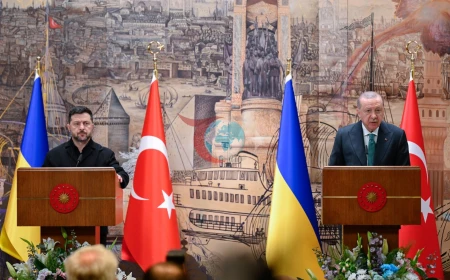
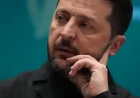
Ukrainian President Volodymyr Zelenskyy said he was convinced that European leaders would not accept Putin’s invitation to Moscow.
Zelenskyy also argued that lower-level European representatives should not travel to the Russian capital. In his view, accepting a meeting under conditions set by Moscow would create an unbalanced starting point for negotiations.
The Ukrainian president proposed holding any meeting between Europe and Russia in a neutral country. He said a neutral venue would better demonstrate that all sides were genuinely prepared to seek an agreement.
Kyiv does not oppose diplomatic contact between Europe and Russia in principle. Its objection concerns the location, format and conditions under which such contact would take place.
German Chancellor Friedrich Merz has also said that future talks involving European representatives could be held on neutral ground. The United Arab Emirates has been mentioned as one possible location, although no decision has been announced.
The differing positions indicate that European governments may be willing to engage with Russia but could reject Moscow as the venue for the initial meeting.
No timetable announced for proposed meeting
European governments have not yet issued a coordinated response to the invitation, and no confirmed meeting date or final list of participants has been published.
Consultations are expected to continue over the location, composition of the delegation and common European position. Governments must also decide whether the talks would be exploratory or part of a formal peace process.
Moscow wants to hear Europe’s position before determining the next negotiating format. Kyiv insists that Ukraine and Europe must participate as equal parties and that meetings should be conducted on neutral territory.
The venue itself has consequently become part of the diplomatic negotiation. A meeting in Moscow would give Russia the role of host, while a neutral location could provide a more balanced setting.
Europe’s eventual response could influence whether a new round of negotiations begins and how Ukraine, Russia, the United States and European governments are represented.
Even if the sides agree on a location, they would still need to settle the agenda, the level of participation and the relationship between discussions on Ukraine and wider European security.
WiseNewsPress.com
What's Your Reaction?
 Like
0
 Dislike
0
 Love
0
 Funny
0
 Wow
0
 Sad
0
 Angry
0

Ahmet Taş is a journalist, editor and Turkey Office Manager of the Wise News Press Media Group. He works across news, digital media and international publishing, focusing on accurate, responsible and accessible journalism. He contributes to the development of media projects that bring important political, social and global developments to a wider international audience.









Comments (0)