



Will Turkish textiles recover in 2026 amid rising costs?
Turkiye's textile and apparel sector enters 2026 facing severe production and employment losses, with 380,000 jobs lost over the last three years.


WISE NEWS PRESS / ISTANBUL, TURKIYE
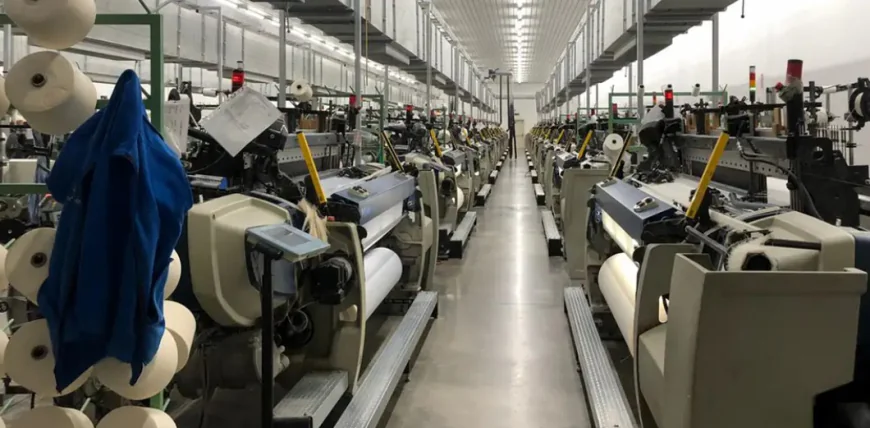
Turkiye's textile and ready-to-wear sector, a major supplier to the European Union, has entered 2026 facing a survival crisis characterized by massive production drops and significant employment losses.
High inflation and rising operational costs have pushed this traditional pillar of the Turkish economy into a corner. Data reveals that 380,000 workers have lost their jobs in the last three years, while more than 4,500 companies were forced to close their doors in 2025 alone. Industry representatives are now calling for a specialized government strategy to protect a sector that supports hundreds of thousands of families and serves as a primary link in the European supply chain.
Declining Exports and the Pressure of Imports
According to the Turkish Exporters Assembly (TIM), ready-to-wear and apparel exports fell by 6.3% in 2025, dropping to $16.8 billion. Similarly, textile and raw material exports saw a loss, settling at $9.4 billion. This decline marks the first time in 35 years that the sector's share in the global apparel market has fallen below 3%, and its share in the EU market has dipped below 5% for the first time in three decades.
While exports are shrinking, the industry is simultaneously battling an influx of imports. Textile and apparel imports, which stood at $2.6 billion in 2022, nearly doubled to reach $5 billion by the end of 2025. According to Seref Fayat, President of the TOBB Apparel and Clothing Industry Council, this trend indicates that domestic producers are losing their grip on the local market to foreign competitors.
Industry Demands and Government Support
Sector leaders are preparing to approach Ankara with a list of urgent demands to stop the "hemorrhage." These include increasing employment support to 6,000 TL per worker, raising minimum wage support to 2,500 TL, and setting foreign currency conversion support at 10%. Mustafa Pasahan, Vice President of the Istanbul Ready-to-Wear and Apparel Exporters Association (IHKIB), emphasized that "the sector has no stamina left to wait."
In response, President Erdogan recently announced an increase in monthly support for SMEs from 2,500 TL to 3,500 TL for 2026, a move aimed at preventing further layoffs. However, Seref Fayat notes that the effectiveness of this support will only become clear in the first quarter of 2026, adding that a real recovery might not be seen until 2027, provided that financing costs decrease and exchange rates become more competitive.
"We Must Save Ourselves"
Some industry veterans remain skeptical of government policies. Jak Eskinazi, President of the Aegean Textile and Raw Materials Exporters Association (ETHIB), argues that the current drop in inflation is not healthy and that the sector must find its own solutions. Eskinazi dismissed government calls to shift toward "value-added production," noting that the industry already exports products worth $20 that cost only $1.50 to produce. "We are no longer waiting for help; we will create the market ourselves to protect our $60 billion infrastructure," Eskinazi stated.
What's Your Reaction?
 Like
0
 Dislike
0
 Love
0
 Funny
0
 Wow
0
 Sad
0
 Angry
0

Editor | Wise News Press — Delivering accurate, timely global news with integrity, insight, and editorial responsibility.


















Comments (0)