



Emine Erdoğan’s Zero Waste vision: Waste, migration and global justice
Emine Erdoğan’s Zero Waste vision links food waste, inequality and climate resilience with a wider debate over migration and global resource justice.


By Yusuf Inan | Wise News Press
Journalist and Author | Political and Strategic Analyst
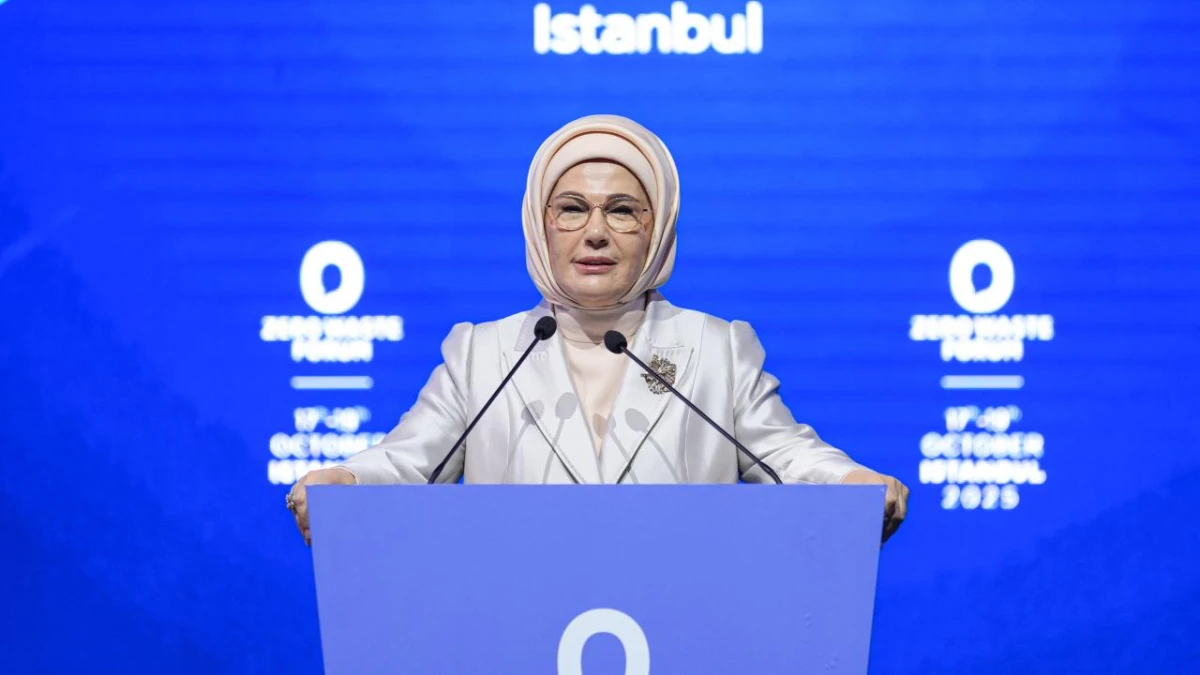
ANKARA, TÜRKİYE — A global movement launched in Türkiye under First Lady Emine Erdoğan is gaining strategic relevance as governments confront food waste, inequality, climate pressure and increasingly contentious migration politics.
The Zero Waste initiative is usually presented as an environmental policy focused on recycling and resource efficiency. Its broader logic — preventing needless consumption, recovering usable materials and redistributing surplus rather than discarding it — also raises a wider question: can better use of existing resources reduce some pressures that drive desperate and risky migration?
From a national initiative to a UN-backed movement
Türkiye launched the Zero Waste project in 2017 under the leadership of First Lady Emine Erdoğan. In December 2022, the UN General Assembly adopted Resolution 77/161, proposed by Türkiye and co-sponsored by 105 other countries, establishing 30 March as the International Day of Zero Waste.
At the first UN high-level observance in 2023, Secretary-General António Guterres urged countries to draw inspiration from Türkiye’s initiative, while Erdoğan said humanity must act collectively because “we will either win or lose together.” The UN framework has since broadened the discussion toward circular economies, sustainable consumption, food systems and climate policy.


That trajectory continued at the Zero Waste Forum 2026 in Istanbul from 5 to 7 June, where UN agencies joined ministerial and technical discussions on climate action, circular economies, food safety and surplus redistribution ahead of COP31 in Antalya.
One billion meals wasted every day
The scale of global food waste gives the philosophy a humanitarian dimension. In his 30 March 2026 message for the International Day of Zero Waste, Guterres said the world throws away enough food every day to prepare 1 billion meals while 9 percent of humanity goes hungry.
UNEP’s Food Waste Index Report 2024 estimated that 1.05 billion tonnes of food were wasted at household, food-service and retail levels in 2022 — about 19 percent of food available to consumers. Households accounted for roughly 631 million tonnes.


This does not mean discarded meals in wealthy countries can simply be shipped to hungry families elsewhere. Food insecurity is shaped by conflict, logistics, storage, market access and purchasing power. But the figures reveal a structural contradiction: huge resources are spent producing food that is never eaten while other communities lack reliable nutrition.
Zero-waste policy therefore extends beyond recycling. It includes preventing surplus, improving supply chains, redistributing edible food safely and designing systems that deliver more social value with fewer resources. The UN’s 2026 Zero Waste agenda specifically calls on retailers to redistribute surplus food and governments to make food-waste reduction part of wider climate and biodiversity policy.
Migration politics are moving toward tougher borders
The debate comes as migration policy in Europe becomes more restrictive and politically sensitive. The EU Pact on Migration and Asylum entered into application on 12 June 2026, introducing common screening, registration, asylum, solidarity and faster return procedures.
EU institutions also reached a provisional agreement in June on a new Return Regulation intended to speed the return of people without a legal right to remain, including provisions for possible return hubs in third countries under international-law and human-rights safeguards.
Yet border management addresses what happens after people move; it does not by itself resolve why they leave.
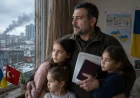
UNHCR reported in June that one in every 70 people worldwide was forcibly displaced at the end of 2025. It counted 41.6 million refugees and 68.7 million people displaced within their own countries because of conflict or violence.
The figures also challenge the assumption that most displaced people are heading directly for Western Europe or North America. UNHCR said 65 percent of refugees were hosted by neighboring countries and 68 percent were hosted in low- and middle-income countries.
Can zero waste reduce migration pressure?
Zero Waste cannot end war, political repression or every form of migration. People move for safety, family, work, education and opportunity. Treating migration as a direct consequence of waste would oversimplify a complex phenomenon.
A more defensible strategic argument is that reducing waste and improving resource efficiency can weaken some conditions associated with forced or risky mobility.
The International Organization for Migration says conflict and disasters often trigger displacement, while climate change, instability, poverty and exploitation deepen underlying vulnerability. The World Bank also identifies income gaps, demographic change, climate pressures and conflict among the major forces shaping migration.
This is where zero-waste policy can intersect with migration strategy. More efficient food systems can strengthen food security. Circular-economy investment can create local jobs. Lower material and energy waste can reduce costs. Better management of food, water and organic resources can improve community resilience.
For Europe and the United States, the implication is that migration policy need not be limited to fences, patrols and return procedures. Investment in resilient economies, food security, human rights and climate adaptation can complement border management by addressing some pressures before desperation becomes dangerous movement.
The aim would not be to prevent ordinary human mobility, but to reduce the circumstances in which families conclude that an extremely dangerous journey is their only realistic path to safety or a viable future.
Islamic ethics and Said Nursi’s argument against waste
Zero Waste also has a clear parallel in Islamic ethics. The Qur’an links consumption with restraint in verse 7:31: “Eat and drink, but waste not by excess.” The principle places limits on extravagance while treating resources as something to be used responsibly.
From this perspective, Emine Erdoğan’s initiative can be read as a modern policy expression of an older moral idea: consume without excess, protect what has value and avoid destroying resources that can still serve people.
That does not make a contemporary government program identical to the life or teachings of the Prophet Muhammad. The historical and political contexts are different. But its emphasis on moderation, avoiding extravagance and social responsibility overlaps with central themes in Islamic ethics.
A similar framework appears in Bediüzzaman Said Nursi’s Nineteenth Flash of the Risale-i Nur, commonly known in English as the Treatise on Frugality. Beginning from Qur’an 7:31, Nursi develops an argument around frugality, contentment and the rejection of extravagance.
Nursi treats wastefulness not simply as bad household management but as a moral and social problem affecting gratitude, dignity, work and the proper appreciation of resources. He contrasts wastefulness with frugality and contentment, arguing that excessive consumption can also create dissatisfaction rather than well-being.
The comparison is notable: circular-economy language seeks to preserve material value, while Nursi speaks of respecting blessings and avoiding waste. Both challenge the assumption that prosperity requires limitless consumption.
The same principle also turns inward. A serious anti-waste ethic questions luxury and conspicuous consumption not only in affluent Western societies but also in Muslim communities and institutions that publicly invoke religious values.
From waste management to a stability strategy
The strongest case for Emine Erdoğan’s Zero Waste vision is not that it offers a single cure for migration, violence or inequality. No environmental project can do that alone.
Its strategic importance lies in a simpler proposition: a world that wastes less food, energy and material can preserve more economic value, reduce environmental pressure and strengthen social resilience.
At a time when enough food for 1 billion meals is wasted each day while millions face hunger and displacement, the politics of waste inevitably touch the politics of justice.
If Europe and the United States are prepared to redesign migration systems because of concerns over uncontrolled movement, the same strategic debate should also include investment in conditions that make staying, rebuilding and living with dignity more possible.
That means stronger food systems, economic opportunity, human rights, conflict prevention, climate resilience and more responsible use of the resources the world already possesses.
In that sense, Zero Waste is more than an environmental slogan. It can be understood as a modern argument for restraint, responsibility and resource justice — principles found in contemporary sustainability policy and, much earlier, in Islamic teachings against extravagance.
The larger question raised by Emine Erdoğan’s initiative may therefore be less about how much humanity can produce and more about how wisely humanity uses what it already has.
Yusuf İnan
WiseNewsPress.com
Yusuf İnan is a journalist, author, and political and strategic analyst. He serves as editor-in-chief of UAPresa.com, WiseNewsPress.com, SehitlerOlmez.com, SiyasetinSesi.com and YerelGundem.com. His work focuses on strategic and political analysis concerning developments in Türkiye and around the world.
What's Your Reaction?
 Like
0
Like
0
 Dislike
0
Dislike
0
 Love
0
Love
0
 Funny
0
Funny
0
 Wow
0
Wow
0
 Sad
0
Sad
0
 Angry
0
Angry
0
Yusuf İnan is a journalist, columnist, strategic analyst and head of the Wise News Press Media Group. His work focuses on international affairs, geopolitics, security and major social issues. Through his journalism, he promotes peace, dialogue, mutual understanding and responsible reporting while contributing to the development of international media projects.














Comments (0)